

Anaphalis margaritacea - PEARLY EVERLASTING
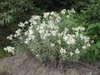
Native perennial with silver fuzzy leaves and dry-looking small white/yellow flowers. Forms upright mounds.
Blooms for long period and attracts skippers and butterflies.
Sun, average to drained soils are the key for successful growing.
Award of Merit by RHS.
Blooming Time: June/July to August/September (the flowers have dry petals, so they look the same for very long time
Size: up to 2' tall x 1.5-2' wide
USDA Zones: Hardy in zones 3-8, heat zones 1-8
Culture: Sun, partial sun are the best (plants will adapt to drier half shade too). Average free draining soils soils, drained soils. Great for leaner, poorer rocky soils, sandy soils, shallower soils, dry and drained soils. Neutral to slightly acidic pH.
Moisture Needs: medium-dry, dry
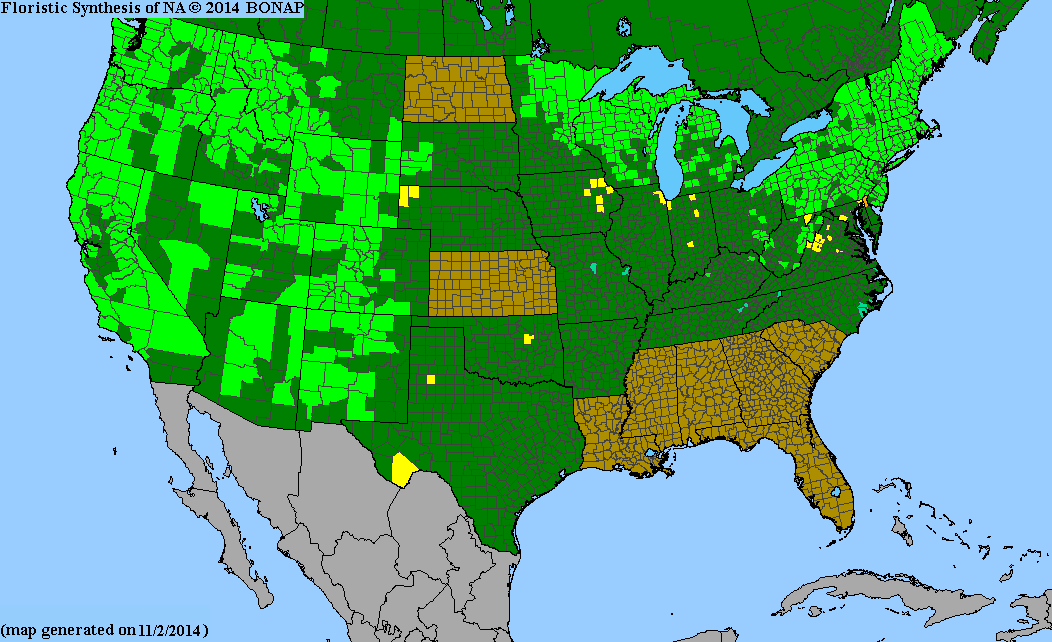
Origin: most of USA and Canada, except for southeast and deep south, see the BONAP distribution map. Can be found in dry prairies, roadsides, and waste places
Deer/Rabbit Resistant: yes/yes
Attracts Butterflies or Pollinators: bees, skippers, butterflies. Host plant for larvae of American and Painted Lady Butterfly.
Attracts Hummingbirds: no
Pot Size: square 3.5" x 4" deep perennial pot
Plant Combinations: Naturalistic gardens, deer resistance plantings, cottage gardens, dry prairie-inspired gardens, rock gardens, xeriscape.
Combine with drought tolerant plants like Antennaria, Asclepias tuberosa, Asclepias verticillata, Calamintha, most of Coreopsis, Callirhoe, narrow-leaved Echinacea, Eryngium, Gaura, Oenothera, Phlomis, Monarda (fistulosa, bradburiana, etc. and hybrids), Kniphophia, Rudbeckia missouriensis, Sedum, smaller and shorter Solidago, grasses (Bouteloa, Eragrostis, Panicum, Muhlenbergia, Stipa).
Picture copyright : de l'Université Laval, Commons Wikimedia
Anaphalis margaritacea - PEARLY EVERLASTING


Native perennial with silver fuzzy leaves and dry-looking small white/yellow flowers. Forms upright mounds.
Blooms for long period and attracts skippers and butterflies.
Sun, average to drained soils are the key for successful growing.
Award of Merit by RHS.
Blooming Time: June/July to August/September (the flowers have dry petals, so they look the same for very long time
Size: up to 2' tall x 1.5-2' wide
USDA Zones: Hardy in zones 3-8, heat zones 1-8
Culture: Sun, partial sun are the best (plants will adapt to drier half shade too). Average free draining soils soils, drained soils. Great for leaner, poorer rocky soils, sandy soils, shallower soils, dry and drained soils. Neutral to slightly acidic pH.
Moisture Needs: medium-dry, dry
Origin: most of USA and Canada, except for southeast and deep south, see the BONAP distribution map. Can be found in dry prairies, roadsides, and waste places
Deer/Rabbit Resistant: yes/yes
Attracts Butterflies or Pollinators: bees, skippers, butterflies. Host plant for larvae of American and Painted Lady Butterfly.
Attracts Hummingbirds: no
Pot Size: square 3.5" x 4" deep perennial pot
Plant Combinations: Naturalistic gardens, deer resistance plantings, cottage gardens, dry prairie-inspired gardens, rock gardens, xeriscape.
Combine with drought tolerant plants like Antennaria, Asclepias tuberosa, Asclepias verticillata, Calamintha, most of Coreopsis, Callirhoe, narrow-leaved Echinacea, Eryngium, Gaura, Oenothera, Phlomis, Monarda (fistulosa, bradburiana, etc. and hybrids), Kniphophia, Rudbeckia missouriensis, Sedum, smaller and shorter Solidago, grasses (Bouteloa, Eragrostis, Panicum, Muhlenbergia, Stipa).
Picture copyright : de l'Université Laval, Commons Wikimedia
Customer Reviews

Shipped With Care
Secure packaging for safe delivery
Nursery Grown Plants
Healthy, well-rooted perennials
Curated Plant Selection
Reliable performers for real gardens