


Zoom the image with the mouse
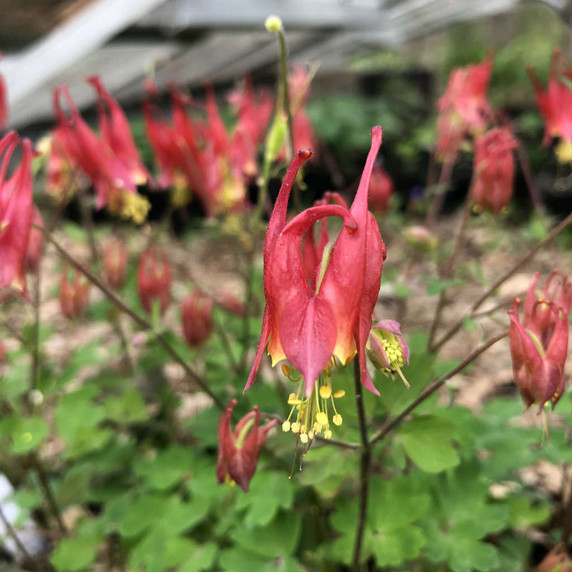
Aquilegia canadensis 'Little Lanterns' - WILD COLUMBINE 'LITTLE LANTERNS' (DWARF)
Product Code:
AQU-LIT-LAN
Shipping:
Calculated at Checkout
$8.49
The dwarf form of native wild columbine, this plant provides a valuable mid-early season source of hummingbird food. Goldfinches and buntings feed on the seeds. In dry summers it may become dormant, but the leaves will come back again in the fall.
It's a rather short-lived perennial, but it will spread through new generations of seedlings. In optimal conditions it can form colonies. This is an excellent “traveling plant” for the early stages of your newly established flower bed, as it will fill the gaps among slower-growing plants. Use it in the front of borders, front of woodland gardens, trough or rock gardens. It goes well with Asarum canadense, Phlox divaricata, Phlox bifida, Phlox subulata, Iris cristata, Stylophorum diphyllum, Tiarella cordifolia, Heuchera americana, and woodland sedges like Carex pennsylvanica.
Native Americans used to crush the black seeds into a powder which was blended into hot water and used to treat fevers. In the past bachelors would use the seed paste as a perfume!
Blooming Time: May-June
Size: usually 0.75' - 1' high x 1' wide
USDA Zones: 3 to 8
Culture: Partial shade, shade, dappled sun, but adaptable to full sun too. Soils range from average to sandy or clayish , preferably with some drainage. Occurs naturally in rich rocky woods, north-facing slopes, cliffs, pastures, and roadside banks.
Moisture Needs: medium, medium-dry
Origin: Native to all states east of the Rockies except Louisiana.
Deer/Rabbit Resistant: yes/yes
Attracts Butterflies or Pollinators: bumblebees, butterflies, hawk moths. Host to the Columbine Duskywing Caterpillar.
Attracts Hummingbirds: yes
Pot Size: 3.5" x 4" perennial pot (1.22 pt/580 ml)
Picture copyright: US Perennials
Aquilegia canadensis 'Little Lanterns' - WILD COLUMBINE 'LITTLE LANTERNS' (DWARF)
$8.49
Details
The dwarf form of native wild columbine, this plant provides a valuable mid-early season source of hummingbird food. Goldfinches and buntings feed on the seeds. In dry summers it may become dormant, but the leaves will come back again in the fall.
It's a rather short-lived perennial, but it will spread through new generations of seedlings. In optimal conditions it can form colonies. This is an excellent “traveling plant” for the early stages of your newly established flower bed, as it will fill the gaps among slower-growing plants. Use it in the front of borders, front of woodland gardens, trough or rock gardens. It goes well with Asarum canadense, Phlox divaricata, Phlox bifida, Phlox subulata, Iris cristata, Stylophorum diphyllum, Tiarella cordifolia, Heuchera americana, and woodland sedges like Carex pennsylvanica.
Native Americans used to crush the black seeds into a powder which was blended into hot water and used to treat fevers. In the past bachelors would use the seed paste as a perfume!
Blooming Time: May-June
Size: usually 0.75' - 1' high x 1' wide
USDA Zones: 3 to 8
Culture: Partial shade, shade, dappled sun, but adaptable to full sun too. Soils range from average to sandy or clayish , preferably with some drainage. Occurs naturally in rich rocky woods, north-facing slopes, cliffs, pastures, and roadside banks.
Moisture Needs: medium, medium-dry
Origin: Native to all states east of the Rockies except Louisiana.
Deer/Rabbit Resistant: yes/yes
Attracts Butterflies or Pollinators: bumblebees, butterflies, hawk moths. Host to the Columbine Duskywing Caterpillar.
Attracts Hummingbirds: yes
Pot Size: 3.5" x 4" perennial pot (1.22 pt/580 ml)
Picture copyright: US Perennials


Customer Reviews

Shipped With Care
Secure packaging for safe delivery
Nursery Grown Plants
Healthy, well-rooted perennials
Curated Plant Selection
Reliable performers for real gardens