Sold out



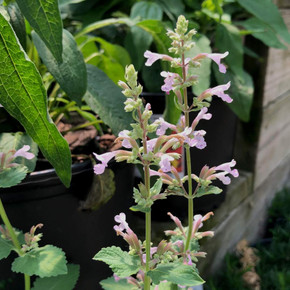
Excellent perennial, blooming machine and pollinator magnet, modest and great-sized plant. Perennial Plant of the Year 2021!
One of the exceptional plants that originate in Europe and thrive in American gardens and public landscaping.
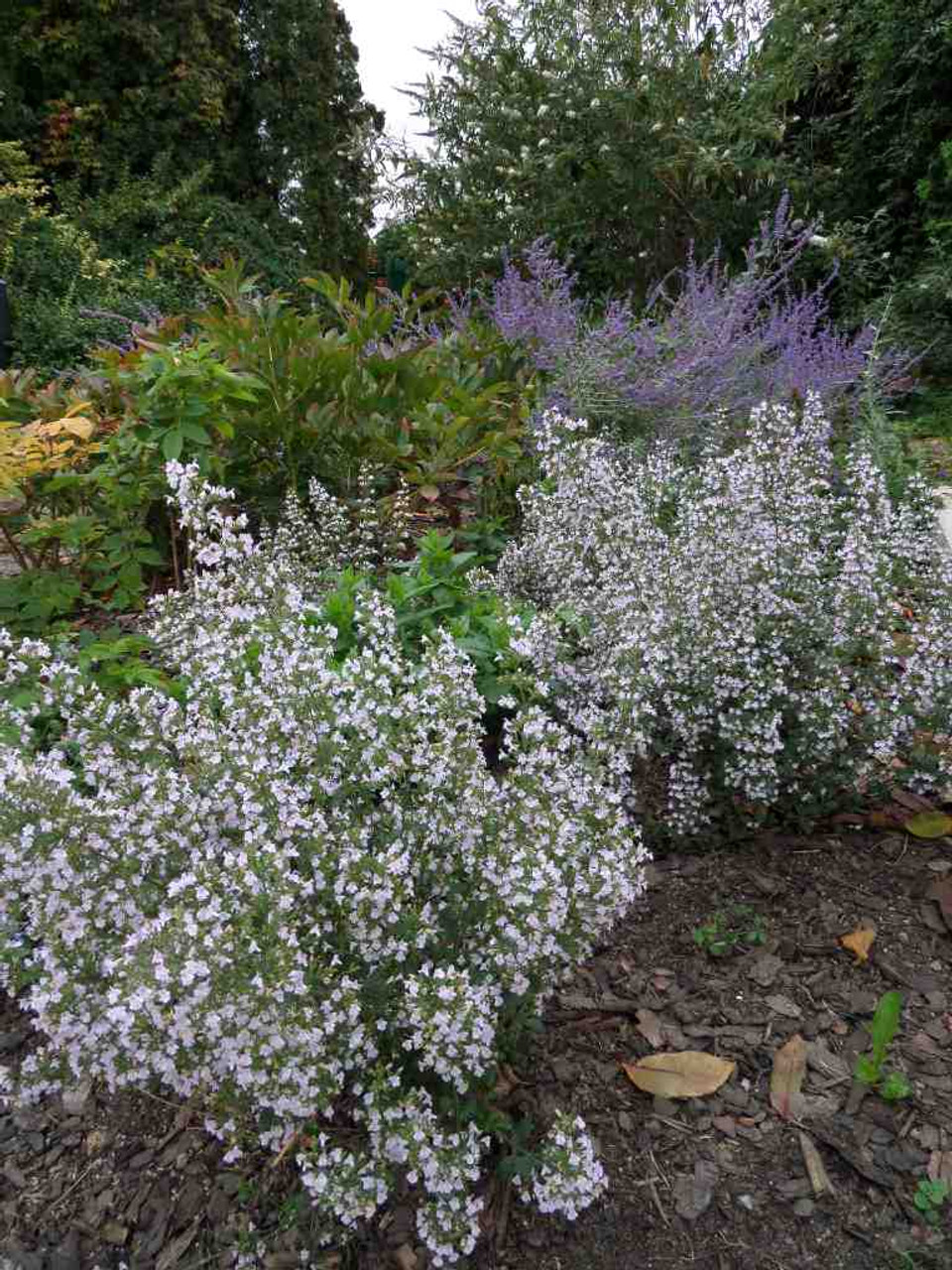
Perfect-sized mounds with somewhat groundcovering growth, and small white flowers from midsummer till frost! Highly attractive to many kinds of pollinators, including native bees, honey bees and butterflies. Its strong minty scent makes it a deer and rabbit resistant plant!
Superb perennial for the edges of a sunny border, or in the middle of the bed; it is more of a "filler plant" that wants to be combined with the more rough structures of medium-sized to medium/tall perennials, and fills the gaps and hides the "dry legs" (leaves) of taller plants.
Be aware - this is a sterile plant that doesn't self seed at all. Similar sterile cultivars are 'Montrose White' and 'Triumphator' (sometimes called 'White Triumphator') - those are also excellent and safe plants, and you can recognize them easily - they have glossy leaves without hair.
There are other seed cultivars on the market that can become problematic seeders, especially in drained soils or in Mediterranean climate - these all originate with Calamintha nepeta ssp. glandulosa (this one has hairy/fuzzy leaves, which is the main distinguishing characteristic) - and have names like 'White Cloud', 'Blue Cloud', 'Marvelette Blue', and Marvelette White'. They are still great plants, but they will seed up to a problematic point in the right conditions.
Blooming Time: from June until frost
Size: 1.5-2' tall and wide
USDA Zones: 4 to 9
Culture: Full sun is best; average soil, drained soil. Will tolerate a little shade during the day (half shade, partial sun), and will do fairly well in lighter dry shade, but the soil has to be well-drained and really dry
Moisture Needs: average to dry; will tolerate moist soil, but it must be drained! Seems to do well in heavier soil or clay that is not waterlogged and has a tendency to dry out (on slopes or in drier zone of tree roots)
Origin: Great Britain through Southern Europe
Black Walnut Tolerant: yes
Deer/Rabbit Resistant: yes / yes
Attracts Butterflies or Pollinators: yes / yes
Attracts Hummingbirds: no
Pot Size: square 3.5" x 4" deep perennial pot
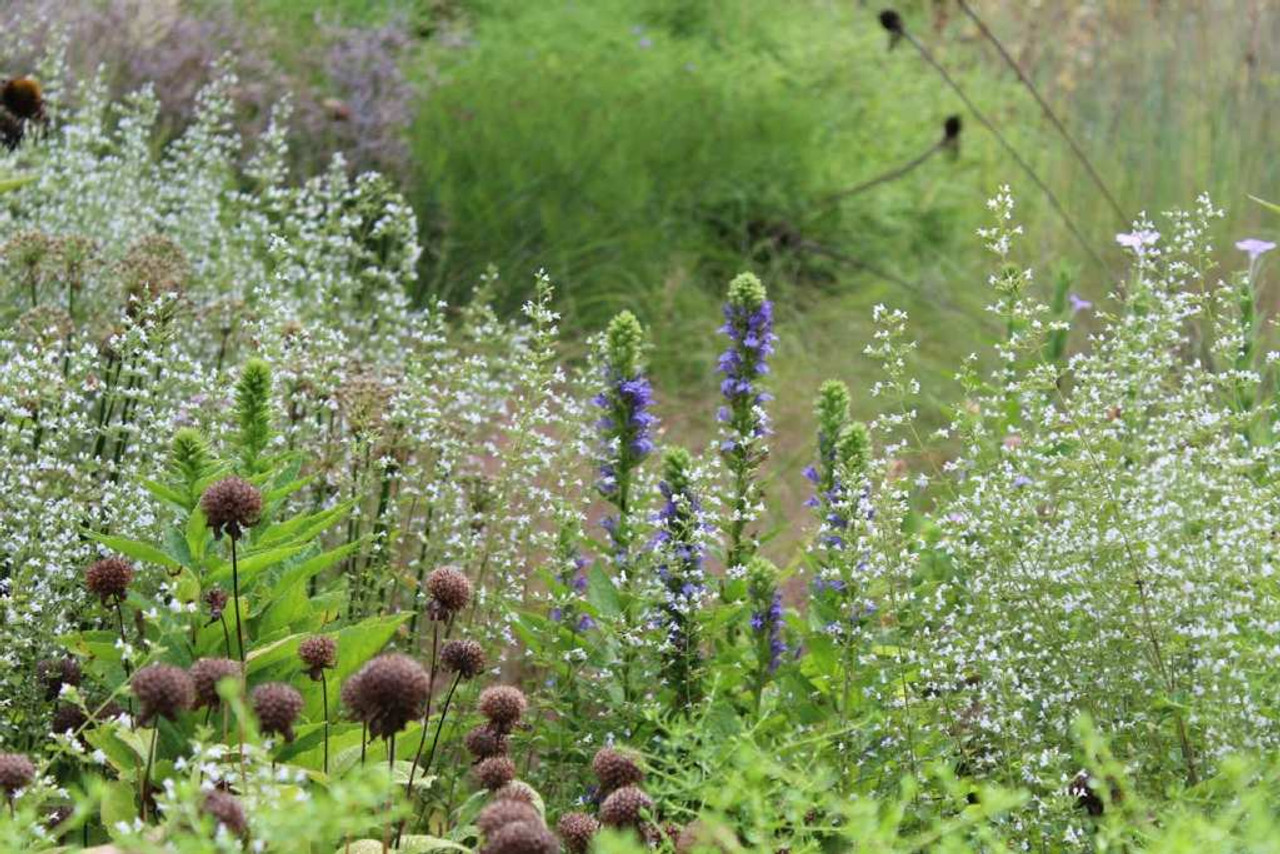
Plant Combinations: The best combinations are with Echinacea and Rudbeckia (R. missouriensis, R. hirta, R. 'American Goldrush', R. fulgida var. deamii), but it will look wonderful with Allium ('Summer Beauty', 'Millenium'), Aster oblongifolius, Geranium sanquineum, Helenium, Liatris aspera, Lobelia siphilitica, Monarda bradburiana, Penstemon, Solidago, and grasses like Schizachyrium scoparium, Sporobolus heterolepis or Sesleria autumnalis.
It also resonates nicely with similar, but different plants such as Agastache or Perovskia.
Because it flowers for an incredibly long season, it offers an amazing background for the dry seedheads of Echinacea, Helenium, Penstemon or Rudbeckia.
Picture Copyright: 1: US Perennials, LLC
2, 3, 4: Andrew Marrs Garden Design, Bloomington, IN
Excellent perennial, blooming machine and pollinator magnet, modest and great-sized plant. Perennial Plant of the Year 2021!
One of the exceptional plants that originate in Europe and thrive in American gardens and public landscaping.
Perfect-sized mounds with somewhat groundcovering growth, and small white flowers from midsummer till frost! Highly attractive to many kinds of pollinators, including native bees, honey bees and butterflies. Its strong minty scent makes it a deer and rabbit resistant plant!
Superb perennial for the edges of a sunny border, or in the middle of the bed; it is more of a "filler plant" that wants to be combined with the more rough structures of medium-sized to medium/tall perennials, and fills the gaps and hides the "dry legs" (leaves) of taller plants.
Be aware - this is a sterile plant that doesn't self seed at all. Similar sterile cultivars are 'Montrose White' and 'Triumphator' (sometimes called 'White Triumphator') - those are also excellent and safe plants, and you can recognize them easily - they have glossy leaves without hair.
There are other seed cultivars on the market that can become problematic seeders, especially in drained soils or in Mediterranean climate - these all originate with Calamintha nepeta ssp. glandulosa (this one has hairy/fuzzy leaves, which is the main distinguishing characteristic) - and have names like 'White Cloud', 'Blue Cloud', 'Marvelette Blue', and Marvelette White'. They are still great plants, but they will seed up to a problematic point in the right conditions.
Blooming Time: from June until frost
Size: 1.5-2' tall and wide
USDA Zones: 4 to 9
Culture: Full sun is best; average soil, drained soil. Will tolerate a little shade during the day (half shade, partial sun), and will do fairly well in lighter dry shade, but the soil has to be well-drained and really dry
Moisture Needs: average to dry; will tolerate moist soil, but it must be drained! Seems to do well in heavier soil or clay that is not waterlogged and has a tendency to dry out (on slopes or in drier zone of tree roots)
Origin: Great Britain through Southern Europe
Black Walnut Tolerant: yes
Deer/Rabbit Resistant: yes / yes
Attracts Butterflies or Pollinators: yes / yes
Attracts Hummingbirds: no
Pot Size: square 3.5" x 4" deep perennial pot
Plant Combinations: The best combinations are with Echinacea and Rudbeckia (R. missouriensis, R. hirta, R. 'American Goldrush', R. fulgida var. deamii), but it will look wonderful with Allium ('Summer Beauty', 'Millenium'), Aster oblongifolius, Geranium sanquineum, Helenium, Liatris aspera, Lobelia siphilitica, Monarda bradburiana, Penstemon, Solidago, and grasses like Schizachyrium scoparium, Sporobolus heterolepis or Sesleria autumnalis.
It also resonates nicely with similar, but different plants such as Agastache or Perovskia.
Because it flowers for an incredibly long season, it offers an amazing background for the dry seedheads of Echinacea, Helenium, Penstemon or Rudbeckia.
Picture Copyright: 1: US Perennials, LLC
2, 3, 4: Andrew Marrs Garden Design, Bloomington, IN
This was my second order for the calamints. Although the flower color is more violet than white (maybe because it's Fall already?), this is a cute plant that I had to get more of. Good size with multiple branches and well developed roots.
This was a Fall purchase that arrived still in bloom. The flowers aren't pure white but rather a pale violet from a distance due to beautiful purple streaking. Violet isn't really my color, but this is cute, and you can't beat the long blooming period so I ordered two more.