

Sold out

Zoom the image with the mouse
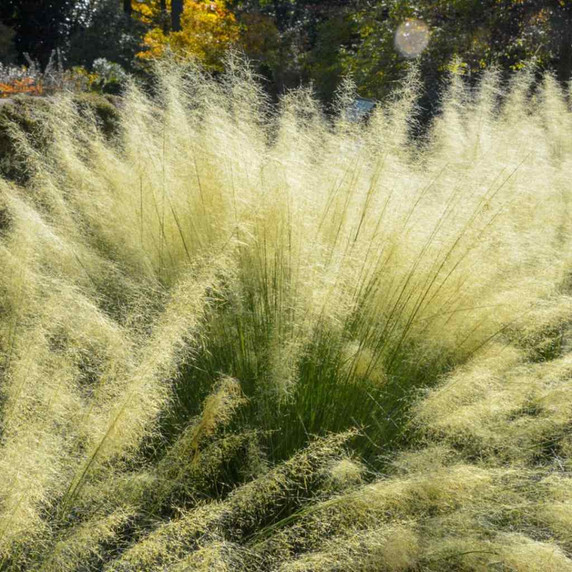
Muhlenbergia capillaris 'White Cloud' - PINK MUHLYGRASS 'WHITE CLOUD'
Product Code:
MUH-WHI-CLO
Shipping:
Calculated at Checkout
$9.99
White fluffy plumes in late summer to fall, persisting into winter months.
It's larger, more upright and later blooming than the species of M. capillaris (some authors say it is M. sericea) and blooms a little later.
Excellent for deep south and coastal gardens!
Blooming Time: September to November (till winter)
Size: mounds 4’ tall and wide (3’ without flowers)
USDA Zones: 6b to 10
Culture: from full sun to half shade. Adaptable to many different soils, tolerates temporary flooding, acid and alkaline pH, excessive wind and moderate salinity. Does best in full sun and drained soils with some gravel or rock material, as well as poor soils. It will not grow in waterlogged soil and winter wetness.
Moisture Needs: dry, medium-dry, medium (in the south even medium-moist)
Origin: Introduced by the Superior Trees Nursery of Lee, Florida. The species of M. capillaris is native grass to Eastern/Central United States, from Massachusetts to Florida, open sandy or rocky woodlands, pine barrens, prairies, sandy dunes, savannas with acidic or calcareous sandy or gravelly soil. However some authors say 'White Cloud' derives from anther species = Muhlenbergia sericea, which is native to southern states, see the BONAP distribution map.
Deer/Rabbit Resistant: yes / yes
Attracts Butterflies or Pollinators: yes - butterflies, offers safe habitat for insects and wildlife
Attracts Hummingbirds: no, but small birds feed on seeds; provides nesting material
Pot Size: 3.5" x 4" perennial pot (1.22 pt/580 ml)
Picture copyright: Mt. Cuba Center
Plant combinations: Public plantings, road and sidewalks, larger road islands, highways, as well as flower borders, natural plantings, prairie style plantings, naturalization, cottage gardens or any private gardens. It looks the best in groups or mass plantings, and it's good to combine it with other plants, because it stays "invisible“ for most of the season and creates only small, low-growing loose clumps that are of little interest.
Add any spring flowers that grow from bulbs - tulips, crocuses, daffodils, or early flowering perennials like Euphorbia, Iris x germanica, Paeonia. Stunning fall combinations are with Amsonia hubrichtii, fall Asters, fall blooming Helianthus, Sedum telephium (’Autumn Joy and other cultivars), other grasses like Calamagrostis x acutiflora ‘Karl Foerster‘, Pennisetum alopecuroides or autumn flowering bulb of Colchicum autumnale.
Nice perennial combinations could be with the already-dry seed heads of Echinacea pallida, Echinacea purpurea, Liatris aspera, Monarda bradburiana, Monarda fistulosa, Monarda punctata, Rudbeckia fulgida, or with the big leaves of Silphium.
Muhlenbergia capillaris 'White Cloud' - PINK MUHLYGRASS 'WHITE CLOUD'
$9.99
Details
White fluffy plumes in late summer to fall, persisting into winter months.
It's larger, more upright and later blooming than the species of M. capillaris (some authors say it is M. sericea) and blooms a little later.
Excellent for deep south and coastal gardens!
Blooming Time: September to November (till winter)
Size: mounds 4’ tall and wide (3’ without flowers)
USDA Zones: 6b to 10
Culture: from full sun to half shade. Adaptable to many different soils, tolerates temporary flooding, acid and alkaline pH, excessive wind and moderate salinity. Does best in full sun and drained soils with some gravel or rock material, as well as poor soils. It will not grow in waterlogged soil and winter wetness.
Moisture Needs: dry, medium-dry, medium (in the south even medium-moist)
Origin: Introduced by the Superior Trees Nursery of Lee, Florida. The species of M. capillaris is native grass to Eastern/Central United States, from Massachusetts to Florida, open sandy or rocky woodlands, pine barrens, prairies, sandy dunes, savannas with acidic or calcareous sandy or gravelly soil. However some authors say 'White Cloud' derives from anther species = Muhlenbergia sericea, which is native to southern states, see the BONAP distribution map.
Deer/Rabbit Resistant: yes / yes
Attracts Butterflies or Pollinators: yes - butterflies, offers safe habitat for insects and wildlife
Attracts Hummingbirds: no, but small birds feed on seeds; provides nesting material
Pot Size: 3.5" x 4" perennial pot (1.22 pt/580 ml)
Picture copyright: Mt. Cuba Center
Plant combinations: Public plantings, road and sidewalks, larger road islands, highways, as well as flower borders, natural plantings, prairie style plantings, naturalization, cottage gardens or any private gardens. It looks the best in groups or mass plantings, and it's good to combine it with other plants, because it stays "invisible“ for most of the season and creates only small, low-growing loose clumps that are of little interest.
Add any spring flowers that grow from bulbs - tulips, crocuses, daffodils, or early flowering perennials like Euphorbia, Iris x germanica, Paeonia. Stunning fall combinations are with Amsonia hubrichtii, fall Asters, fall blooming Helianthus, Sedum telephium (’Autumn Joy and other cultivars), other grasses like Calamagrostis x acutiflora ‘Karl Foerster‘, Pennisetum alopecuroides or autumn flowering bulb of Colchicum autumnale.
Nice perennial combinations could be with the already-dry seed heads of Echinacea pallida, Echinacea purpurea, Liatris aspera, Monarda bradburiana, Monarda fistulosa, Monarda punctata, Rudbeckia fulgida, or with the big leaves of Silphium.


Customer Reviews

Shipped With Care
Secure packaging for safe delivery
Nursery Grown Plants
Healthy, well-rooted perennials
Curated Plant Selection
Reliable performers for real gardens