


Zoom the image with the mouse
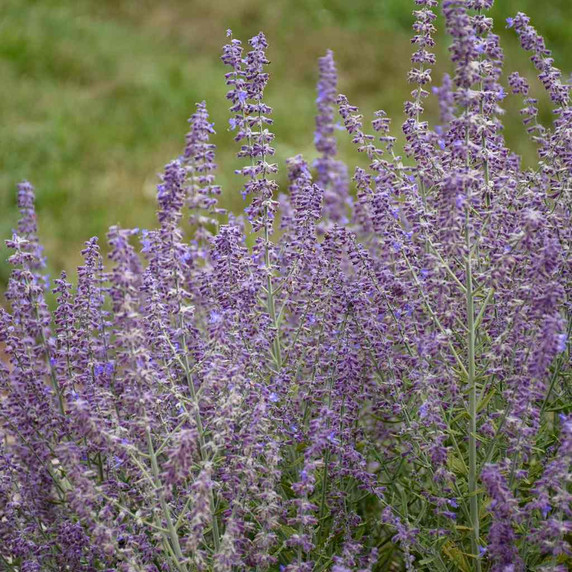
Perovskia 'Sage Advice' - RUSSIAN SAGE 'SAGE ADVICE'
Product Code:
PER-SAG-ADV
Shipping:
Calculated at Checkout
$11.99
'Sage Advice' = darkest purple shade of Russian Sage to date. Rich lavender purple flowers, darker calyxes, dissected (but slightly wider leaves).
Strictly upright dense shape, that doesn't open up, good garden size and hardy one! (zone 4)
Aromatic leaves deter herbivores, but flowers attract bees and hummingbirds.
Later blooming long-lived perennial, with silvery look throughout the season.
Blooming Time: starts in mid summer - usually July, with the peak July and August, continues to early fall
Size: 32-36" tall x 28-32" wide
USDA Zones: Hardy in zones 4-9.
Culture: Sun, partial sun are the best (plants will grow well in half shade too, but the shape may be more irregular). Average soils, adaptable to many soil types, clay tolerant, but soil has to be medium-moist, medium-dry to dry. Otherwise perfect for leaner, poorer rocky soils, sandy soils, shallower soils, dry and drained soils. Any pH.
Moisture Needs: Drained soils are the best and means long-lived plants. Don't plant in waterlogged soil or clay. Tolerates hot and dry spots and humidity.
Origin: introduced by the Walters Gardens, plant patented under number PP33310, propagation is prohibited. It is also a Proven Winner Plant. Perovskia is native to Eastern Russia, Western China, Himalaya
Deer/Rabbit Resistant: yes/yes (due to it's specific aromatic leaves and stems it's very rarely browsed by deer or rabbits)
Attracts Butterflies or Pollinators: occasionally butterflies/yes
Attracts Hummingbirds: yes
Pot Size: round Proven Winner pint 4.25" x 5" deep pot
Plant Combinations: Private gardens or public spaces. Great, non-invasive, reliable and long-lived perennial. Excellent in groups, however in smaller gardens can be planted as single plant.
Great companions are plants with yellow daisy-shaped plants, that contrast in structure and color - Coreopsis, Rudbeckia, orange or yellow cultivars of Echinacea purpurea, also orange or yellow cultivars of Achillea (yarrow) and Solidago. It can also be planted with yellow flowering daylilies (Hemerocallis) or daysies (Leucanthemum maximum).
Other good companions are for example any Echinacea, Eryngium, Gaura, Phlomis russeliana, Monarda fistulosa, Kniphophia, Sedum telephium and of course many grasses (Bouteloa, Eragrostis, Panicum, Muhlenbergia, Stipa).
Picture copyright : Walters Gardens

Perovskia 'Sage Advice' - RUSSIAN SAGE 'SAGE ADVICE'
$11.99
Details
'Sage Advice' = darkest purple shade of Russian Sage to date. Rich lavender purple flowers, darker calyxes, dissected (but slightly wider leaves).
Strictly upright dense shape, that doesn't open up, good garden size and hardy one! (zone 4)
Aromatic leaves deter herbivores, but flowers attract bees and hummingbirds.
Later blooming long-lived perennial, with silvery look throughout the season.
Blooming Time: starts in mid summer - usually July, with the peak July and August, continues to early fall
Size: 32-36" tall x 28-32" wide
USDA Zones: Hardy in zones 4-9.
Culture: Sun, partial sun are the best (plants will grow well in half shade too, but the shape may be more irregular). Average soils, adaptable to many soil types, clay tolerant, but soil has to be medium-moist, medium-dry to dry. Otherwise perfect for leaner, poorer rocky soils, sandy soils, shallower soils, dry and drained soils. Any pH.
Moisture Needs: Drained soils are the best and means long-lived plants. Don't plant in waterlogged soil or clay. Tolerates hot and dry spots and humidity.
Origin: introduced by the Walters Gardens, plant patented under number PP33310, propagation is prohibited. It is also a Proven Winner Plant. Perovskia is native to Eastern Russia, Western China, Himalaya
Deer/Rabbit Resistant: yes/yes (due to it's specific aromatic leaves and stems it's very rarely browsed by deer or rabbits)
Attracts Butterflies or Pollinators: occasionally butterflies/yes
Attracts Hummingbirds: yes
Pot Size: round Proven Winner pint 4.25" x 5" deep pot
Plant Combinations: Private gardens or public spaces. Great, non-invasive, reliable and long-lived perennial. Excellent in groups, however in smaller gardens can be planted as single plant.
Great companions are plants with yellow daisy-shaped plants, that contrast in structure and color - Coreopsis, Rudbeckia, orange or yellow cultivars of Echinacea purpurea, also orange or yellow cultivars of Achillea (yarrow) and Solidago. It can also be planted with yellow flowering daylilies (Hemerocallis) or daysies (Leucanthemum maximum).
Other good companions are for example any Echinacea, Eryngium, Gaura, Phlomis russeliana, Monarda fistulosa, Kniphophia, Sedum telephium and of course many grasses (Bouteloa, Eragrostis, Panicum, Muhlenbergia, Stipa).
Picture copyright : Walters Gardens


Customer Reviews

Shipped With Care
Secure packaging for safe delivery
Nursery Grown Plants
Healthy, well-rooted perennials
Curated Plant Selection
Reliable performers for real gardens