


Zoom the image with the mouse
Phlox paniculata 'Sunset Coral' - GARDEN PHLOX 'SUNSET CORAL'
Product Code:
PHL-SUN-COR
Shipping:
Calculated at Checkout
$9.99
Mildew resistant cultivar and tolerant to more humid climates.
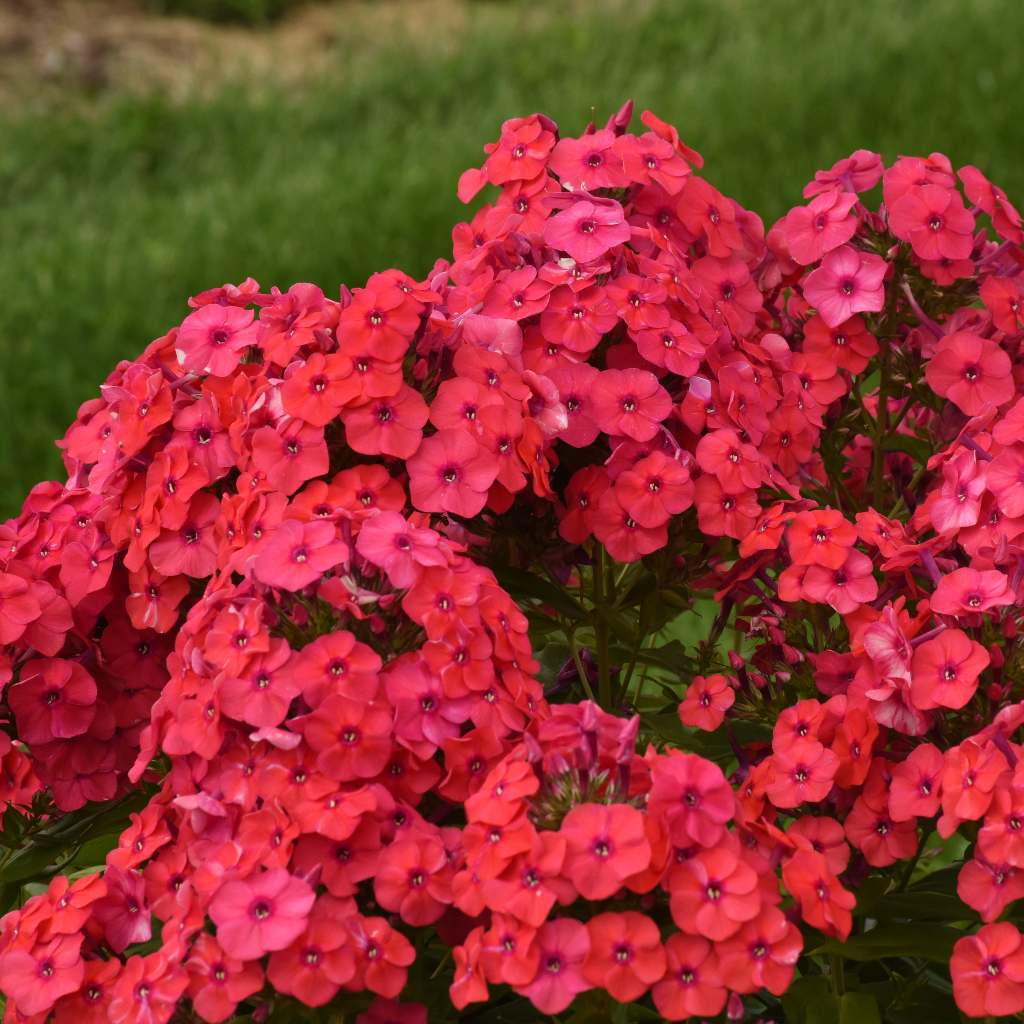
Long flowering season, coral pink flowers with orange tinge.
Blooming Time: mid-July to the beginning of September, peaks at the end of July
Size: 30-32" tall x 30-32" wide, spacing 18-20", moderately fast growing
USDA Zones: 3 to 9
Culture: full sun, half shade. Grows well in average garden soil, preferably not fertilized too much. Loam, clay, average garden soils amended with some organic matter
Moisture Needs: medium, medium-moist, medium-dry
Origin: selected by Walters Gardens, member of LUMINARY® Collection, plant is patented under CPBRAF PP35222
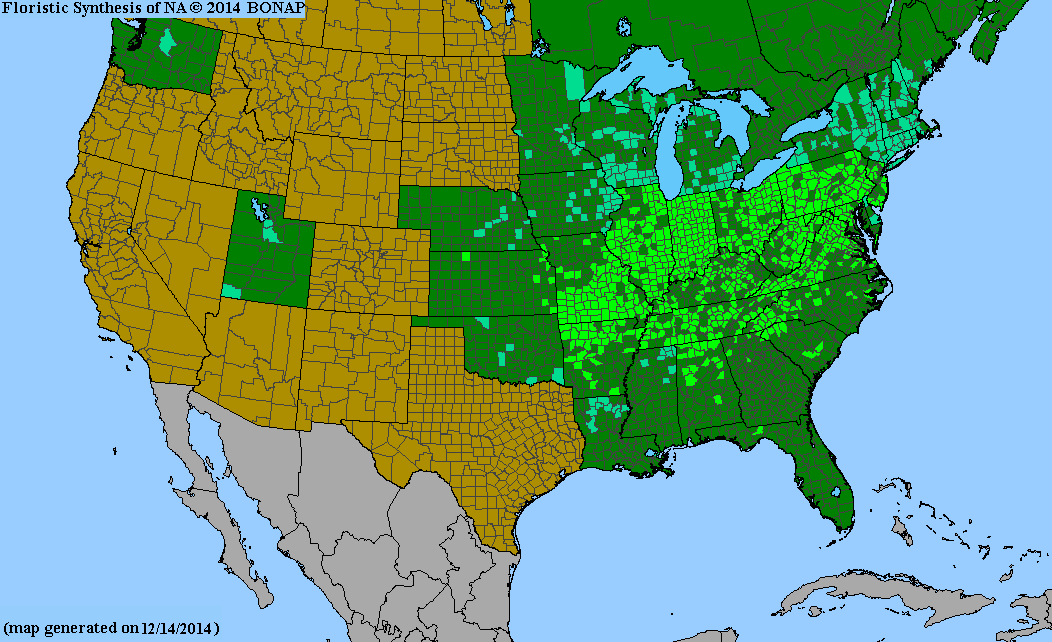
The wild form of Phlox paniculata is native to many states of USA and Canada, see the distribution BONAP map.
Deer/Rabbit Resistant: no / no (needs some protection)
Attracts Butterflies or Pollinators: butterflies, some bees
Attracts Hummingbirds: yes
Pot Size: round Proven Winner quart pot 4.25"x5" deep
Plant combinations: Looks best in flower beds, both private and public landscaping projects, cottage gardens, sunnier woodland edges.
Beautiful combinations with other perennials include Agastache, Coreopsis (C. tripteris and cultivars, C. verticillata, C. palustris 'Summer Sunshine'), Echinacea (E. purpurea and it's nativars, E. tennesseensis, Eupatorium, Filipendula rubra ‘Venusta‘ or wild form, Helenium, Monarda didyma, other varieties of Phlox paniculata, Rudbeckia ( R. maxima, fulgida, laciniata), Veronicastrum or cultivars of grass Panicum virgatum.
Good non-native perennial combinations include taller Astilbe, Dephinium, taller Geranium, Hemerocallis, Irises, Leucanthemum superbum, Lilium, Persicaria amplexicaulis, Sanquisorba, Scabiosa caucasica or Thalictrum.
Picture copyright: Walters Gardens
Phlox paniculata 'Sunset Coral' - GARDEN PHLOX 'SUNSET CORAL'
$9.99
Details
Mildew resistant cultivar and tolerant to more humid climates.
Long flowering season, coral pink flowers with orange tinge.
Blooming Time: mid-July to the beginning of September, peaks at the end of July
Size: 30-32" tall x 30-32" wide, spacing 18-20", moderately fast growing
USDA Zones: 3 to 9
Culture: full sun, half shade. Grows well in average garden soil, preferably not fertilized too much. Loam, clay, average garden soils amended with some organic matter
Moisture Needs: medium, medium-moist, medium-dry
Origin: selected by Walters Gardens, member of LUMINARY® Collection, plant is patented under CPBRAF PP35222
The wild form of Phlox paniculata is native to many states of USA and Canada, see the distribution BONAP map.
Deer/Rabbit Resistant: no / no (needs some protection)
Attracts Butterflies or Pollinators: butterflies, some bees
Attracts Hummingbirds: yes
Pot Size: round Proven Winner quart pot 4.25"x5" deep
Plant combinations: Looks best in flower beds, both private and public landscaping projects, cottage gardens, sunnier woodland edges.
Beautiful combinations with other perennials include Agastache, Coreopsis (C. tripteris and cultivars, C. verticillata, C. palustris 'Summer Sunshine'), Echinacea (E. purpurea and it's nativars, E. tennesseensis, Eupatorium, Filipendula rubra ‘Venusta‘ or wild form, Helenium, Monarda didyma, other varieties of Phlox paniculata, Rudbeckia ( R. maxima, fulgida, laciniata), Veronicastrum or cultivars of grass Panicum virgatum.
Good non-native perennial combinations include taller Astilbe, Dephinium, taller Geranium, Hemerocallis, Irises, Leucanthemum superbum, Lilium, Persicaria amplexicaulis, Sanquisorba, Scabiosa caucasica or Thalictrum.
Picture copyright: Walters Gardens


Customer Reviews

Shipped With Care
Secure packaging for safe delivery
Nursery Grown Plants
Healthy, well-rooted perennials
Curated Plant Selection
Reliable performers for real gardens