


Zoom the image with the mouse
Phlox subulata 'Amazing Grace' - CREEPING PHLOX 'AMAZING GRACE'
Product Code:
PHL-AMA-GRA
Shipping:
Calculated at Checkout
$8.99
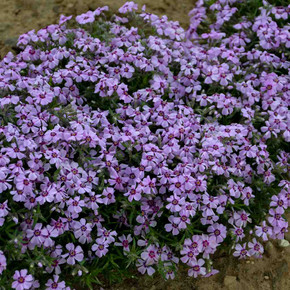
Cultivar with white flowers and a dash of red in the center.
Moderately spreading.
Blooming time : usually for a couple weeks in April/May (in cooler region or in cool spring longer)
Size : 4” tall x 12-18" wide mat
USDA zones : 3 to 9
Culture : full sun, half shade, dappled sun, organic, gravelly, rocky, sandy soils, poor and shallow soils, xeriscape. Adaptable plant, but drainage is essential!
Moisture Needs : dry, medium-dry, soil has to be drained
Origin : garden origin. The species of Phlox subulata is native wildflower to states from Michigan, Ontario and New York south to Tennessee and mainly in the Appalachians to North Carolina. Often found on dry, rocky or sandy places, open woodland areas, limestone barrens and slopes. See the BONAP distribution map.
Deer/rabbit resistant : yes / yes
Pot size : square 3.5" x 4" deep perennial pot
Picture copyright : US Perennials
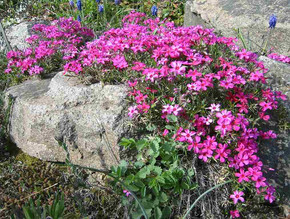
Plant combinations : For the edges, along patios and paths, rock gardens, trough gardens, crevice gardens, slopes, in combination with rocks. Best combined with smaller to medium sized perennial – from native choose shorter Agastache, Anemone patens, Antennaria, Asclepias tuberosa, dwarf Baptisia, Campanula rotundifolia, Coreopsis, Cunila origanoides, Dalea, shorter Echinacea, Gaillardia, Gaura (shorter cultivars), smaller cultivars of Heuchera (in cooler regions), Penstemons, Ruellia humilis, shorter cultivars of Stokesia, Verbena canadensis, native grasses like Boutelloa gracilis, Koeleria cristata, Sporobolus heterolepis 'Tara' (or non-native Sesleria).
And non-native perennials like Achillea, summer blooming Allium, shorter Aquilegia, Armeria, Calamintha, Campanula, Cerastium, Delosperma, Dianthus, Geranium (G. sanquineum, G. dalmaticum and x cantabrigiense, G. cinereum, G. endresii, G. renardii), Gypsohila, Iris (dwarf and miniature bearded Iris), shorter Lavandula, shorter Nepeta, Origanum, shorter Platycodon, Satureja, Salvia, Sedum, Sempervivum, low Stachys, Scabiosa columbaria, Thymus, lower Veronica and many spring bulbs.

Phlox subulata 'Amazing Grace' - CREEPING PHLOX 'AMAZING GRACE'
$8.99
Details
Cultivar with white flowers and a dash of red in the center.
Moderately spreading.
Blooming time : usually for a couple weeks in April/May (in cooler region or in cool spring longer)
Size : 4” tall x 12-18" wide mat
USDA zones : 3 to 9
Culture : full sun, half shade, dappled sun, organic, gravelly, rocky, sandy soils, poor and shallow soils, xeriscape. Adaptable plant, but drainage is essential!
Moisture Needs : dry, medium-dry, soil has to be drained
Origin : garden origin. The species of Phlox subulata is native wildflower to states from Michigan, Ontario and New York south to Tennessee and mainly in the Appalachians to North Carolina. Often found on dry, rocky or sandy places, open woodland areas, limestone barrens and slopes. See the BONAP distribution map.
Deer/rabbit resistant : yes / yes
Pot size : square 3.5" x 4" deep perennial pot
Picture copyright : US Perennials
Plant combinations : For the edges, along patios and paths, rock gardens, trough gardens, crevice gardens, slopes, in combination with rocks. Best combined with smaller to medium sized perennial – from native choose shorter Agastache, Anemone patens, Antennaria, Asclepias tuberosa, dwarf Baptisia, Campanula rotundifolia, Coreopsis, Cunila origanoides, Dalea, shorter Echinacea, Gaillardia, Gaura (shorter cultivars), smaller cultivars of Heuchera (in cooler regions), Penstemons, Ruellia humilis, shorter cultivars of Stokesia, Verbena canadensis, native grasses like Boutelloa gracilis, Koeleria cristata, Sporobolus heterolepis 'Tara' (or non-native Sesleria).
And non-native perennials like Achillea, summer blooming Allium, shorter Aquilegia, Armeria, Calamintha, Campanula, Cerastium, Delosperma, Dianthus, Geranium (G. sanquineum, G. dalmaticum and x cantabrigiense, G. cinereum, G. endresii, G. renardii), Gypsohila, Iris (dwarf and miniature bearded Iris), shorter Lavandula, shorter Nepeta, Origanum, shorter Platycodon, Satureja, Salvia, Sedum, Sempervivum, low Stachys, Scabiosa columbaria, Thymus, lower Veronica and many spring bulbs.



Customer Reviews

Shipped With Care
Secure packaging for safe delivery
Nursery Grown Plants
Healthy, well-rooted perennials
Curated Plant Selection
Reliable performers for real gardens