

New

Zoom the image with the mouse
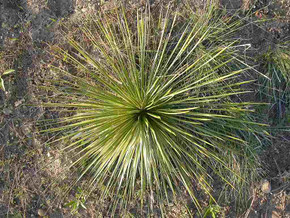
Yucca rostrata 'Sapphire Skies' - BEAKED YUCCA 'SAPPHIRE SKIES''
Product Code:
YUC-SAP-SKI
Shipping:
Calculated at Checkout
$14.99
Evergreen structural perennial with powdery gray-blue leaves arranged in globe-like rosette on the tops of the stems (trunked yucca).
Full sun, dry and drained soils.
Blooming Time: May to August
Size: 4-5' tall x 3-3.5' wide, older plants up to 8'
USDA Zones: 5b-10b
Culture: full sun, half sun, requires sharp drainage - drained soils (gritty, rocky, sandy).
Moisture Needs: dry, medium-dry, drought tolerant, but may appreciate occasional moisture in summer
Origin: native to the Big Bend region of southern Texas and northern Mexico. Selected by Sean Hogan from seed collected in northern Mexico around 1990. Selected for the most powder blue form.
Black walnut tolerant: possibly yes
Deer/Rabbit Resistant: yes / yes
Attracts Butterflies or Pollinators: yucca moths are the main pollinators
Attracts Hummingbirds: yes
Pot Size: square 3.5" x 5" deep pot
Plant combinations: Naturally looks very good with rocks. Dry flower beds, exotic, xeric, large rock gardens, sloped and terrased gardens, in large containers. Avoid planting directly atthe path (even the leves are less spiky than other yuccas). The best combinations are with smaller-leaved, smaller, groundcovering plants, succulents and fine-leaved grasses that support the majestic and unusual look. But looks well even with larger plants.
Good companions can be Artemisia, Agastache, Catanache caerulea, Eriogonum, Eryngium, Euphorbia, Gaillardia, Gypsohilla repens, Nepeta, Lavandula, Linum lewisii, Opuntia, Phlox subulata and other creeping phloxes, Scabiosa, various Salvia, Veronica. But can be combined with many plants on the average to drought tolerant scale like Achillea, shorter Aster, Echinacea, Paeonia, bearded Iris, Perovskia, Platycodon, Sedum and medium to taller grasses (Muhlenbergia, shorter Panicum, Pennisetum, Sporobolus, Schizachyrium).
Picture copyright: Raffi Kojian, http://Gardenology.org

Yucca rostrata 'Sapphire Skies' - BEAKED YUCCA 'SAPPHIRE SKIES''
$14.99
Details
Evergreen structural perennial with powdery gray-blue leaves arranged in globe-like rosette on the tops of the stems (trunked yucca).
Full sun, dry and drained soils.
Blooming Time: May to August
Size: 4-5' tall x 3-3.5' wide, older plants up to 8'
USDA Zones: 5b-10b
Culture: full sun, half sun, requires sharp drainage - drained soils (gritty, rocky, sandy).
Moisture Needs: dry, medium-dry, drought tolerant, but may appreciate occasional moisture in summer
Origin: native to the Big Bend region of southern Texas and northern Mexico. Selected by Sean Hogan from seed collected in northern Mexico around 1990. Selected for the most powder blue form.
Black walnut tolerant: possibly yes
Deer/Rabbit Resistant: yes / yes
Attracts Butterflies or Pollinators: yucca moths are the main pollinators
Attracts Hummingbirds: yes
Pot Size: square 3.5" x 5" deep pot
Plant combinations: Naturally looks very good with rocks. Dry flower beds, exotic, xeric, large rock gardens, sloped and terrased gardens, in large containers. Avoid planting directly atthe path (even the leves are less spiky than other yuccas). The best combinations are with smaller-leaved, smaller, groundcovering plants, succulents and fine-leaved grasses that support the majestic and unusual look. But looks well even with larger plants.
Good companions can be Artemisia, Agastache, Catanache caerulea, Eriogonum, Eryngium, Euphorbia, Gaillardia, Gypsohilla repens, Nepeta, Lavandula, Linum lewisii, Opuntia, Phlox subulata and other creeping phloxes, Scabiosa, various Salvia, Veronica. But can be combined with many plants on the average to drought tolerant scale like Achillea, shorter Aster, Echinacea, Paeonia, bearded Iris, Perovskia, Platycodon, Sedum and medium to taller grasses (Muhlenbergia, shorter Panicum, Pennisetum, Sporobolus, Schizachyrium).
Picture copyright: Raffi Kojian, http://Gardenology.org


Customer Reviews

Shipped With Care
Secure packaging for safe delivery
Nursery Grown Plants
Healthy, well-rooted perennials
Curated Plant Selection
Reliable performers for real gardens