
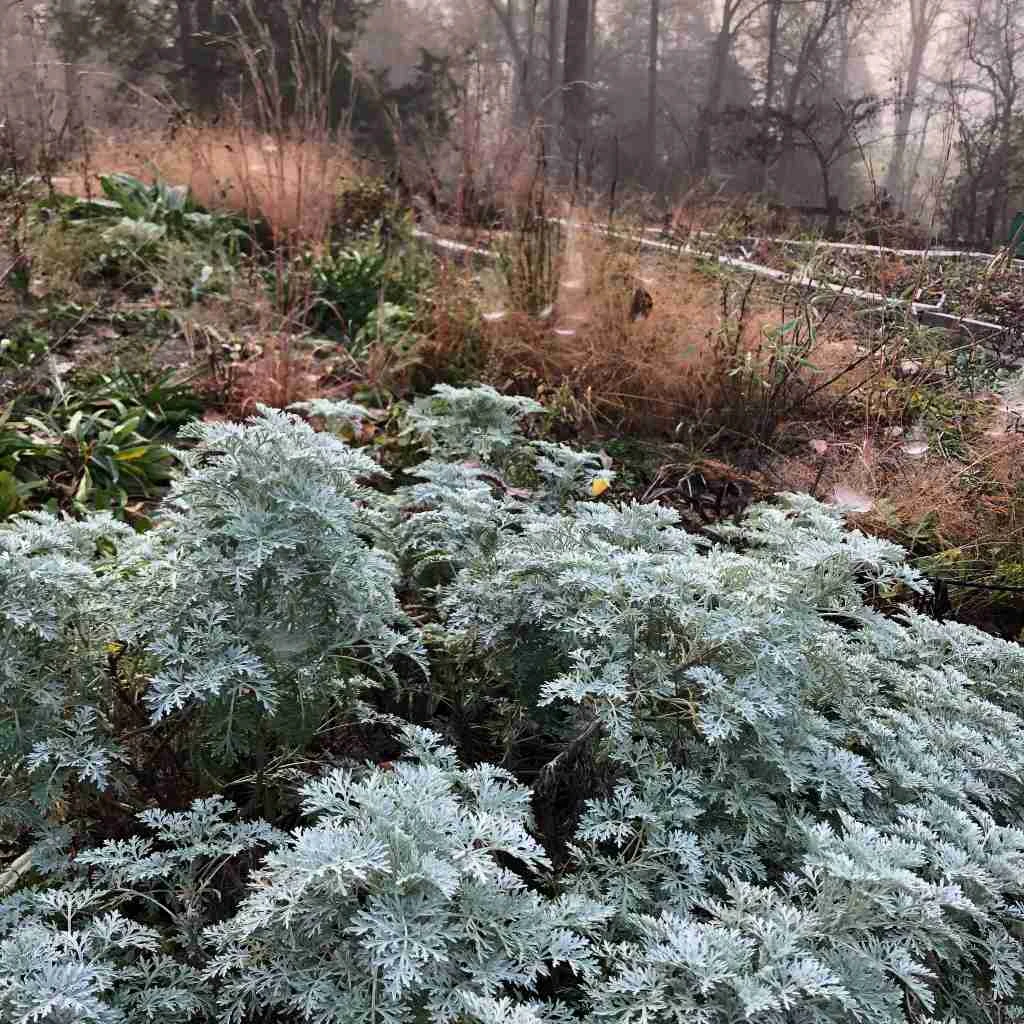

Artemisia x 'Powis Castle' - WORMWOOD 'POWIS CASTLE'
Tough and very hardy aromatic perennial for sunny and dry gardens. Forms low clumps and doesn't spread.
Attractive, aromatic, fern-like silver leaves deter many insects, mosquitos, but also deer and rabbits.
Plant is bitter (and poisonous) and leaves can be used in natural repelent, potpouri, or repelents.
In too rich and too moist soil is short-lived.
Blooming Time: late summer, but tiny yellow flowers have little ornamental value
Size: 2-3' tall and wide. Slowly spreads wide and in ideal conditions will form wide clumps
USDA Zones: 6 to 9, heat zone 8-11
Culture: full sun, half sun, average to well-drained soils. Heat and drought tolerant. Drained and leaner soils are preferred (sandy, rocky, gritty, gravelly) since they increase the longevity. In moist or wet soils, the plants are susceptible to root rot
Moisture Needs: dry to medium
Origin: most likely a cross of two European species - Artemisia arborescens (Tree Wormwood, Mediterranean) and Artemisia absinthium (Absinth Wormwood, most of Europe). Was introduced in 1972 from the National Trust’s Powis Castle in Wales. Award of Garden Merit by RHS (Royal Horticultural Society, Britain).
Deer/Rabbit Resistant: yes / yes
Attracts Butterflies or Pollinators: no/no
Attracts Hummingbirds: no
Pot Size: 3.5" x 4" perennial pot
Plant combinations: Best for herb gardens, xeriscape, dry soil plantings, large rock gardens, shallow soil and slopes, aove retaining walls, or as a unique soft texture accent.
Can be combined with many perennials with similar needs (sun and average, or drier (or leaner) soils). Looks good combined with rough and more bold structure. Good companions can be summer blooming perennial Alliums, Amsonia, Aster novae-angliae cultivars, Asclepias tuberosa, shorter cultivars of Baptisia, Echinacea (hybrids, E. angustifolia, pallida, paradoxa, tennesseensis), Eryngiums, Gaura, Rudbeckia, bearded Iris, Monarda bradburiana, Nepeta, Salvia, Sedum and many others.
Picture copyright: US Perennials

Artemisia x 'Powis Castle' - WORMWOOD 'POWIS CASTLE'

Tough and very hardy aromatic perennial for sunny and dry gardens. Forms low clumps and doesn't spread.
Attractive, aromatic, fern-like silver leaves deter many insects, mosquitos, but also deer and rabbits.
Plant is bitter (and poisonous) and leaves can be used in natural repelent, potpouri, or repelents.
In too rich and too moist soil is short-lived.
Blooming Time: late summer, but tiny yellow flowers have little ornamental value
Size: 2-3' tall and wide. Slowly spreads wide and in ideal conditions will form wide clumps
USDA Zones: 6 to 9, heat zone 8-11
Culture: full sun, half sun, average to well-drained soils. Heat and drought tolerant. Drained and leaner soils are preferred (sandy, rocky, gritty, gravelly) since they increase the longevity. In moist or wet soils, the plants are susceptible to root rot
Moisture Needs: dry to medium
Origin: most likely a cross of two European species - Artemisia arborescens (Tree Wormwood, Mediterranean) and Artemisia absinthium (Absinth Wormwood, most of Europe). Was introduced in 1972 from the National Trust’s Powis Castle in Wales. Award of Garden Merit by RHS (Royal Horticultural Society, Britain).
Deer/Rabbit Resistant: yes / yes
Attracts Butterflies or Pollinators: no/no
Attracts Hummingbirds: no
Pot Size: 3.5" x 4" perennial pot
Plant combinations: Best for herb gardens, xeriscape, dry soil plantings, large rock gardens, shallow soil and slopes, aove retaining walls, or as a unique soft texture accent.
Can be combined with many perennials with similar needs (sun and average, or drier (or leaner) soils). Looks good combined with rough and more bold structure. Good companions can be summer blooming perennial Alliums, Amsonia, Aster novae-angliae cultivars, Asclepias tuberosa, shorter cultivars of Baptisia, Echinacea (hybrids, E. angustifolia, pallida, paradoxa, tennesseensis), Eryngiums, Gaura, Rudbeckia, bearded Iris, Monarda bradburiana, Nepeta, Salvia, Sedum and many others.
Picture copyright: US Perennials