


New

Zoom the image with the mouse
Baccharis halimifolia - GROUNDSEL BUSH
Product Code:
BACH-HAL
Shipping:
Calculated at Checkout
$9.99
Native shrub that likes wet feet, very valuable for late blooming period and high ecological values (attracts birds, various native bees, butterflies and moths).
Long blooming period and great tolerance to salinity.
Blooming Time: August to October
Size: depends on the site and amount of nutrients - can breach 3-10' tall and wide
USDA Zones: 5 to 10
Culture: full sun, very adaptable to a variety of soils, tolerates a wide range of soils from poor, shallow, rocky, clayey, dry or wet soils, brackish waters and salt-sprayed soils. Slightly acidic to slightly alkaline soils (around pH 7)
Moisture Needs: average (medium) to wet
Origin: AL, AR, CT, DC, DE, FL, GA, LA, MA, MD, MS, NC, NJ, NY, OK, PA, RI, SC, TX, VA, often on disturbed soils, salt marshes, wet areas and shores and often on sandy, or gravelly soils
Deer/Rabbit Resistant: yes / yes
Attracts Butterflies or Pollinators: offers nectar to bees, butterflies (including Monarchs), moths and other insects
Attracts Hummingbirds: occasionally yes, but attracts granivorous birds
Pot Size: square 3.5" x 4" deep perennial pot
Plant combinations: Rain gardens, erosion control, saline soil, coastal areas with exposures to salt and salinity, retention areas, banks, around ponds. Can see aggressively, if female plant is present.
Good companions can be Asclepias incarnata, Helianthus angustifolius and hybrids, Iris (I. sibirica, I. x lousiana, I. versicolor, I. ensata, I. pseudata, I. virginica), Lobelia, Lysimachia, Mimulus, Persicaria amplexicaulis, Phlox paniculata (with smaller flowers), Phlox paniculata and P. maculata, Physostegia, Sanquisorba, Thalictrum, Veronicastrum and grasses and sedges - Carex, Andropogon gerardii and cultivars, Calamagrostis, Chasmantium, Deschmapsia, Panicum, Pennisetum, Spartina.
Can be also used with mounding plants like Amsonia, Baptisia, Chelone, Hemerocallis (better with smaller flowers) or with lower growing or groundcovering plants (Alchemilla, hardy Geraniums,etc.)
Picture copyright: Macleay Grass Man, Commons Wikimedia
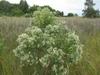
Baccharis halimifolia - GROUNDSEL BUSH
$9.99
Details
Native shrub that likes wet feet, very valuable for late blooming period and high ecological values (attracts birds, various native bees, butterflies and moths).
Long blooming period and great tolerance to salinity.
Blooming Time: August to October
Size: depends on the site and amount of nutrients - can breach 3-10' tall and wide
USDA Zones: 5 to 10
Culture: full sun, very adaptable to a variety of soils, tolerates a wide range of soils from poor, shallow, rocky, clayey, dry or wet soils, brackish waters and salt-sprayed soils. Slightly acidic to slightly alkaline soils (around pH 7)
Moisture Needs: average (medium) to wet
Origin: AL, AR, CT, DC, DE, FL, GA, LA, MA, MD, MS, NC, NJ, NY, OK, PA, RI, SC, TX, VA, often on disturbed soils, salt marshes, wet areas and shores and often on sandy, or gravelly soils
Deer/Rabbit Resistant: yes / yes
Attracts Butterflies or Pollinators: offers nectar to bees, butterflies (including Monarchs), moths and other insects
Attracts Hummingbirds: occasionally yes, but attracts granivorous birds
Pot Size: square 3.5" x 4" deep perennial pot
Plant combinations: Rain gardens, erosion control, saline soil, coastal areas with exposures to salt and salinity, retention areas, banks, around ponds. Can see aggressively, if female plant is present.
Good companions can be Asclepias incarnata, Helianthus angustifolius and hybrids, Iris (I. sibirica, I. x lousiana, I. versicolor, I. ensata, I. pseudata, I. virginica), Lobelia, Lysimachia, Mimulus, Persicaria amplexicaulis, Phlox paniculata (with smaller flowers), Phlox paniculata and P. maculata, Physostegia, Sanquisorba, Thalictrum, Veronicastrum and grasses and sedges - Carex, Andropogon gerardii and cultivars, Calamagrostis, Chasmantium, Deschmapsia, Panicum, Pennisetum, Spartina.
Can be also used with mounding plants like Amsonia, Baptisia, Chelone, Hemerocallis (better with smaller flowers) or with lower growing or groundcovering plants (Alchemilla, hardy Geraniums,etc.)
Picture copyright: Macleay Grass Man, Commons Wikimedia
Sale 56%
Sold out

Salvia leucantha - MEXICAN BUSH SAGE
$8.99
$3.99


Customer Reviews

Shipped With Care
Secure packaging for safe delivery
Nursery Grown Plants
Healthy, well-rooted perennials
Curated Plant Selection
Reliable performers for real gardens