Sold out


Showy, easy to grow, suitable for garden conditions and with superior qualities for native pollinators!
Aromatic minty leaves.
This plant is not aggressive than similar Mints or Monarda, and it's better to pair it with smaller or same-sized plants which will not outcompete it.
Nice ornamental seedheads.
Black walnut, drought and heat tolerant.
Blooming Time: for about 4 weeks in May/June to June/July with small purple-pink flowers arranged in pagoda-like clusters
Size: 12-18" tall x 10-12" wide
USDA Zones: 4-8
Culture: full sun, half-shade, adaptable to soil types, including dry clay, rocky, shallow or sandy soil, average soils, drained soils, dry soils. Does better in drier conditions. Organic mulch (especially bark or wood chips) can cause crown rot, so we recommend mulching very lightly or skip that patch around the plant.
Moisture Needs: medium, medium-dry, dry
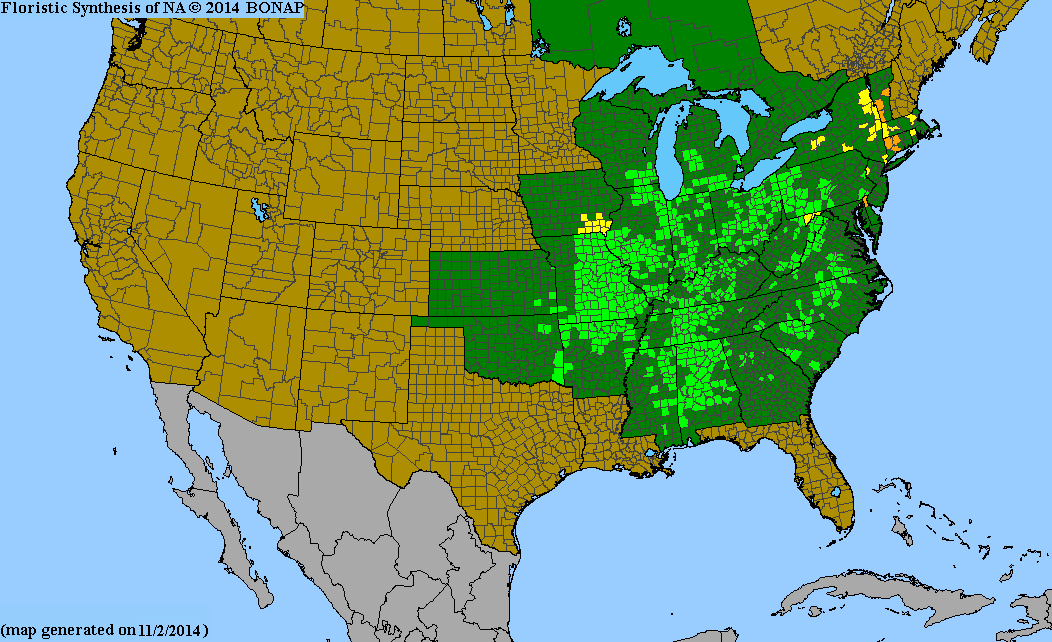
Origin: central and eastern and northeastern part of USA and Canada, where can be found in savannas, open woods, open areas, prairies, bluffs, limestone outcrops with shallower soil, thickets, limestone glades, usually on drained soils. See the BONAP distribution map.
Deer/Rabbit Resistant: resistant to both
Attracts Butterflies or Pollinators: Attracts many native long-tongued and short-tongued bees, bumblebees, butterflies, skippers and Syrphid flies (bee visitors include honeybees, bumblebees, Anthophorine bees, little carpenter bees, leaf-cutting bees, Halictine bees, masked bees).
Attracts Hummingbirds: no
Pot Size: 3.5" x 4" perennial pot (1.22 pt/580 ml)
Picture copyright: Michael Wolf, Commons Wikipedia
Plant combinations: Best in naturalistic plantings, pollinator or butterfly gardens, herb gardens, in dry flower beds or drier woodland edges. Best combined with same sized or a bit smaller plants. Good companions can be many perennials Aquilegia canadensis, Asclepias (A. arenaria, tuberosa, verticillata, viridis, viridiflora), smaller Amsonia and Baptisia, Calamintha, Callirhoe, Coreopsis, Dalea, smaller Echinacea hybrids, Heuchera, smaller Iris, Liatris, Oenothera 'Cold Crick', smaller Origanum, Penstemons, Phlox amoena, Phlox pilosa, and other less spreading Creeping Phloxes, smaller Rudbeckia selections, Satureja, Spigelia, Veronica, etc and many smaller to medium-sized grasses like Bouteloa, Muhlenbergia, Sporobolus.
Showy, easy to grow, suitable for garden conditions and with superior qualities for native pollinators!
Aromatic minty leaves.
This plant is not aggressive than similar Mints or Monarda, and it's better to pair it with smaller or same-sized plants which will not outcompete it.
Nice ornamental seedheads.
Black walnut, drought and heat tolerant.
Blooming Time: for about 4 weeks in May/June to June/July with small purple-pink flowers arranged in pagoda-like clusters
Size: 12-18" tall x 10-12" wide
USDA Zones: 4-8
Culture: full sun, half-shade, adaptable to soil types, including dry clay, rocky, shallow or sandy soil, average soils, drained soils, dry soils. Does better in drier conditions. Organic mulch (especially bark or wood chips) can cause crown rot, so we recommend mulching very lightly or skip that patch around the plant.
Moisture Needs: medium, medium-dry, dry
Origin: central and eastern and northeastern part of USA and Canada, where can be found in savannas, open woods, open areas, prairies, bluffs, limestone outcrops with shallower soil, thickets, limestone glades, usually on drained soils. See the BONAP distribution map.
Deer/Rabbit Resistant: resistant to both
Attracts Butterflies or Pollinators: Attracts many native long-tongued and short-tongued bees, bumblebees, butterflies, skippers and Syrphid flies (bee visitors include honeybees, bumblebees, Anthophorine bees, little carpenter bees, leaf-cutting bees, Halictine bees, masked bees).
Attracts Hummingbirds: no
Pot Size: 3.5" x 4" perennial pot (1.22 pt/580 ml)
Picture copyright: Michael Wolf, Commons Wikipedia
Plant combinations: Best in naturalistic plantings, pollinator or butterfly gardens, herb gardens, in dry flower beds or drier woodland edges. Best combined with same sized or a bit smaller plants. Good companions can be many perennials Aquilegia canadensis, Asclepias (A. arenaria, tuberosa, verticillata, viridis, viridiflora), smaller Amsonia and Baptisia, Calamintha, Callirhoe, Coreopsis, Dalea, smaller Echinacea hybrids, Heuchera, smaller Iris, Liatris, Oenothera 'Cold Crick', smaller Origanum, Penstemons, Phlox amoena, Phlox pilosa, and other less spreading Creeping Phloxes, smaller Rudbeckia selections, Satureja, Spigelia, Veronica, etc and many smaller to medium-sized grasses like Bouteloa, Muhlenbergia, Sporobolus.
I love this plant as a filler/green mulch. It's fairly tall, but it works well mixed in with perennials to shade out weeds and prevent the cheesy "dots on mulch" look. Pollinators LOVE this plant, deer don't eat it, and it's pretty and rambling. One downside: it's biennial, not perennial. For a while it was self-seeding but when I put down a thick layer of mulch to reduce weeds, the wood mint didn't come back. But now I have new, healthy plants!
I think this plant has charisma. The flowers remind me of adorable fluffy snowmen. In a word: charming. The short size also makes it easy to incorporate in smaller gardens.