


Brickellia eupatorioides - FALSE BONESET
End of season flowering native plant, small creamy flowers in loose panicles open to highly ornamental fluffy seedheads.
Fragrant flowers attract a lot of insects.
Suitable for dryish garden.
Size: usually around 3' tall x 1.5-2’ wide. Can handle lean soil, but will get much shorter (1-1.5' tall)
Flowering time : August to September
USDA Zones: 3 to 10
Culture: sun to half shade, average, drier, drained soils (rocky, sandy, gritty, gravelly)
Moisture Needs: dry, medium-dry, medium
Origin: native to eastern 2/3 of USA, see BONAP map. Can be found on drier, rocky, sandy or aluvial soils, in prairies, open woods, thickets, clearings, rocky slopes, etc.
Deer/Rabbit Resistant: yes / yes
Attracts Butterflies or Pollinators: butterflies, bees
Attracts Hummingbirds: no
Pot Size: 3.5" x 4" perennial pot (1.22 pt/580 ml)
Picture copyright : 1 US Perennials, 2 - Frank Mayfield
Plant combinations : Interesting plant for prairie, butterfly gardens, pollinator gardens, and dry naturalistic flower borders . Good companions can be Amsonia, Asclepias tuberosa, Aster (A. oblongifolius, A. leavis, A. oolentangiense, A. novae-angliae), Baptisia, Coreopsis, Echinacea (especially narrow-leavedf ones and hybrids), Monarda bradburiana, Monarda fistilosa (and hybrids), Monarda pucntata, Penstemon, narrow-leaved Rudbeckia, Salvia azurea, Salvia reptans, Yucca and many more.Good grass companions include like Eragrostis, Panicum, Muhlennbergia, Schizachyrium scoparium, Sporobolus or Sorghastrum nutans.
Brickellia eupatorioides - FALSE BONESET
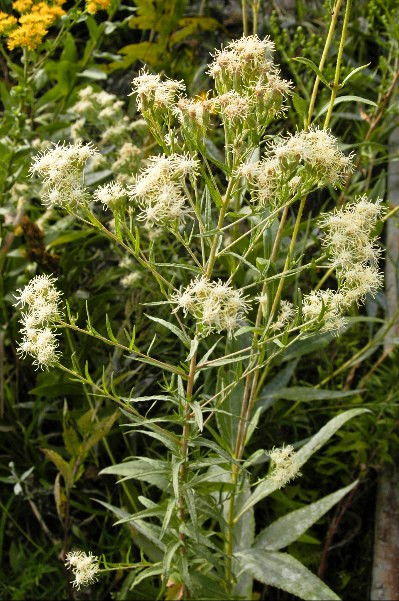
End of season flowering native plant, small creamy flowers in loose panicles open to highly ornamental fluffy seedheads.
Fragrant flowers attract a lot of insects.
Suitable for dryish garden.
Size: usually around 3' tall x 1.5-2’ wide. Can handle lean soil, but will get much shorter (1-1.5' tall)
Flowering time : August to September
USDA Zones: 3 to 10
Culture: sun to half shade, average, drier, drained soils (rocky, sandy, gritty, gravelly)
Moisture Needs: dry, medium-dry, medium
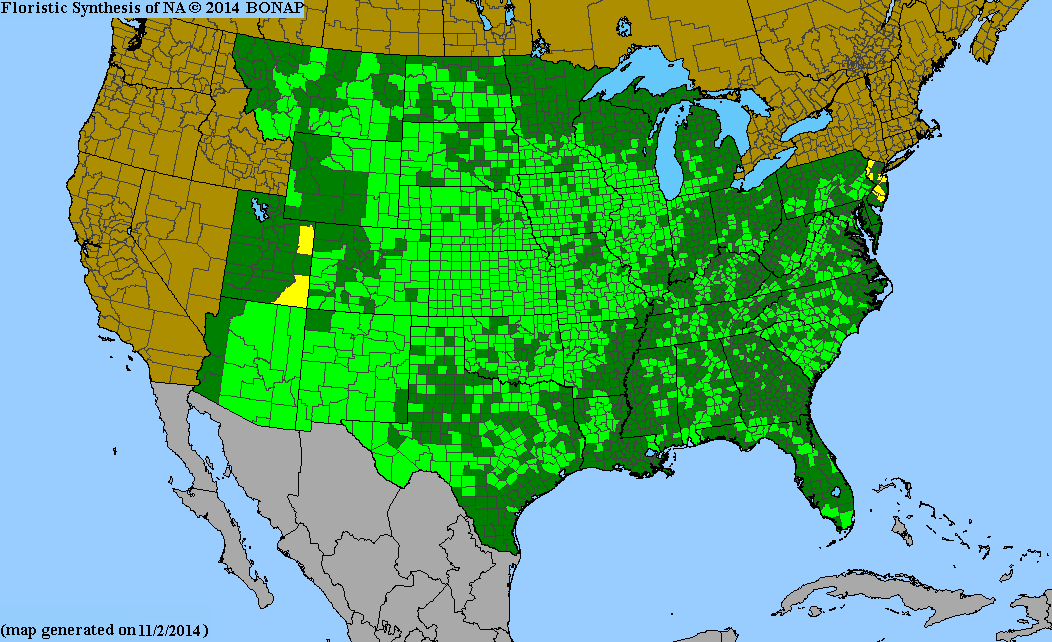
Origin: native to eastern 2/3 of USA, see BONAP map. Can be found on drier, rocky, sandy or aluvial soils, in prairies, open woods, thickets, clearings, rocky slopes, etc.
Deer/Rabbit Resistant: yes / yes
Attracts Butterflies or Pollinators: butterflies, bees
Attracts Hummingbirds: no
Pot Size: 3.5" x 4" perennial pot (1.22 pt/580 ml)
Picture copyright : 1 US Perennials, 2 - Frank Mayfield
Plant combinations : Interesting plant for prairie, butterfly gardens, pollinator gardens, and dry naturalistic flower borders . Good companions can be Amsonia, Asclepias tuberosa, Aster (A. oblongifolius, A. leavis, A. oolentangiense, A. novae-angliae), Baptisia, Coreopsis, Echinacea (especially narrow-leavedf ones and hybrids), Monarda bradburiana, Monarda fistilosa (and hybrids), Monarda pucntata, Penstemon, narrow-leaved Rudbeckia, Salvia azurea, Salvia reptans, Yucca and many more.Good grass companions include like Eragrostis, Panicum, Muhlennbergia, Schizachyrium scoparium, Sporobolus or Sorghastrum nutans.