


New

Zoom the image with the mouse
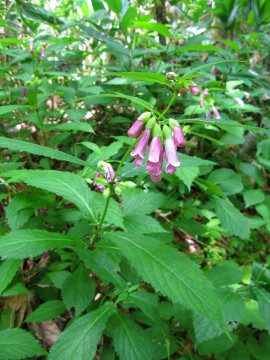
Desmodium glutinosum (syn. Hylodesmum) - POINTED-LEAVED TICK TREFOIL
Product Code:
DES-GLU
Shipping:
Calculated at Checkout
$8.49
Adaptable woodland perennial with late blooming period and great wildlife benefits.
Showy pink flowers in late summer brighten any shade garden. Ornamental compound three-leaflet leaves.
Adaptable to various soil and moisture conditions.
Excellent addition to half shade and shade garden.
The flat seedpods (burs) can easily spread by sticking to clothes and fur.
Blooming Time: June - July/August
Size: usually 2' tall x 1-1.5' wide (in ideal conditions with flower up to 3')
USDA Zones: 3 to 9
Culture: partial sun, half shade, dappled shade, lighter shade, average soils amended with organic matter (composted leaves, leaves, compost, broken down mulch).
Moisture Needs: medium (average), medium-dry, medium-moist
Origin: native to the half of USA (eastern part of USA and Canada. See the BONAP distribution map. Can be found in upland woodlands, woodland edges, along roads and railroads and paths, on various soils - from rocky to loamy soil with some organic matter, both in disturbed and good quality habitats.
Deer/Rabbit Resistant: no / no
Attracts Butterflies or Pollinators: various native bees (Halictid bee, bumblebees and other long-tongued bees). Host plant for caterpillars of several butterflies and skippers. Other insects that can feed on this plant are aphid (Microparsus variabilis), the thrips (Echinothrips americanus, Neohydatothrips desmodianus), the leaf-mining larvae of the Buprestid beetles (Pachyschelus confusus, Pachyschelus laevigatus), the larvae of the seed weevil (Apion decoloratum), and several leaf beetles. Seeds are eaten by the Wild Turkey and Bobwhite.
Attracts Hummingbirds: no
Pot Size: square 3.5" x 4" deep pot
Plant combinations: half shade and shade gardens, savanna style planting, in spots with difficult to ID light/shade conditions, naturalistic plantings, woodland edges, pollinator gardens, and can used for naturalizing. Goes well with many native and non-native perennials like Actaea (Cimicifuga), Ajuga, Aquilegia, Anemones, Astrantia (in cooler areas), Chelone lyonii, Chrysogonum, Dicentra, Digitalis, Epimedium, Euphorbia amygdaloides, Eupatorium rugosum 'Chocolate', Geranium hybrids, Geranium maculatum, Geum, Hosta, Lamium, Galium, Polemonium, woodland Peonies, Primula, Tricyrtis, Waldsteinia and grasses like Carex (both very narrow-leaved or wide-leaved), Chasmantium, or Hakonchloa
Picture copyright: Fritzflohrreynolds, Commons Wikimedia

Desmodium glutinosum (syn. Hylodesmum) - POINTED-LEAVED TICK TREFOIL
$8.49
Details
Adaptable woodland perennial with late blooming period and great wildlife benefits.
Showy pink flowers in late summer brighten any shade garden. Ornamental compound three-leaflet leaves.
Adaptable to various soil and moisture conditions.
Excellent addition to half shade and shade garden.
The flat seedpods (burs) can easily spread by sticking to clothes and fur.
Blooming Time: June - July/August
Size: usually 2' tall x 1-1.5' wide (in ideal conditions with flower up to 3')
USDA Zones: 3 to 9
Culture: partial sun, half shade, dappled shade, lighter shade, average soils amended with organic matter (composted leaves, leaves, compost, broken down mulch).
Moisture Needs: medium (average), medium-dry, medium-moist
Origin: native to the half of USA (eastern part of USA and Canada. See the BONAP distribution map. Can be found in upland woodlands, woodland edges, along roads and railroads and paths, on various soils - from rocky to loamy soil with some organic matter, both in disturbed and good quality habitats.
Deer/Rabbit Resistant: no / no
Attracts Butterflies or Pollinators: various native bees (Halictid bee, bumblebees and other long-tongued bees). Host plant for caterpillars of several butterflies and skippers. Other insects that can feed on this plant are aphid (Microparsus variabilis), the thrips (Echinothrips americanus, Neohydatothrips desmodianus), the leaf-mining larvae of the Buprestid beetles (Pachyschelus confusus, Pachyschelus laevigatus), the larvae of the seed weevil (Apion decoloratum), and several leaf beetles. Seeds are eaten by the Wild Turkey and Bobwhite.
Attracts Hummingbirds: no
Pot Size: square 3.5" x 4" deep pot
Plant combinations: half shade and shade gardens, savanna style planting, in spots with difficult to ID light/shade conditions, naturalistic plantings, woodland edges, pollinator gardens, and can used for naturalizing. Goes well with many native and non-native perennials like Actaea (Cimicifuga), Ajuga, Aquilegia, Anemones, Astrantia (in cooler areas), Chelone lyonii, Chrysogonum, Dicentra, Digitalis, Epimedium, Euphorbia amygdaloides, Eupatorium rugosum 'Chocolate', Geranium hybrids, Geranium maculatum, Geum, Hosta, Lamium, Galium, Polemonium, woodland Peonies, Primula, Tricyrtis, Waldsteinia and grasses like Carex (both very narrow-leaved or wide-leaved), Chasmantium, or Hakonchloa
Picture copyright: Fritzflohrreynolds, Commons Wikimedia

Sale 78%



Customer Reviews

Shipped With Care
Secure packaging for safe delivery
Nursery Grown Plants
Healthy, well-rooted perennials
Curated Plant Selection
Reliable performers for real gardens