

Lobelia spicata - SPIKED LOBELIA
Delicate native lobelia for drier soils (while the majority of lobelias like more moisture).
2' tall x 0.5' wide, narrow subtle looking that intermingles with other taller plants (under-story plant). Blooms in June to July with whitish, white or pale blue flowers (also called pale spiked lobelia).
Full sun, half shade, average (medium to medium-moist) to slightly dry soil. Prefers moderately fertile soil to loam, but tolerates rocky or sandy soils too. To fertile soil leads to flopping.
Hardy in zones 4 to 9.
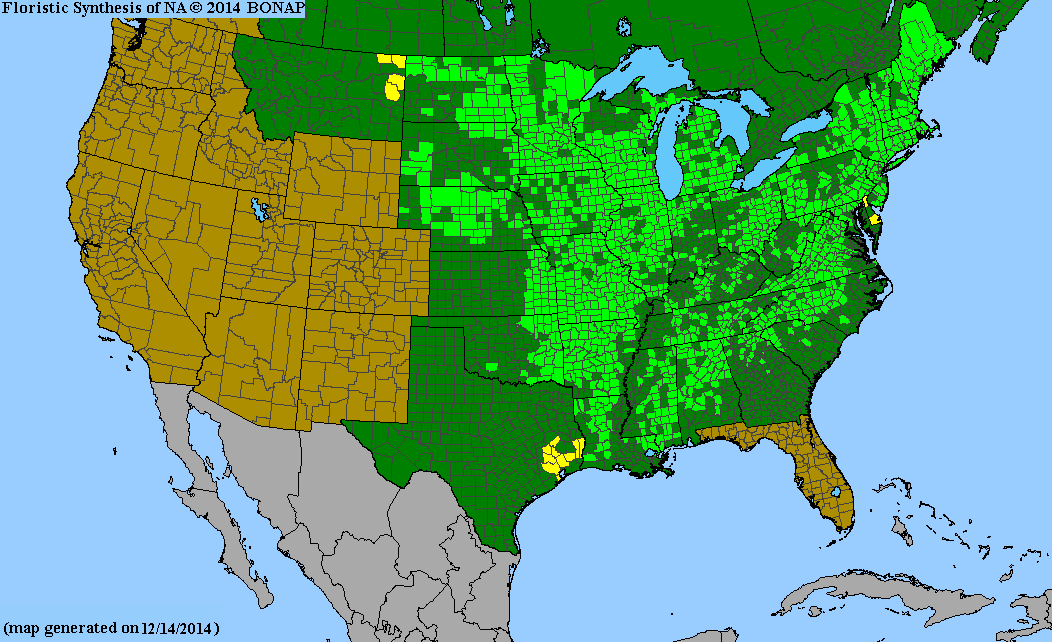
Native to central and eastern USA and Canada, see the BONAP distribution map. Spiked lobelia can be found in prairies (moist to mesic black soil to sandy prairies), meadows, savannas, thickets, along the rivers etc.
Deer and rabbit resistant, black walnut tolerant. Flower attracts primarily long-tongued bees, that are the main pollinators (little carpenter bees, miner bees, mason bees, and leaf-cutting bees). Occasional visitors are also small butterflies and skippers. Tiny seeds are dispersed by the wind.
Best in sunny or half shade garden, naturalistic garden, pollinator or butterfly garden, to naturalize. can be combined with many perennials and wildflowers.
Pot size : square 3.5" x 5" deep pot
Picture copyright : Eric Hunt, Commons Wikipedia

Lobelia spicata - SPIKED LOBELIA


Delicate native lobelia for drier soils (while the majority of lobelias like more moisture).
2' tall x 0.5' wide, narrow subtle looking that intermingles with other taller plants (under-story plant). Blooms in June to July with whitish, white or pale blue flowers (also called pale spiked lobelia).
Full sun, half shade, average (medium to medium-moist) to slightly dry soil. Prefers moderately fertile soil to loam, but tolerates rocky or sandy soils too. To fertile soil leads to flopping.
Hardy in zones 4 to 9.
Native to central and eastern USA and Canada, see the BONAP distribution map. Spiked lobelia can be found in prairies (moist to mesic black soil to sandy prairies), meadows, savannas, thickets, along the rivers etc.
Deer and rabbit resistant, black walnut tolerant. Flower attracts primarily long-tongued bees, that are the main pollinators (little carpenter bees, miner bees, mason bees, and leaf-cutting bees). Occasional visitors are also small butterflies and skippers. Tiny seeds are dispersed by the wind.
Best in sunny or half shade garden, naturalistic garden, pollinator or butterfly garden, to naturalize. can be combined with many perennials and wildflowers.
Pot size : square 3.5" x 5" deep pot
Picture copyright : Eric Hunt, Commons Wikipedia