
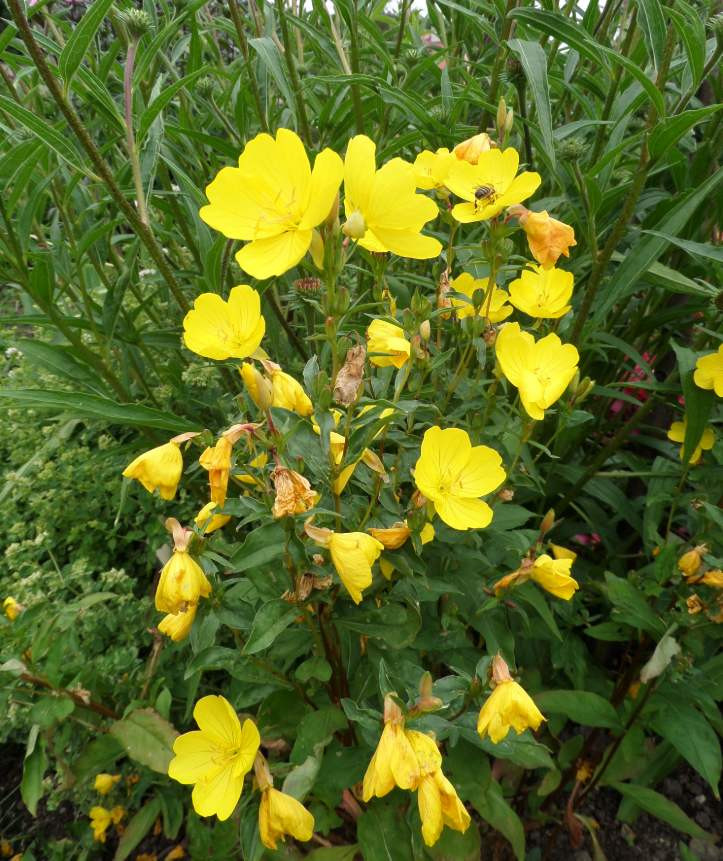
Oenothera tetragona (syn. O. fruticosa ssp. tetragona) - NARROWLEAF EVENING PRIMROSE
Larger yellow flowers, flat basal rosettes. Well behaved and slowly spreading into wider clumps (less aggressive than O. pilosella).
Somewhat reddish stems and dark green foliage (purple tips).
Heat and humidity tolerant plant.
Blooming Time: May to June (flowers for 3-5 weeks, and blooming can be prolonged by cutting it back)
Size: upright clumps 2' tall x 1' wide
USDA Zones: 4 to 8
Culture: full sun, medium to dry soils, adaptable to any soil, that is not waterlogged. Tolerates shallow, rocky or infertile soils. Shade and too much nutrients can cause flopping.
Moisture Needs: average(medium) to dry
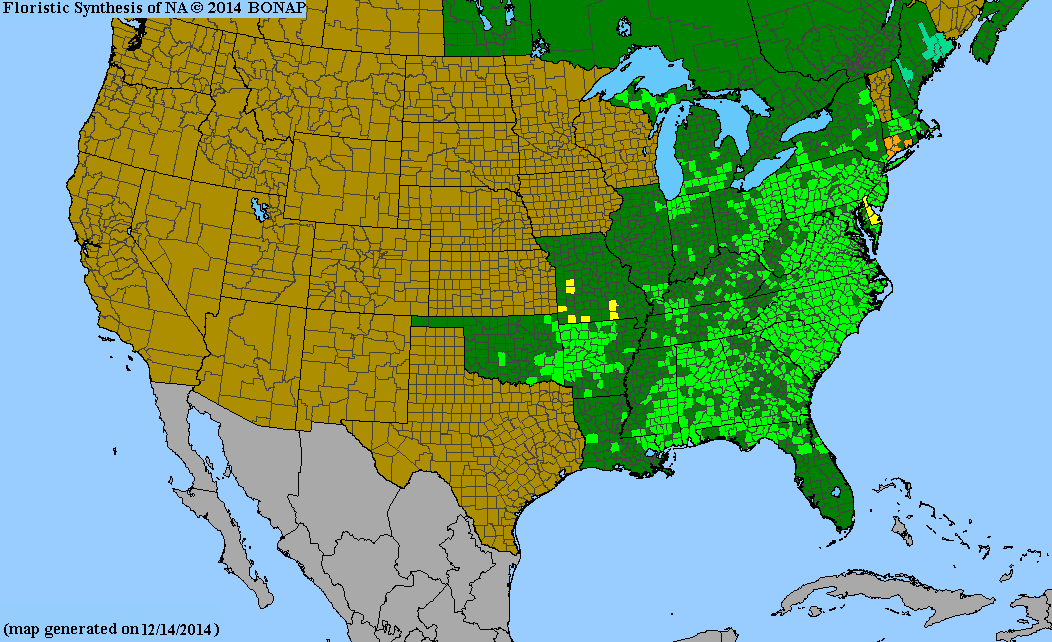
Origin:native wildflower to eastern half of USA and Canada, see the USDA distribution map.
Deer/Rabbit Resistant: yes / yes
Attracts Butterflies or Pollinators: yes / yes
Attracts Hummingbirds: no
Pot Size: square 3.5" x 5" deep pot
Plant Combinations: Best in sunny border, with somewhat drier soil, cottage gardens, naturalistic gardens, low maintenance landscaping, prairie-inspired plantings. Meets and looks very good with blue flowers of Iris x barbata (Iris x germanica - bearded Iris), Nepeta, Salvia nemorosa or with purple flowers of Achillea millefolium, Geranium sanquineum, Penstemon digitalis 'Pocahontas' or Monarda.
Other good combinations include Agastache, Amsonia, Asclepias tuberosa, Asclepias verticillata, Aster, Echinacea, Eryngium, Gaura, Heliopsis, Liatris, Penstemon, Perovskia, Scabiosa columbaria, Sedum, Stokesia, Vernonia 'Iron Butterfly' or medium sized grasses (Eragrostis, Muhlenbergia, Sporobolus, lower cultivars of Panicum).
Picture Copyright:

Oenothera tetragona (syn. O. fruticosa ssp. tetragona) - NARROWLEAF EVENING PRIMROSE

Larger yellow flowers, flat basal rosettes. Well behaved and slowly spreading into wider clumps (less aggressive than O. pilosella).
Somewhat reddish stems and dark green foliage (purple tips).
Heat and humidity tolerant plant.
Blooming Time: May to June (flowers for 3-5 weeks, and blooming can be prolonged by cutting it back)
Size: upright clumps 2' tall x 1' wide
USDA Zones: 4 to 8
Culture: full sun, medium to dry soils, adaptable to any soil, that is not waterlogged. Tolerates shallow, rocky or infertile soils. Shade and too much nutrients can cause flopping.
Moisture Needs: average(medium) to dry
Origin:native wildflower to eastern half of USA and Canada, see the USDA distribution map.
Deer/Rabbit Resistant: yes / yes
Attracts Butterflies or Pollinators: yes / yes
Attracts Hummingbirds: no
Pot Size: square 3.5" x 5" deep pot
Plant Combinations: Best in sunny border, with somewhat drier soil, cottage gardens, naturalistic gardens, low maintenance landscaping, prairie-inspired plantings. Meets and looks very good with blue flowers of Iris x barbata (Iris x germanica - bearded Iris), Nepeta, Salvia nemorosa or with purple flowers of Achillea millefolium, Geranium sanquineum, Penstemon digitalis 'Pocahontas' or Monarda.
Other good combinations include Agastache, Amsonia, Asclepias tuberosa, Asclepias verticillata, Aster, Echinacea, Eryngium, Gaura, Heliopsis, Liatris, Penstemon, Perovskia, Scabiosa columbaria, Sedum, Stokesia, Vernonia 'Iron Butterfly' or medium sized grasses (Eragrostis, Muhlenbergia, Sporobolus, lower cultivars of Panicum).
Picture Copyright: