
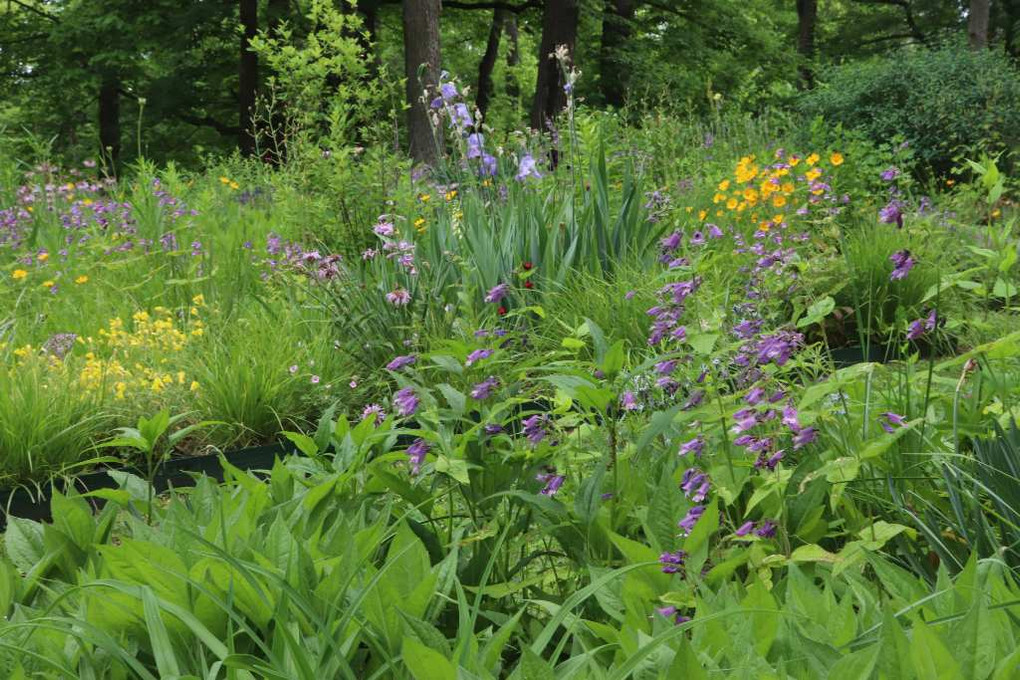
PENSTEMON SMALLII - Small's Beardtongue
Posted by Rad Hajek on Dec 13 2025
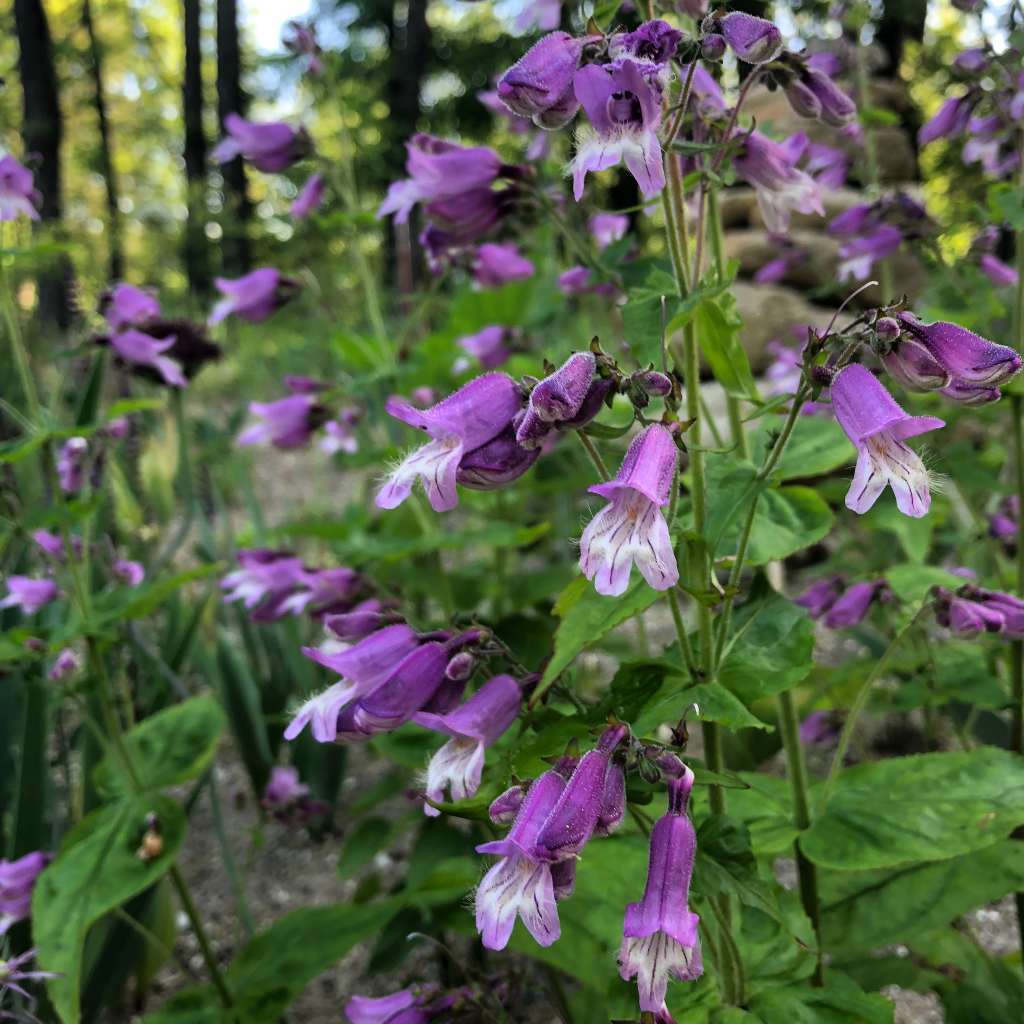
Small’s Beartdtongue is one of the very showy native plants that deserves to be planted more. Can be common in some southeastern gardens, and unknow in others. ©US Perennials
Here in Indiana, it is often excluded by the native plant enthusiasts primarily because it’s not native to our area, but only to these southeastern states - both Carolinas, Tennessee, Georgia and Alabama (where it’s still rare).
Most likely it's also overlooked by a common gardener, because the flowers are rather smaller in comparisson to favored perennials (like peony or Iris). It is also not long-lived plant, it travels in the garden and it is more of a companion plant (looks better with other companions than on it's own).
For a few years, we had overstock of this penstemon and we did a little trick. We repeatedly gave some freebee plants to local customers, and next year they were back and wanted more. That’s how quickly they fell in love with it.
And it wasn’t only due to its excellent deer and rabbit resistance. It's because this plant is surprisingly charming and has it's own qualities. So when we are around some local landscaping project, we try to tuck some in as a universal filling plant. And we grow it in our gardens here.
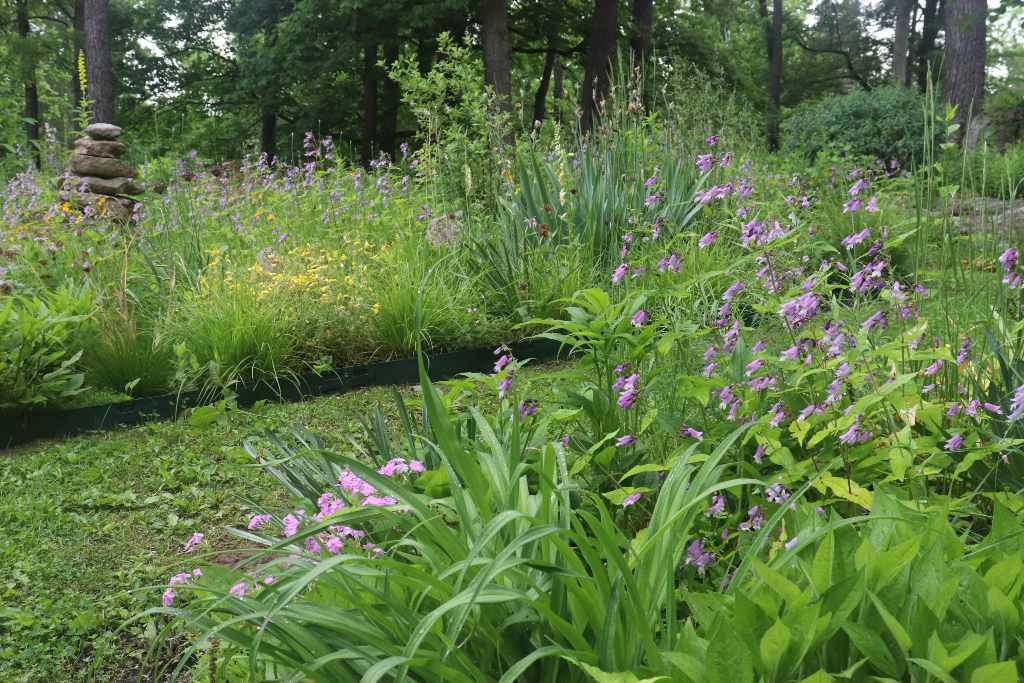 View from the woodland edge flower bed into mostly sunny flower bed. Penstemon smallii grows well in both. Pink flowers in the front belong to Phlox glaberrima 'Forever Pink'. ©US Perennials
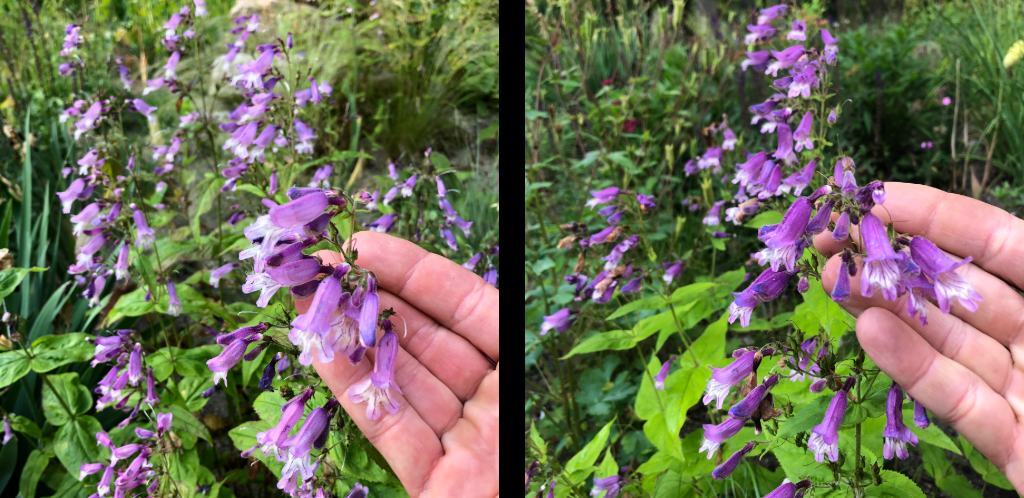
We often find misleading pics on various websites, but we have been documenting this gem for a few years and now it’s time to share those pics. Camera often can’t capture the unique color tones and you’ll see it even on our pics. On some pics the colors look totally pale, despite the colors are bold - more like on the right picture. ©US Perennials
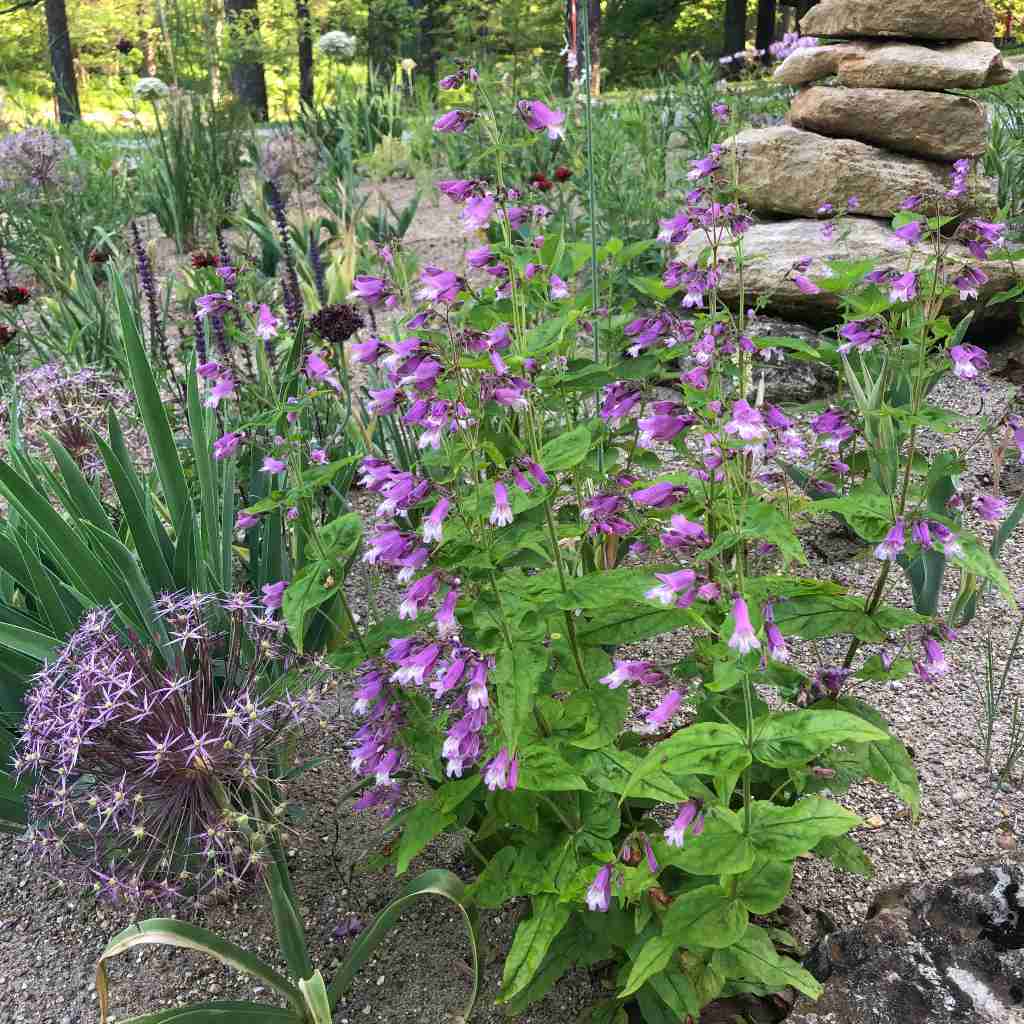
Small's Beardtongue - young plant in newly planted Arrowhead bed. You can see the shape of the plant quite well. It's more upright than wide, reaching usually 18” of height and 12” of width. In rich soils can reach to 30”, but the most common height is somewhere between 18-24”. ©US Perennials
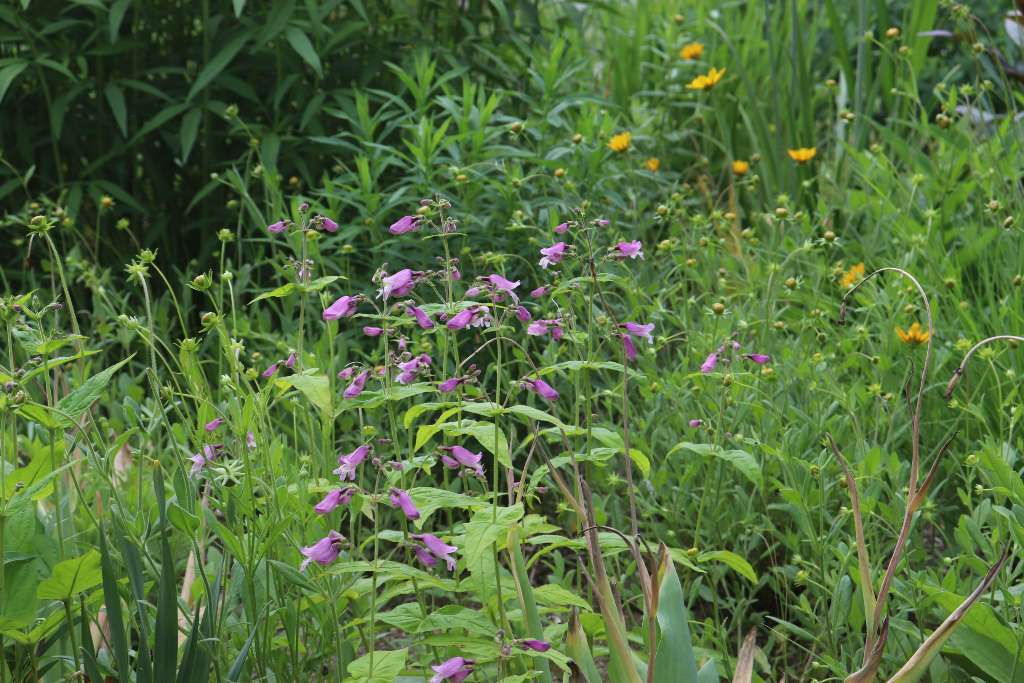
The tear-shaped buds open to fairly big, about 1” + long tubular flowers with playful transition of colors of dark violet, pale lavander, to purplish pink and whitish throat. ©US Perennials
Flowers are arranged in terminal loose clusters and can easily count 50 flowers; the flowering stem takes more than half of the total height. That means that these penstemon flowers are a bit longer than other species = for about 3 to 4 weeks and can rebloom especially on more fertile soils.
Where there’s enough nutrients, cutting the plants back leads supports reblooming = the plant will keep sending new flowering shoots till fall (but it’s good to leave some seedpods for some seeds).
Bloom period for us in our Zone 6 garden is early to late May (depending on your hardiness zone it can vary to April – April/May in warmer zone, to later blooming till May-June or June).
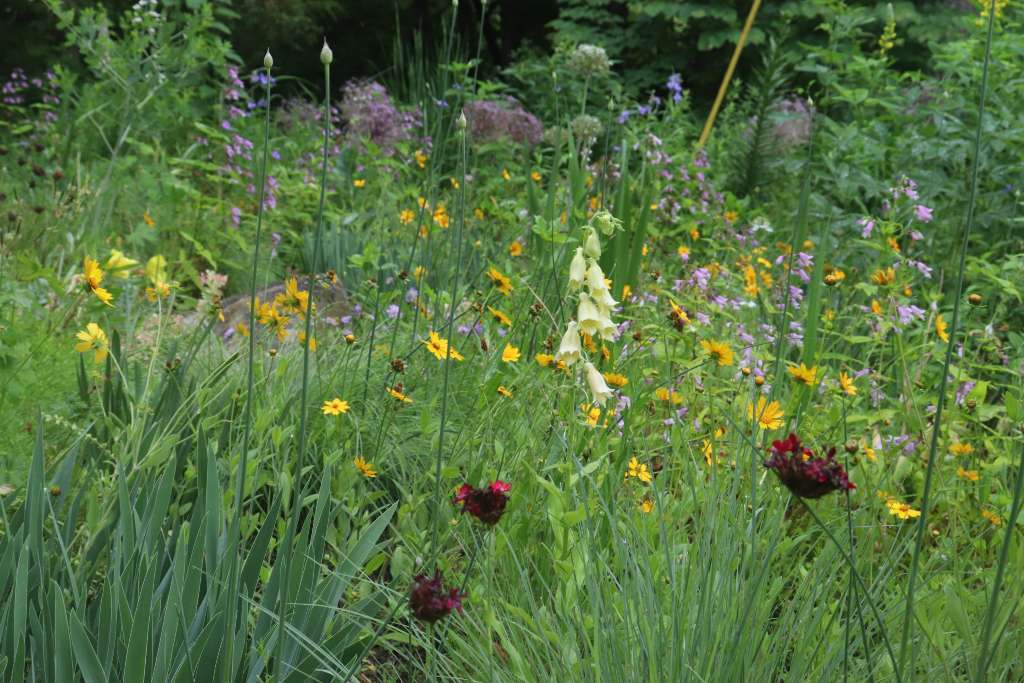
Penstemon smallii in the background with its pale yellow European cousin Digitalis grandiflora (Large Yellow Foxglove) and Coreopsis pubescens 'Sunshine Superman' (Star Tickseed) and last red flowers of Dianthus cruentus (Blood Carnation) ©US Perennials
Previously belonging to the Scrophulariaceae - Figwort family, but after recent genetic research moved to Plantaginaceae – Plantain family (with cousins like Angelonia, Digitalis, Linaria, Veronica, Veronicastrum and many others).
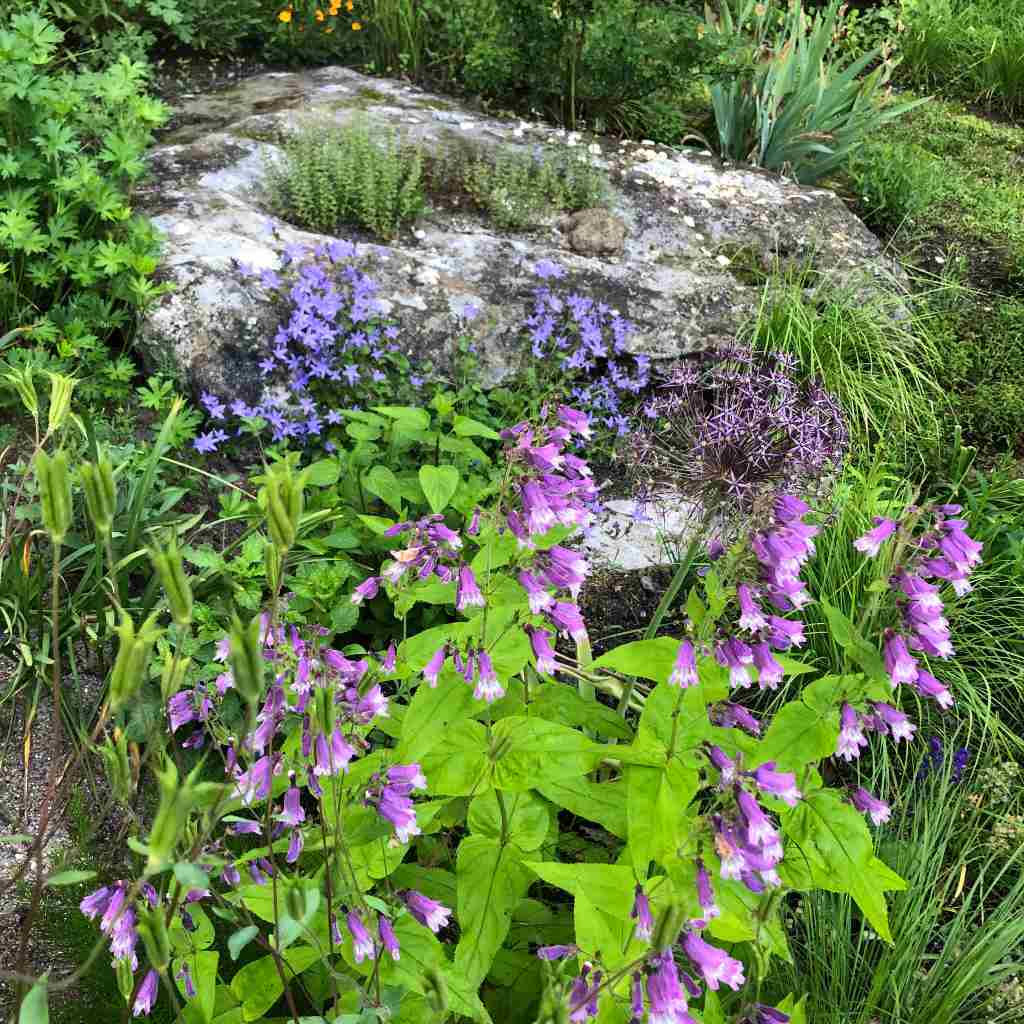
Penstemon smallii at the limestone outcrop, together with globes of Allium christophii (Stars of Persia) and Campanula poscharskyana (Serbian Bluebell). ©US Perennials
The leaves are rugged, vivid green to chartreuse with some reddish hue or burgundy red bottom of the leaf. The red tone gets more pronounced in late summer (late July, here caused by drought stress) and changes to reddish fall color, usually on the edges of the leaves and stems. One of the great things is that the leaves on Penstemon smallii look good all season long!
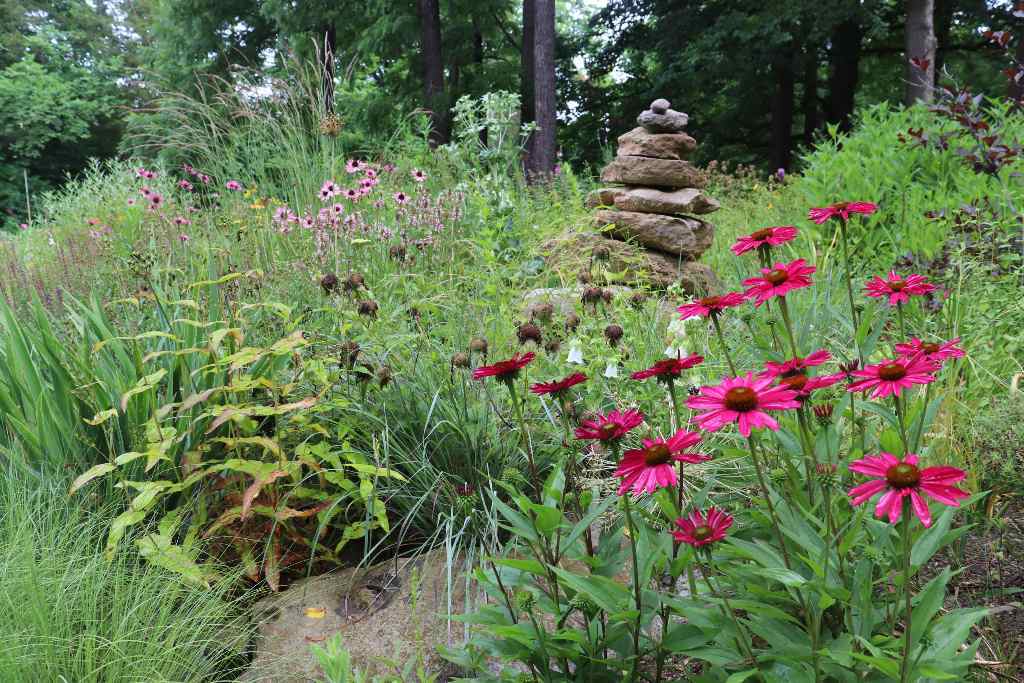
Small's Beardtongue (left front) at the end of June. That spring of that year was very wet and many plants developped some leaf spots. Acompanied by Echinacea 'Kismet Raspberry' ©US Perennials
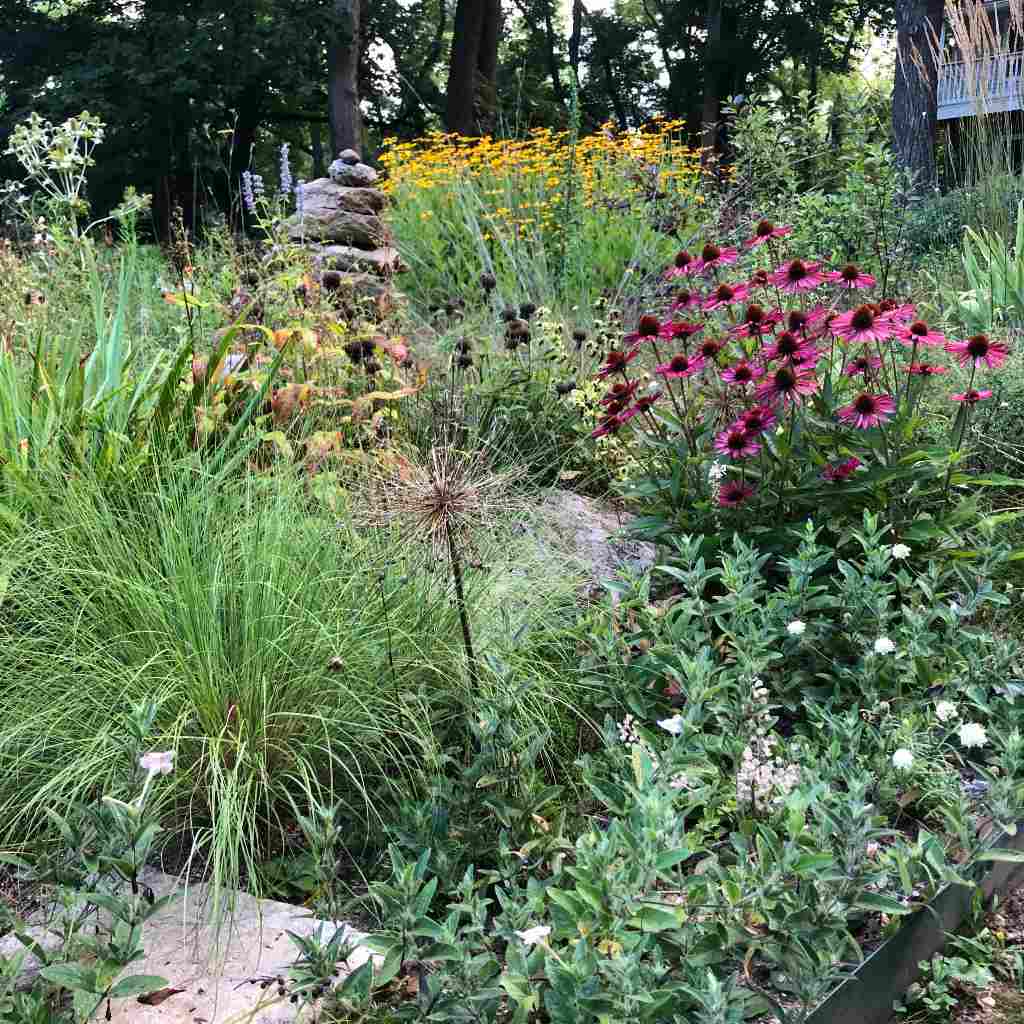
Nearly the same shot one month later at the end of July. The reddish hue leaf color gets more pronounced, which can be amplified by the droughts. ©US Perennials
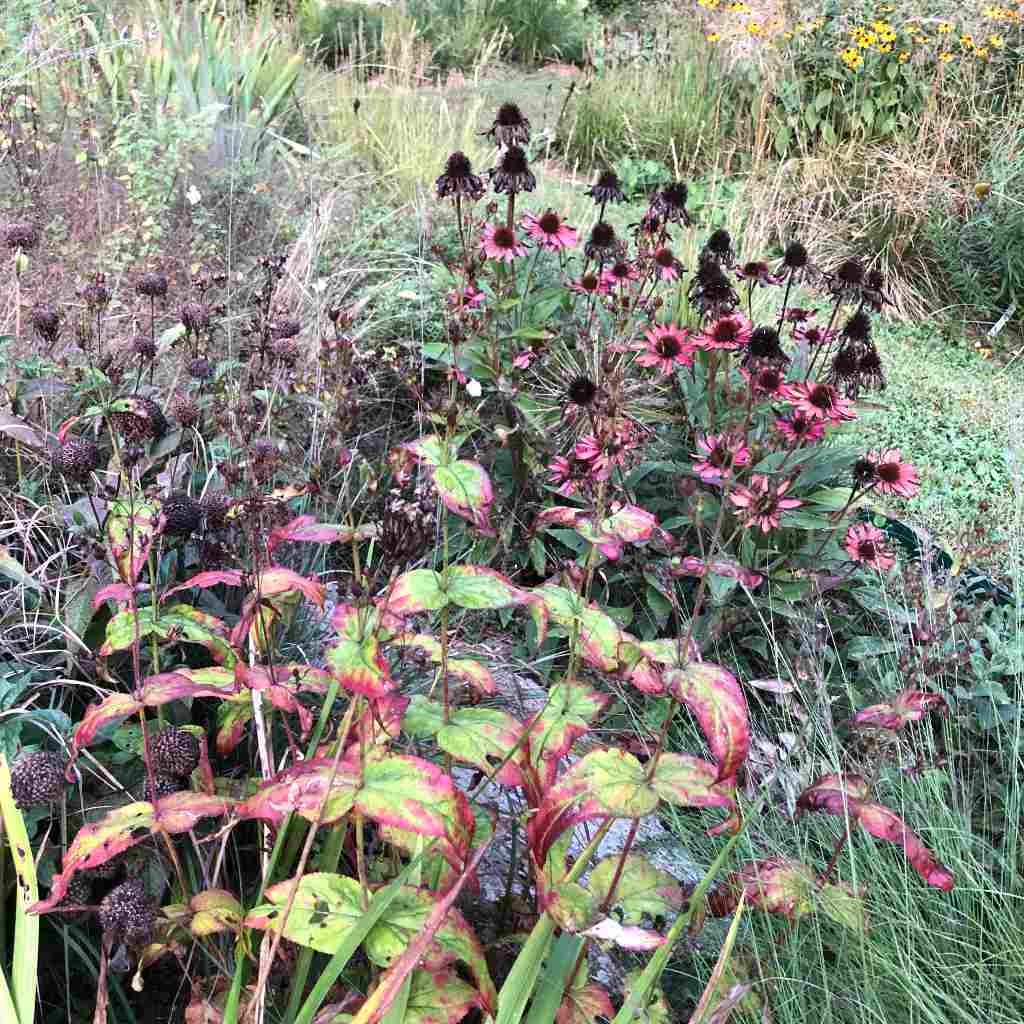
Leaf color at the end of August (so about 3 months after flowering). Notice that there are still some flowers on the Echinacea 'Kismet Raspberry' ©US Perennials
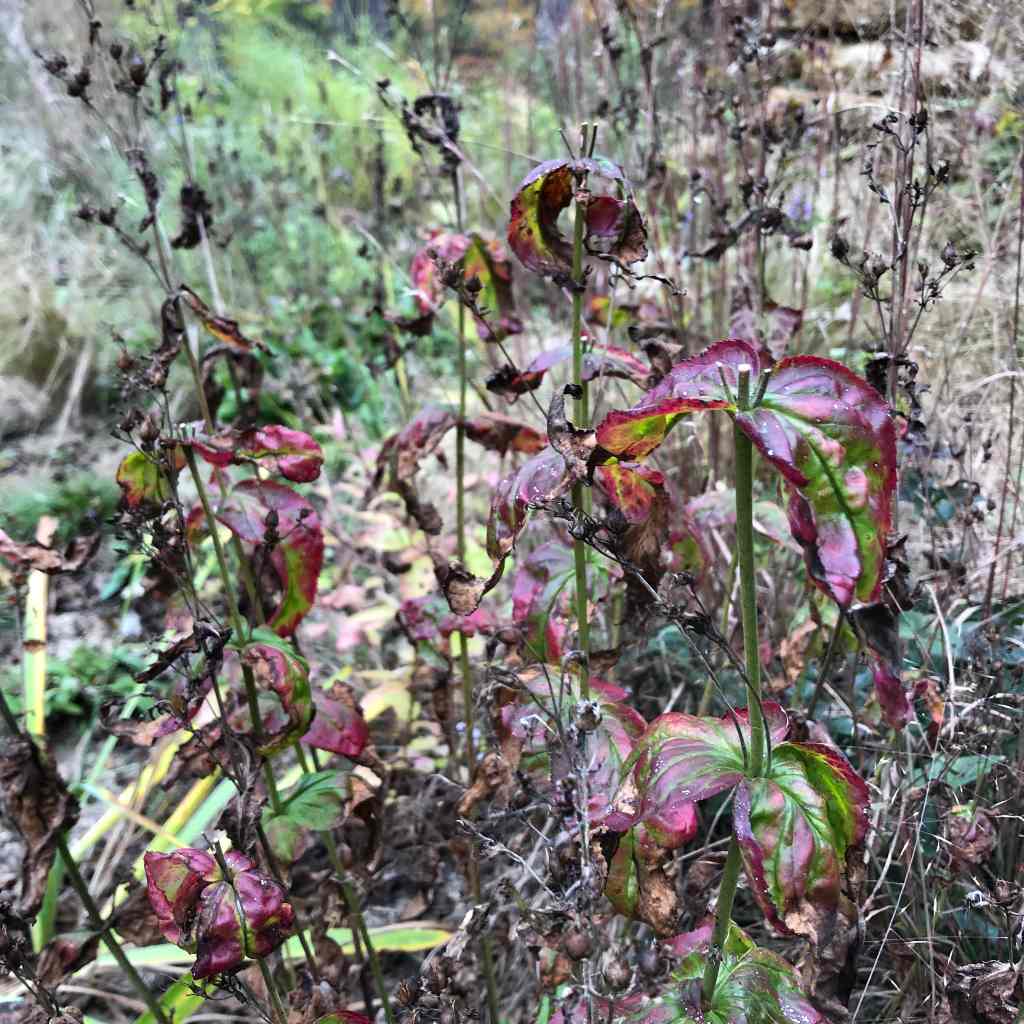
Leaf color at the begining of November. This plant is deciduous = loses its leaves for the winter and survives as a rosette of leaves right above the soil level. After the winter the surviving basal leaves are often rich burgundy red. At this time of the season, some leaves start to turn black. You can see we collected some seeds from our plant. ©US Perennials
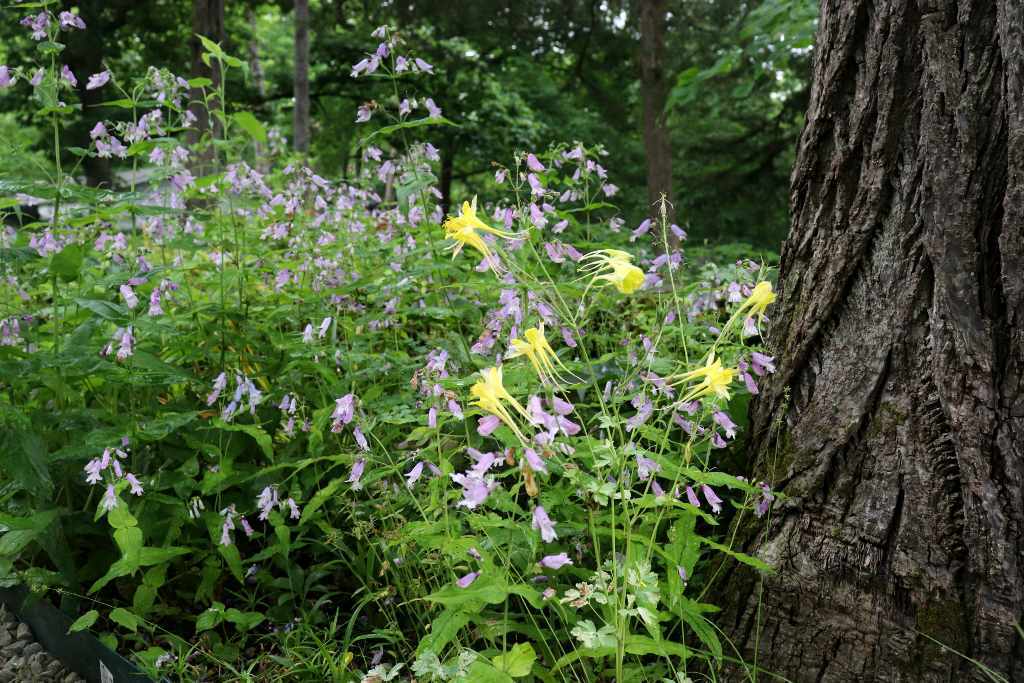
Woodland edge plant, but not only. Penstemon smallii with Aquilegia chrysantha 'Yellow Queen' at the base of mature black walnut tree, that shades this corner for the most of the day. One of the pics where the purple colors look very pale ©US Perennials
This plant is quite rare in the nature, inhabiting rocky mountainous slopes, rocky outcrops (shale glades, barrens, cliffs or boulder fields). Often is found on acidic or circumneutral soils (where it may find its niche and compete better), but we are successfully growing it in highly alkaline soils, with limestone bedrock and soil amended with highly alkaline sand.
It often grows close to the tree line, so in the woodland edge, or in the forest openings, so it can handle some shade, but doesn’t thrive in deep shade (gets leggy and somehow disproportional/unhappy looking).
Full sun, partial sun, half shade, hard to identify light exposure spots (some sun/ some shade during the day) are the best. We experimented and pushed it to its limits in dappled shade, where it survives and blooms, but you have to expect that lanky look.
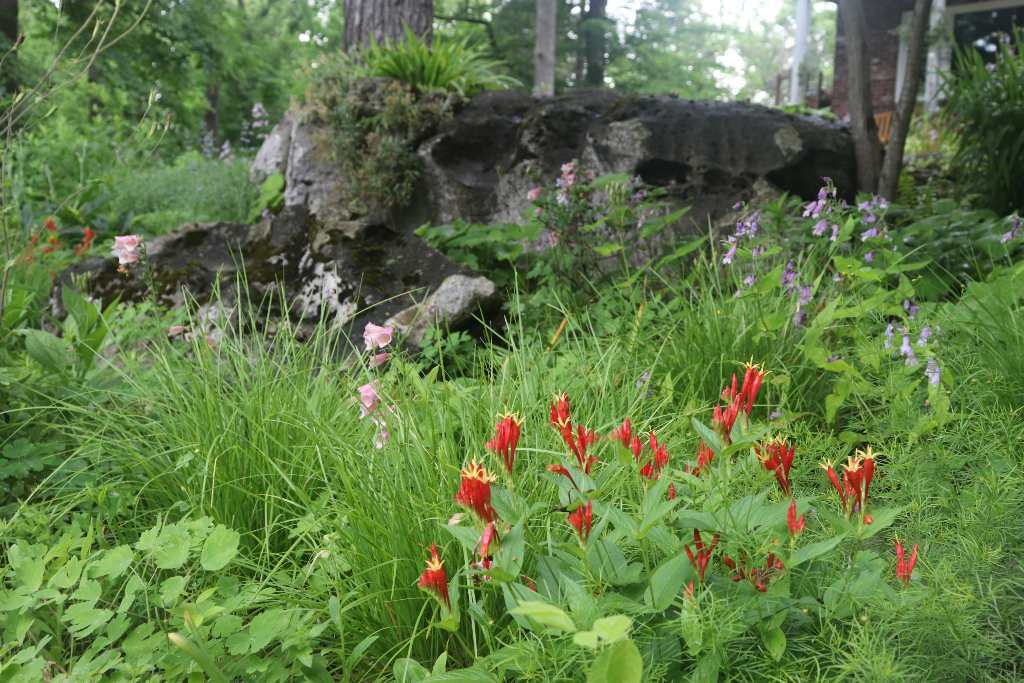
Woodland edge garden = partially sunny + partially shaded bed (shaded by the trees till about 1.30-2 pm). Limestone outcrops in the background, Spigelia 'Ragin Cajun' (Indian Pink) in the front, scattered Digitalis x 'Arctic Fox Rose' (Foxglowe hybrid), grassy leaves of Sesleria autumnalis (Autumn Moor Grass), fine narrow leaves Coreopsis verticillata 'Zagreb' (Tickseed). The penstemon is more in the shaded area (right upper corner of the photo). We realized that Penstemon smallii is excellent color combination to bright orange-red color of Spigelia 'Ragin Cajun'. This Digitalis vanished the second year, but the other plants remain ©US Perennials
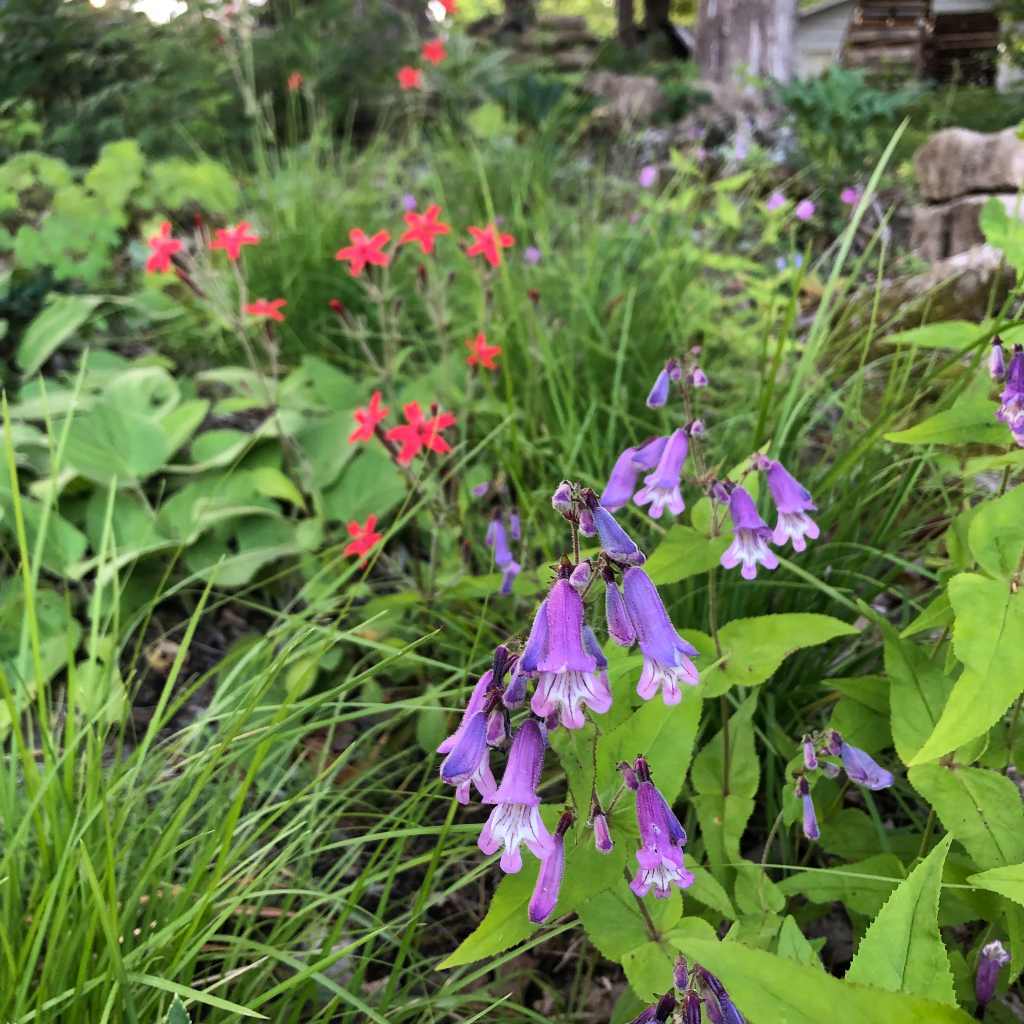
Another partially sunny woodland edge corner. Orange-red flower of Silene virginica (Indian Pink) - very hard to combine with any other colors, with the exception of this beardtongue! The cooling purplish tones are contrasting, at the same cooling and taming down the hot colors. Striking combo, no doubt! ©US Perennials
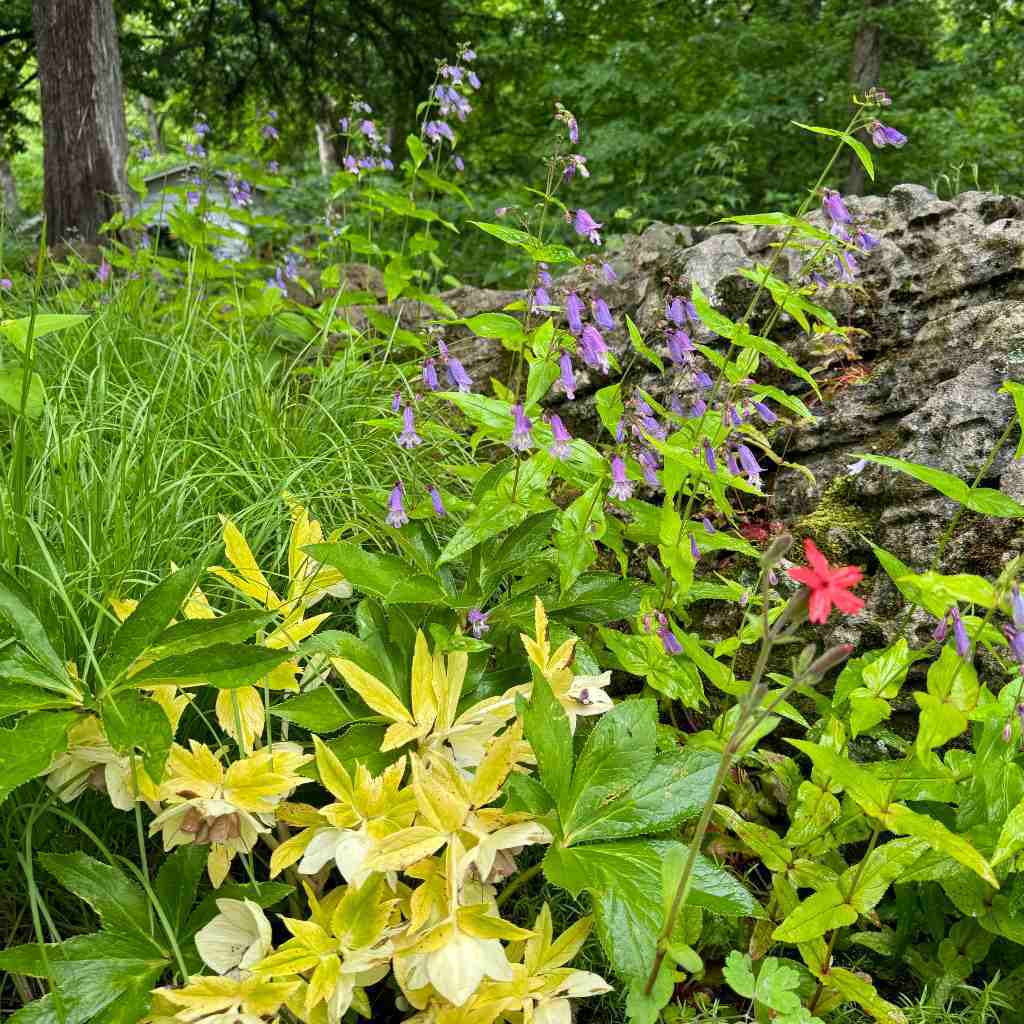
The same woodland edge area with Silene virginica and great Helleborus 'California Dream' (hellebore with chartreuse to yellow-green leaves and light yellow flowers) ©US Perennials
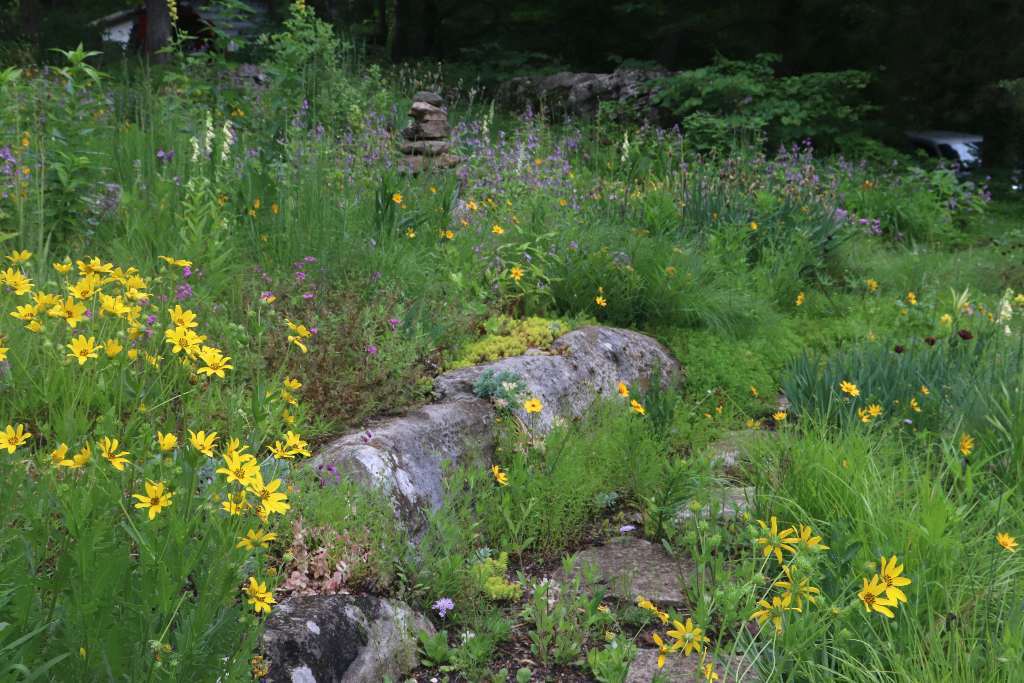
Arrowhead flower bed in mid to late May. Engelmannia peristenia (Engelmann's Daisy) in the left bottom corner, Penstemon smallii in the blury background around the stacked rocks. ©US Perenials
This beardtongue adapts to most of the soil, but some drainage is useful. You should avoid wet pottery clay, or soil that doesn’t dry out easily. In not matching conditions can vanish qucikly. But it seems to do well in most other settings, with average soil or soil that tends to dry out (gritty, rocky, sandy, gravelly soils).
In rich soils tends to be shorter-lived. Generally it lives about 2-3 years and persists in your garden by self-seeding. No extra care is needed – no watering, no fertilizing. It seeds into gaps usually and fills those in. We noticed that it may wonder further away from the original area after some years – most likely when the nutrients get depleted. In other words, it behaves more or less like a “pioneer plant”, which many other penstemons also do.
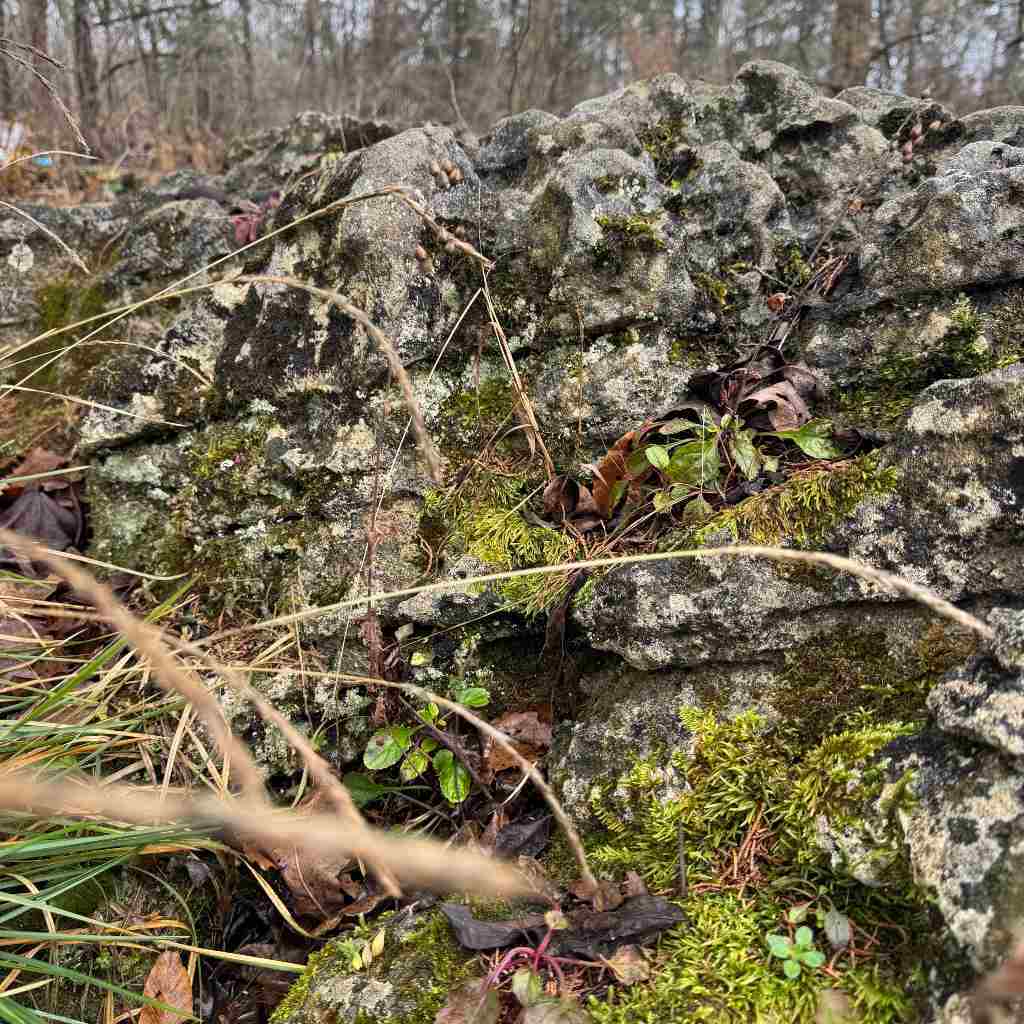
The spots that are close to its natural habitats make this plant happy – so rocky, sandy, often leaner soil, or even shallow soil. We also find is seeding into nearly bare limestone rock – if there’s little organic waste accumulation in a crack or pocket, it will grow well and even bloom on the rock ©US Perennials
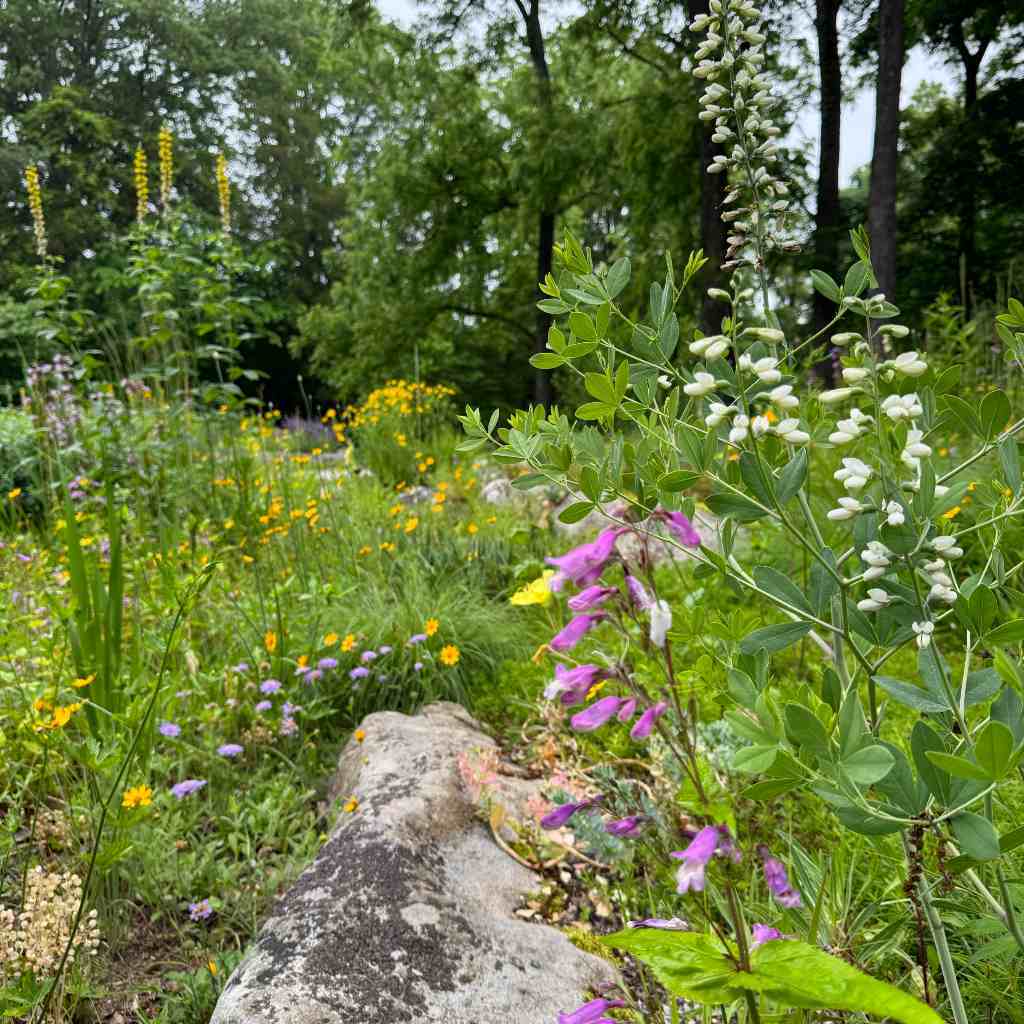
Arrowhead flower bed in mid to late May. With flowering Baptisia alba (White False Indigo), yellow daisy flowers of Coreopsis pubescens 'Sunshine Superman' (Star Tickseed), pale blue buttons of Scabiosa columbaria 'Butterfly Blue' (Pincushion Flower) and very tall yellow Thermopsis caroliniana (Carolina Lupine) in the background ©US Perennials
Since P.smalii thrives in soil with average moisture to dry or drier, we don’t recommend mulching it heavily with organic mulch around the crown (moisture retaining wood chips or bark). If you're using those, mulch lightly only. Shredded or composted leaves might be the better option.
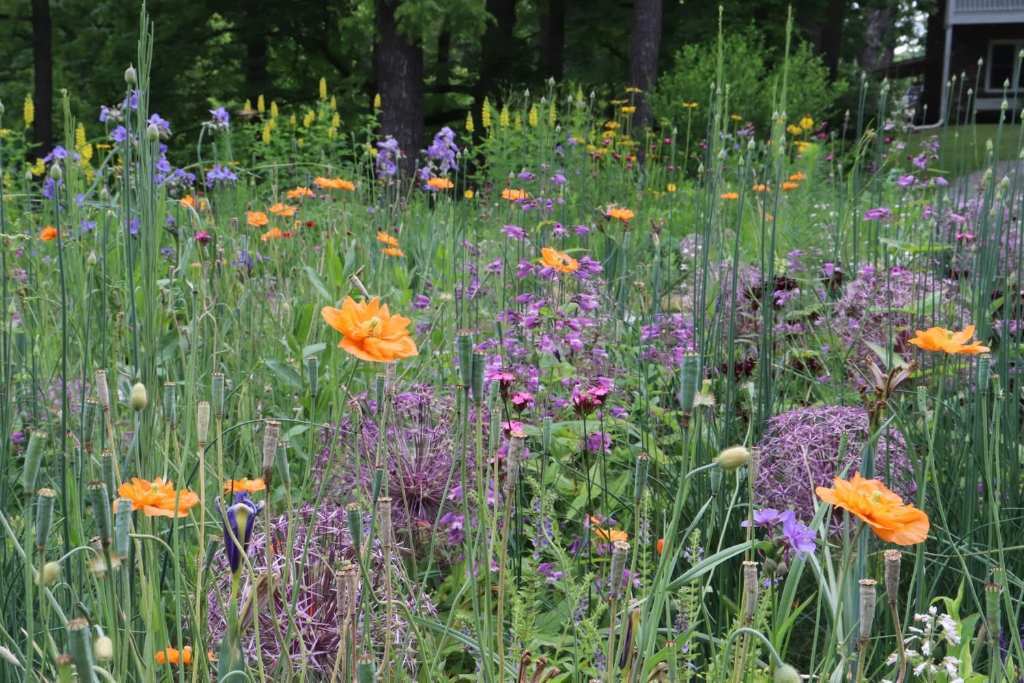
Raised bed with drained soil in mid to late May. ©US Perennials Orange Papaver atlanticum 'Semiplenum' (Morrocan Poppy), purple globes of Allium christophii (Stars of Persia), pink Dianthus carthusianorum (Carthusian Pink). In the background is tall yellow Thermopsis carolianiana (Carolina Lupine) and blue Tradescantia ohioensis (Ohio Spiderwort) and heritage bearded Iris (Iris x germanica).
Small's beardtongue is fully heat and humidity tolerant plant – no wilt, no scorch. It didn’t blink an eye after 5-6 weeks of no rain (and high temps). Usually it is a trouble-free plant. Various sources say that it attracts bees, bumblebees, moths, wasps and some butterflies. We never observed many pollinators on them, and if so it was mostly only bumblebees and quite rarely, here and there hummingbird. It should be host plant to Common Buckeye butterfly. But all what you will be able to observe depends on your surroundings and also the way you garden.
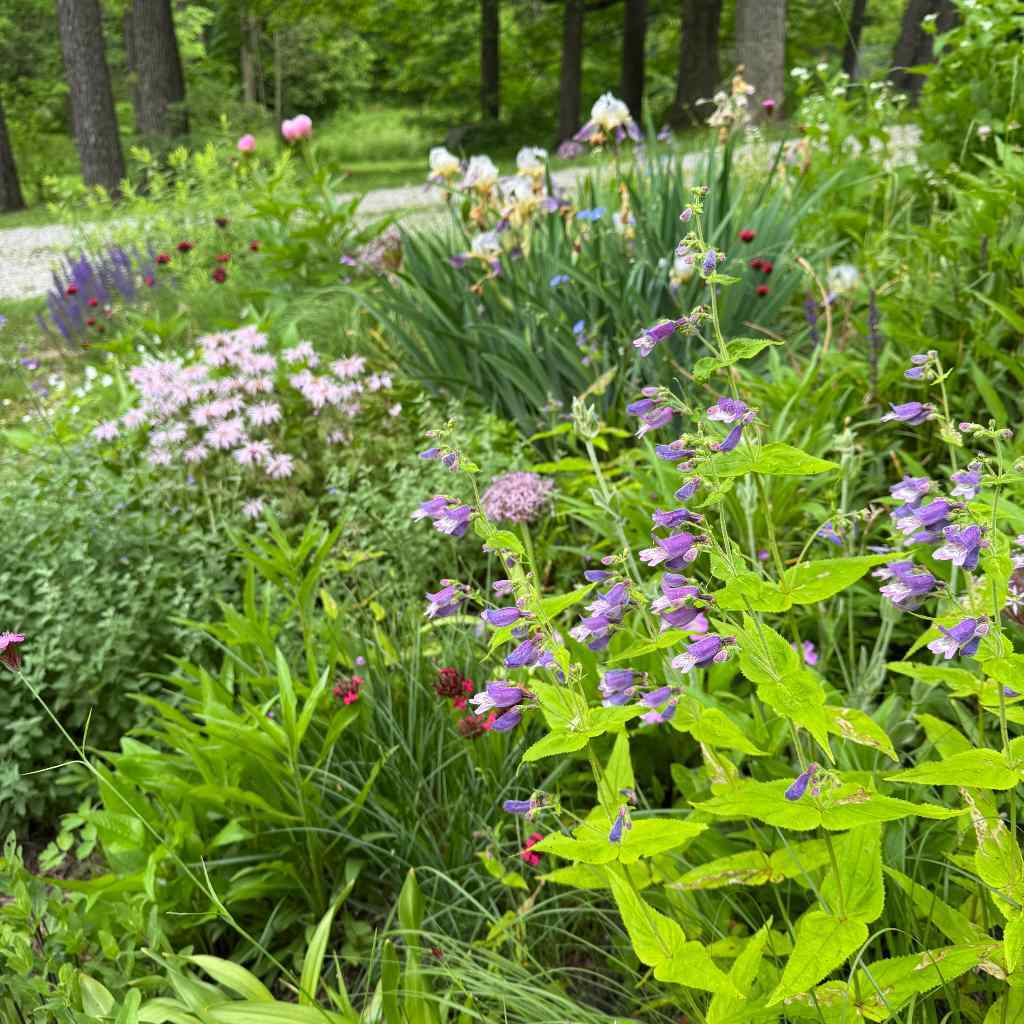
Here with Peaonia 'Bowl of Beauty' and unknown heritage bearded Iris. This is where Penstemon smalli could play it's role, because it's fine flowers go so well and meet with large flowers of peonies, bearded irises, or even early daylilies (Hemerocallis), lilies (Lilium) or early blooming roses! Another great blooming companions are mint family plants like Salvia nemorosa (Meadow Sage) or Nepeta x faasenii (Catmint) or Monarda bradburiana (Eastern Beebalm). You can see all three of those in the backround ©US Perennials
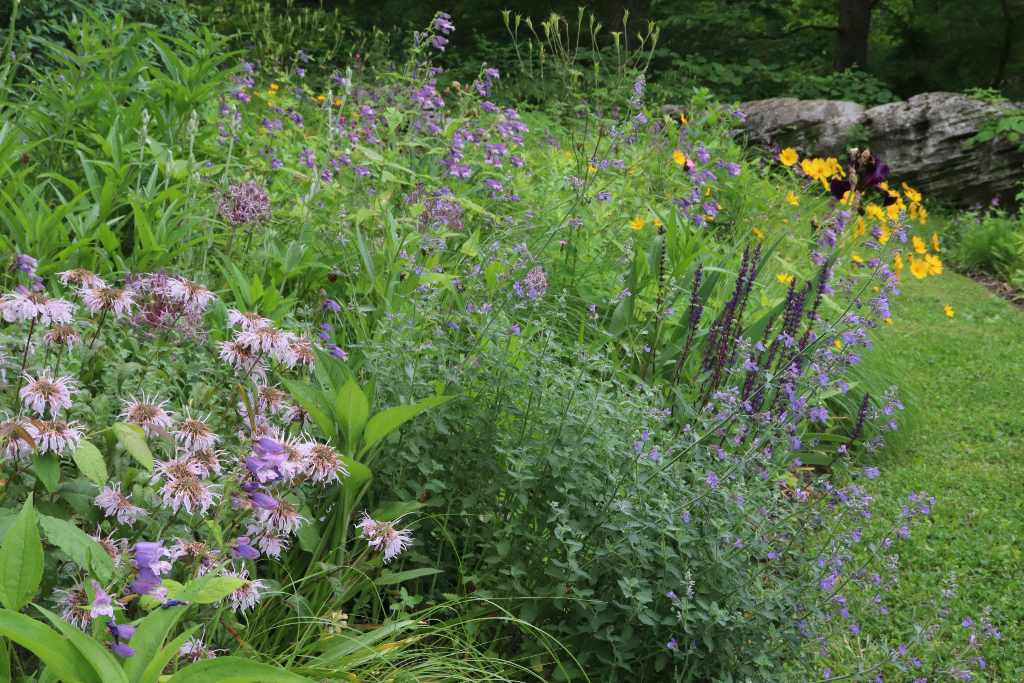
The same flower bed, view from the other side. With dark flowering Salvia nemorosa 'Caradonna'. ©US Perennials
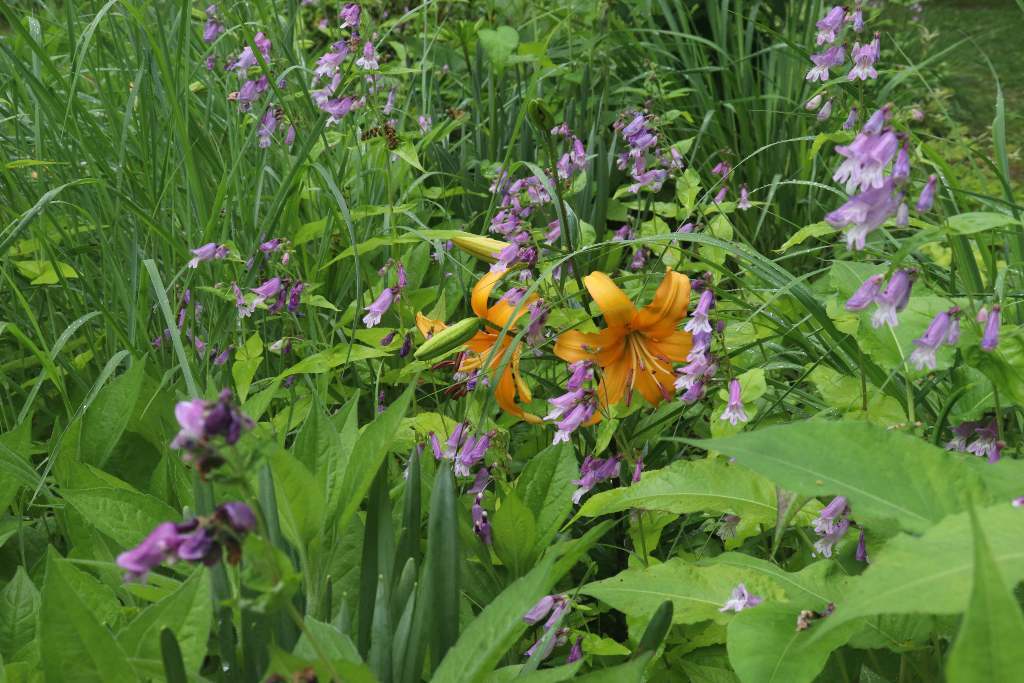
...here with Lilium 'Pearl Justien' (Asiatic and Tiger lily hybrid 'Pearl Justien') in partial shade @US Perennials
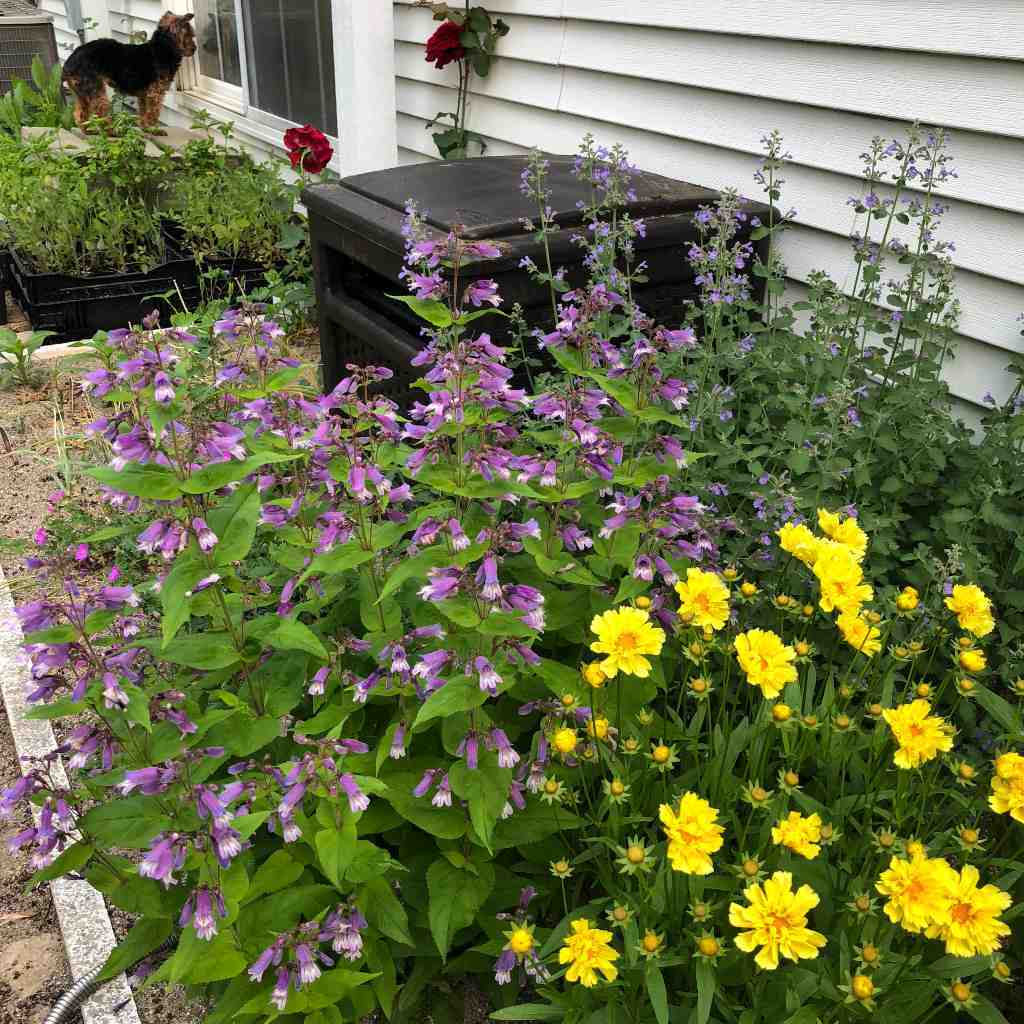
...here in the previous garden - about mid May, with Coreopsis 'Lady Charlize', Nepeta 'Dropmore' and climbing rose 'Don Juan'. Interestingly, this plant was purchased as Penstemon 'Violet Dusk', which is just a commercial name of Penstemon smallii, but it had thinner and longer flowers. So there can be variability in the appearance, dedepnding where you get your plant or seeds. ©US Perennials
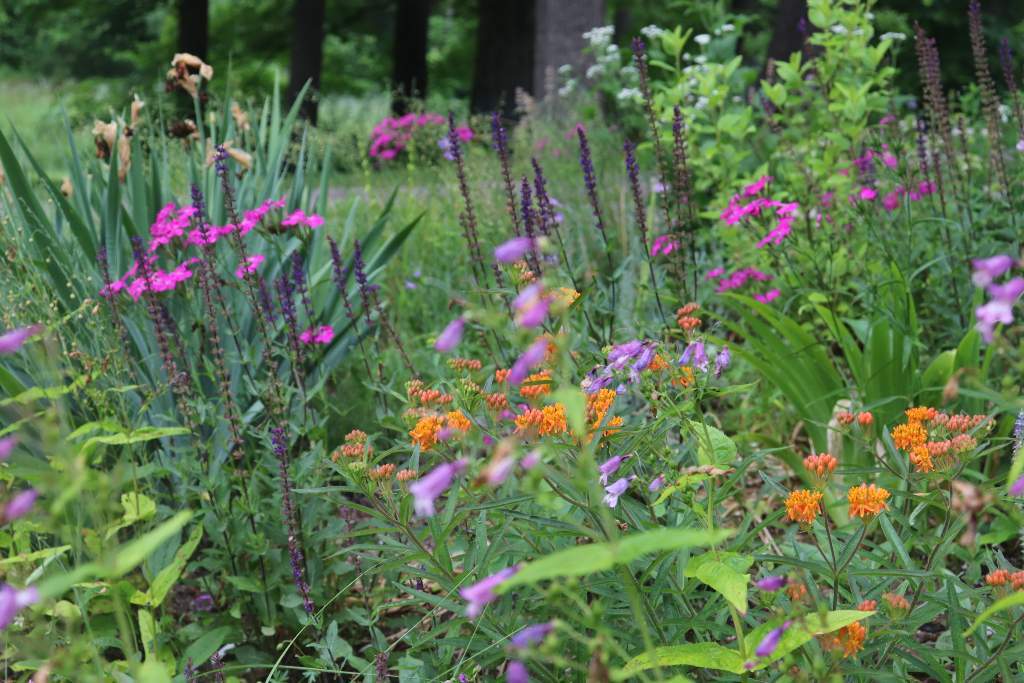
Each year is different. Garden evolves and changes. It's much better combine plants according to their different contrasting structures. So even when there are no blooms, there's still that contrast and interest. But combining flowers and colors is more entertaining, but in our climate often short-lived show. Sometimes the beardtongue meets with more orange colors - with last flowers of Aquilegia canadensis (Wild Columbine) or here with very early flower of Asclepias tuberosa (Butterly Milkweed). The dark purple Dianthus 'Rockin' Purple' thrived for several years. ©US Perennials
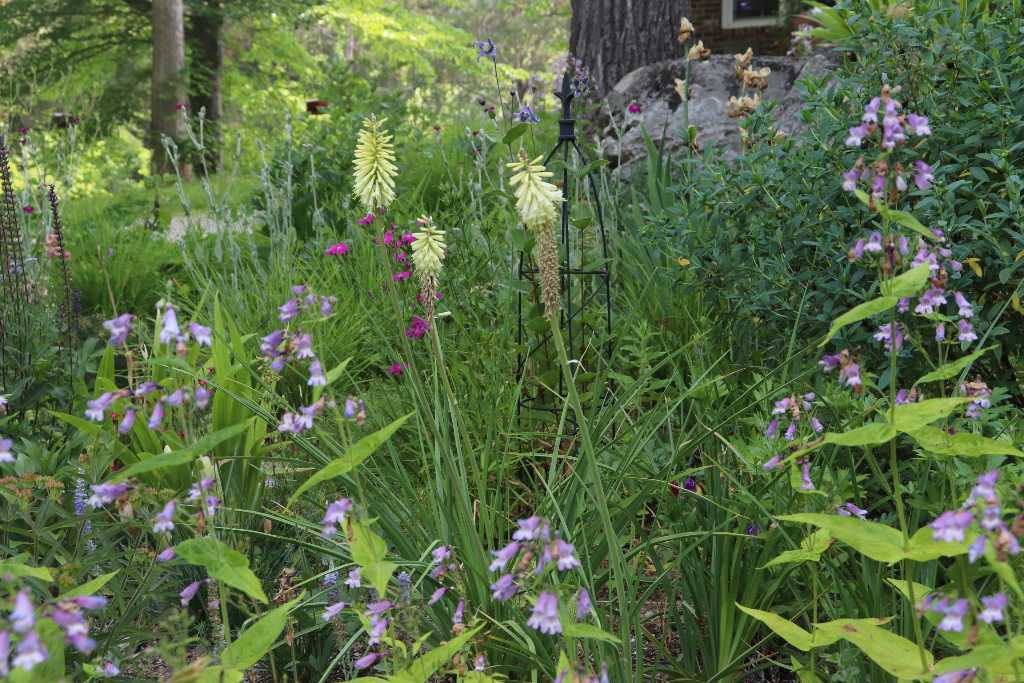
The same bed in a different year - with Kniphofia citrina (Red Hot Poker) an Dianthus 'Rockin' Purple' @US Perennials
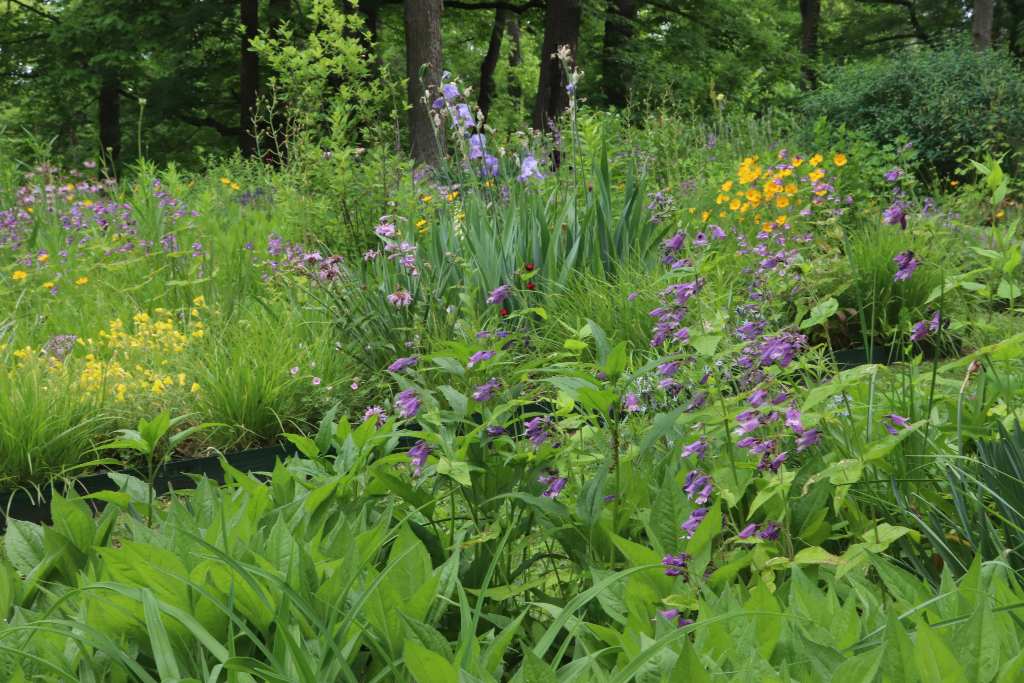
Penstemon smalli will guide your garden from late spring to early early summer. It has good proportion of the leafy part and the flowering part. Not too short, not too big, so it fits perfectly into many garden settings. It doesn't smother other plants (unless you combine it with really tiny and finicky plants). It goes well with smaller plants and taller ones too. Where happy it seeds freely around, but not to a nuisance point. On somewhat drained soils, it has universal use with many common perennials (native or non-native). We have other beardtongue species in our garden that bloom at the same time (P. smallii, P. pallidus, also P. grandiflorus, P. cobea, P. digitalis and in the nursery close by other species), but we have't observed any crosspolination and all the seedlings come true. ©US Perennials