
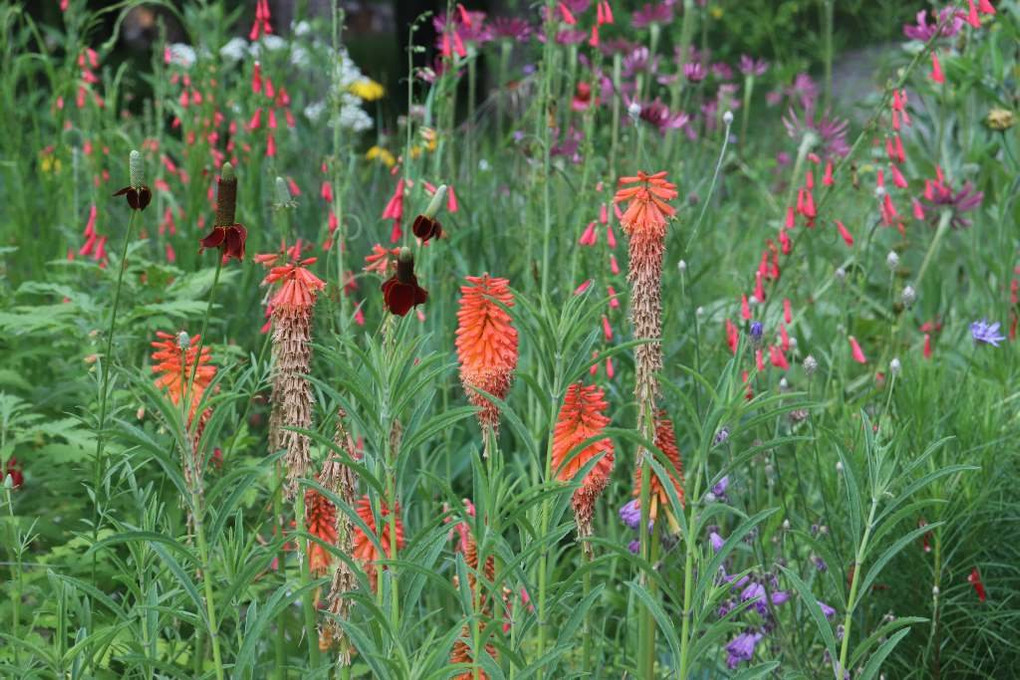
SAND GARDENING IN SOUTH CENTRAL INDIANA
Posted by Rad Hajek on Feb 06 2026
This article was published a while ago in the winter/spring 2025 issue of NARGS magazine, the North American Rock Garden Society.
Since then, our sand bed finished 4 full seasons (4 winters) and it's about to finish it's fifth winter very soon. Winters are valuable data sources and crucial times at the same times. The winter 2024/2025 was quite harsh for us and so far the 2025/2026 winter is similar, if not worse. Both winters have solid cold, constant freezing periods for over a month with deep temperatures - frequent night dips to minus 20 Celsius/minus 4 Fahrenheit). Fortunatelly both winters provided some snow cover (now 28 cm/11" of snow). Hard to tell, what is "normal" with the climate anymore.
Some plants in the sand bed struggled, especially the tender ones (for us). Visibly Muhlenbergia capillaris (Pink Muhly Grass) was beaten up badly (2/3 of each clump died and it took them the whole season 2025 to recover). All Kniphofias (Red Hot Pokers) looked terrible, some did not resprout. Ruta greaveolens lost the whole upper part, but recovered from the bottom. Well, each season (and winter) are different and the plants react. Some plants come and go, some persist.
The NARGS is international organization gathers rock gardeners and gardeners from all around the world. That's why this article is a bit general, but hopefully it still provides enough data for American Gardeners. Here, we can also share a lot more pics than in the printed magazine allowed.
Pictures are placed into the text chronologically to follow the text, dynamic processes and progresses. We would do things differnetly now and rely more on the plants that do well in sand. But the mistakes and errors still seem to be the best ways of learning.
I heard of Peter Korn’s sand gardening long time time ago at one of the Czech Perennial Plant Association afterparties in the Botanical Garden in Prague. My friend Martin Hajman, back then the head gardener of the Pruhonice Alpinum (now head gardener in Tromso Botanical Garden), was talking enthusiastically about such a approach. I forgot Peter Korn’s name immediately, but the sand garden topic was stuck in my head since.
Sand for me was always somehow pleasing material, clean, easy to play with and reminding of lazy summers times on the beaches. Czech Republic also has abundance of sand and rock sediments in many regions, and one large sand quarry was also a place where we used to play as kids. So there was no reason not to try sand as a growing medium.
I planted my first 2 small sand stripes in 2014 and 2015 in my previous job in the Czech Republic. I trialed there assortment of Mediterranean herbs, a few other drought tolerant plants, grape vines and fig along south facing wall. Most of the plants did well. The trouble was that I had less than 2 years to observe the plants there, since I decided to relocate to USA.
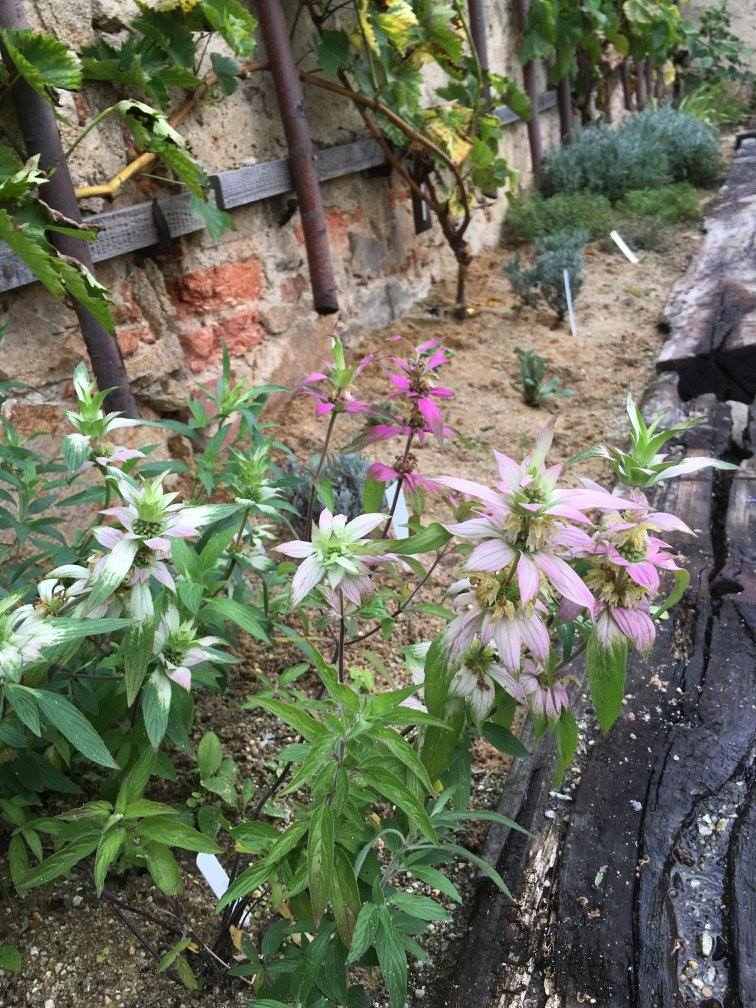
First sand bed attempt in the Czech republic (2015) with Monarda punctata in the front. South facing wall, 1-1.5' (30-45 cm) of sand. Various herbs and grapes were planted there (Lavandula assortment, Hyssopus, Satureja, Origanum, etc.)
MOVING TO USA FROM THE CZECH REPUBLIC was a big leap. Sometimes life takes you somewhere you wouldn’t expect to go at the first place. Anyways, I started to garden in the new place close to Indianapolis pretty much immediately in late summer 2017. Quickly I changed one neglected corner into a sand bed. I repurposed flat rocks (edging remnants) into round raised bed, cleaned up the yard and buried there some muddy river rocks from around the pond, scooped some soil, build the wall and then filled it with sand.
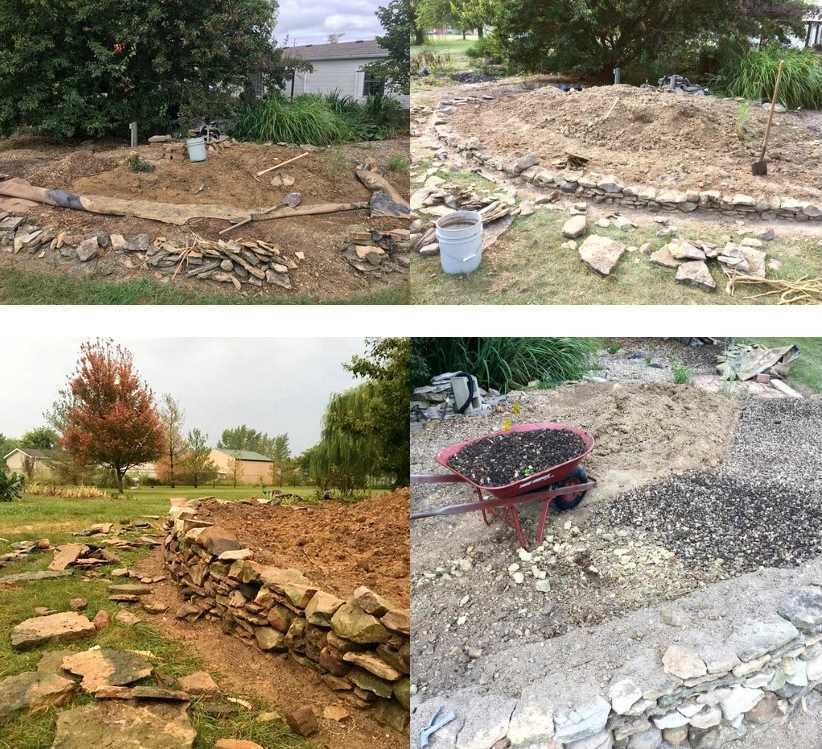
Construction of my second sand bed called "Lavender Hill", Morgan County, Central Indiana, 2017
Since lavenders were my favorite plants back then, I ordered about 12 different cultivars of lavender from Oregon. This bed was named Lavender Hill. I didn’t want to spend too much money on plants, so I was buying mostly only plants on sales, divided them or propagated myself, so I never managed to plant it fully and I abandoned it in less than one year after.
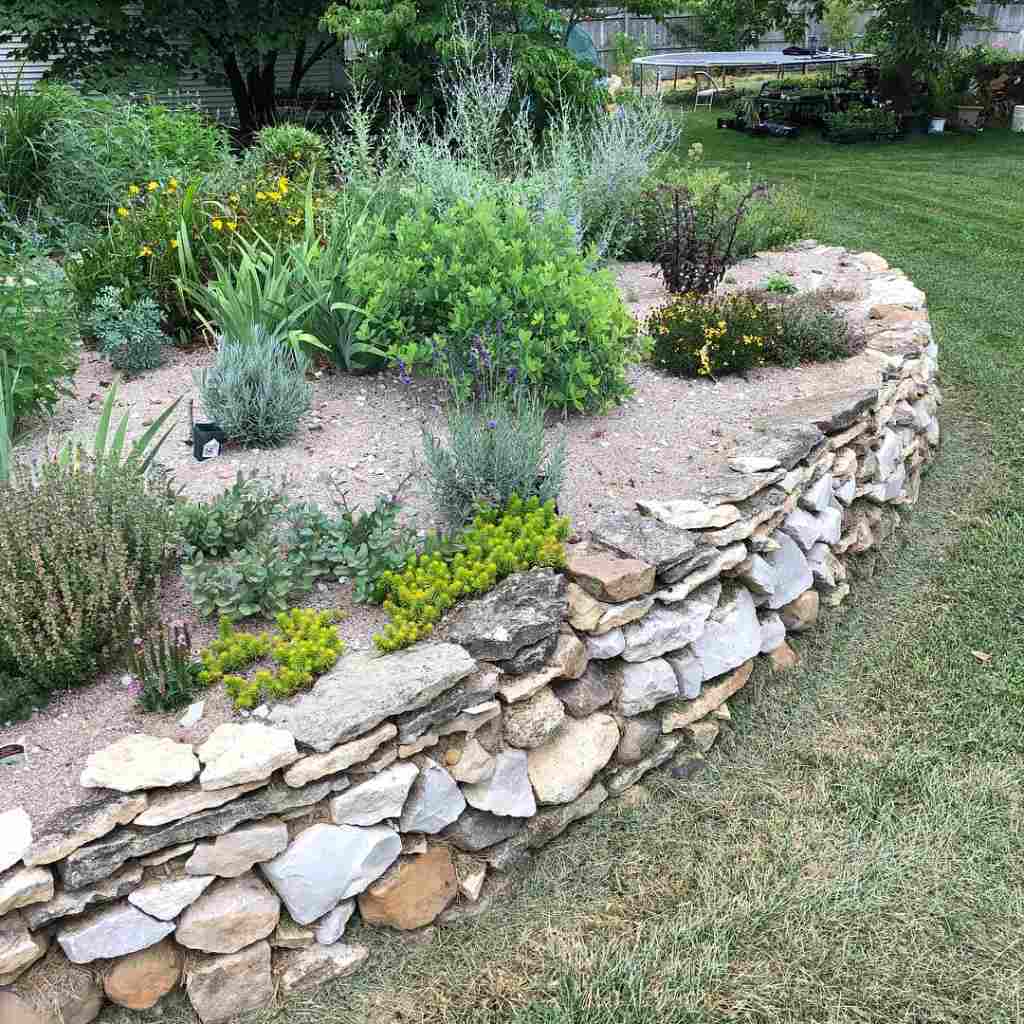
Lavander Hill in 2018, this bed was never fully planted.
My first very cold and long winter in USA, among the corn fields, with no nature around and with little social opportunities, was quite hard. So our family decided to move closer to civilization. Bloomington, IN seemed to be cool, progressive small town and great place to be. The countryside in southern Indiana is also lot more visually attractive, wild and dramatic. Limestone hills with deep woods full of spring ephemerals, charming woodland creeks. And a warmer zone as a bonus!
After the move, I quickly planted 2 large areas. Sand garden naturally had to follow. I friended Peter Korn on the social media, where I could see a lot more pics of his gardens. I was totally hooked.
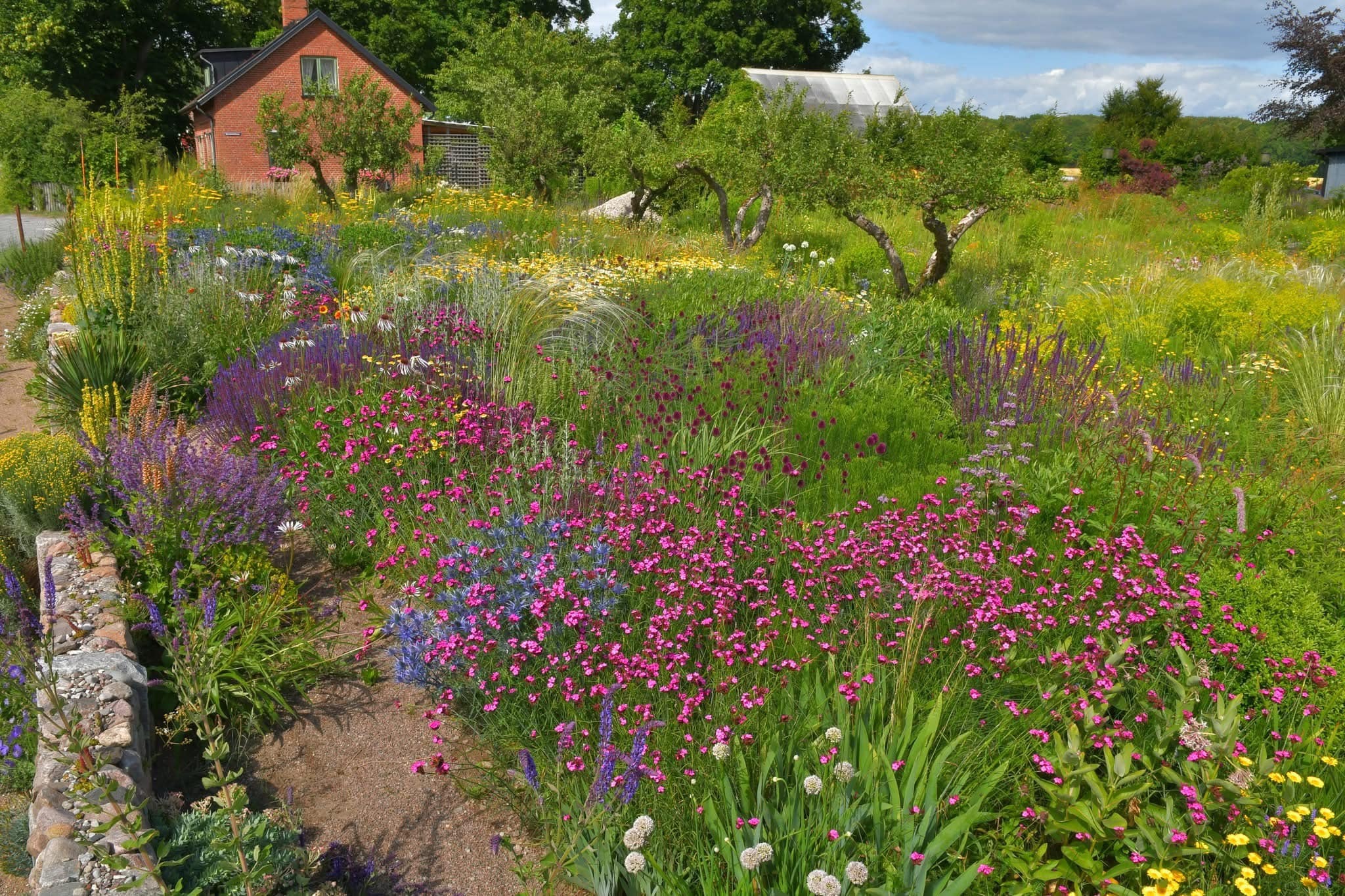
Peter Korn's Sand Garden (and nursery) in Klinta, Southern Sweden ©Peter Korn
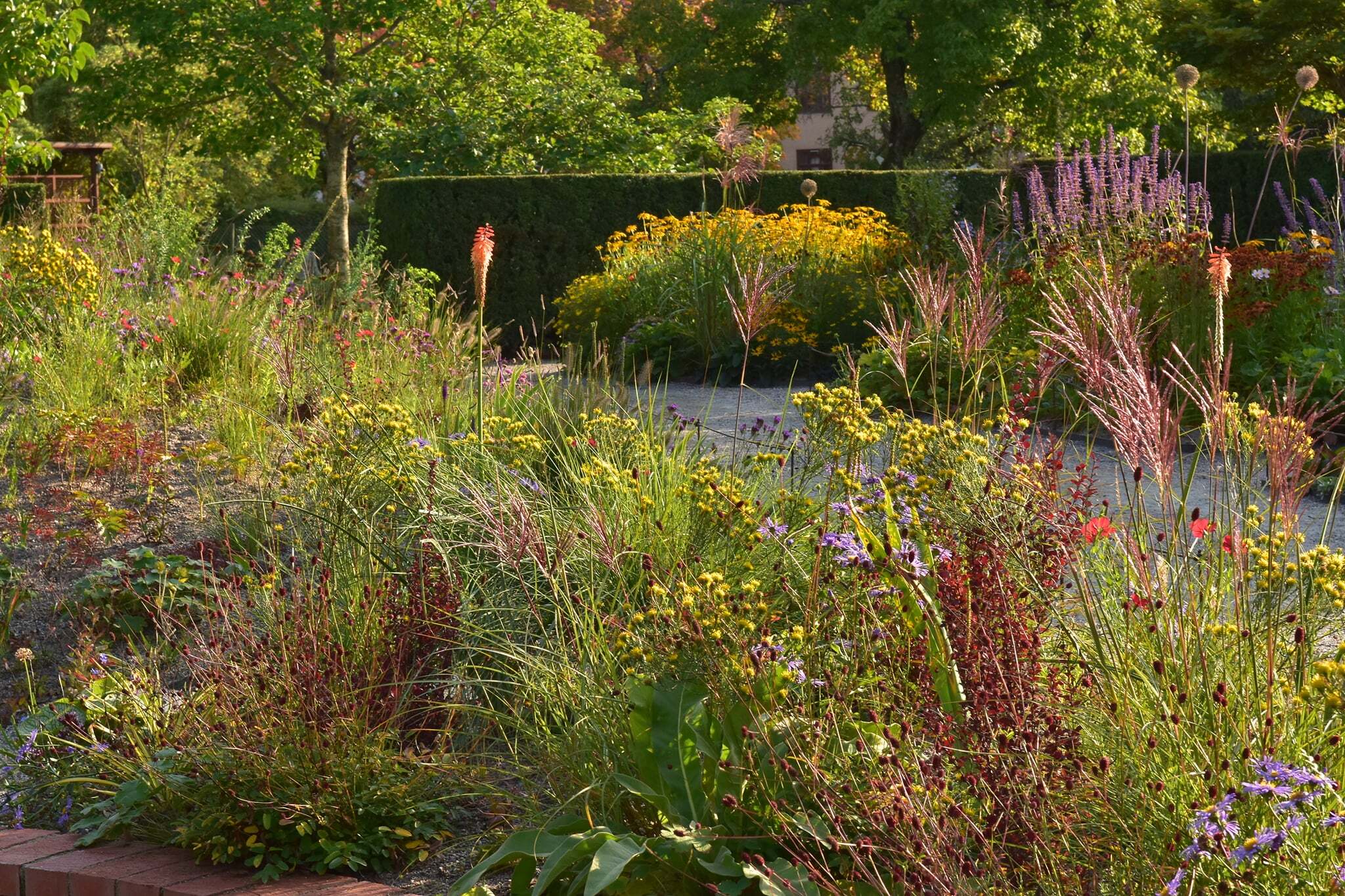
Peter Korn's Public Sand Garden. Yes, even the whole public parks can be planted in sand ©Peter Korn
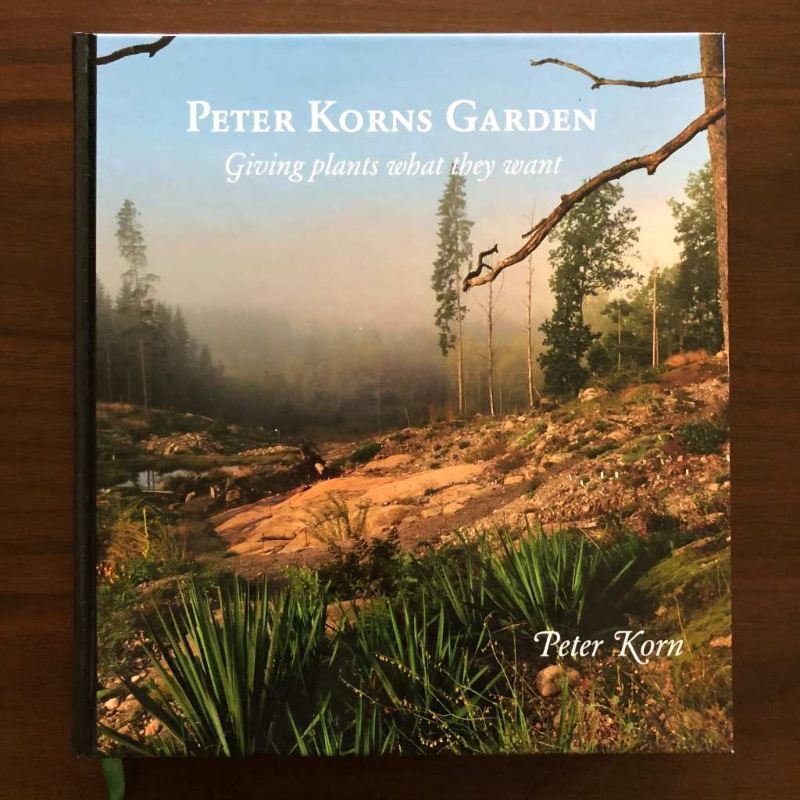
I ordered his book “Giving Plants What They Want” directly from Peter and read it eagerly. This time I wanted to be more educated and more ready.
CHALLENGING CLIMATE OF SOUTH-CENTRAL INDIANA
My first two seasons in Bloomington were merciless. Primary exceptionally wet at the beginning (with very wet winters), with lush and promising springs, but poof they changed into Amazonian forest summer with temps in 90’s F/32+C from May on. Then the rain faucet turned off and the end of summer and early fall stayed dry. Winters were also lessons - fast changes and drops in temperatures. Hard freezes with no snow cover for several days with temps of -2.2 to -7.6 F (-19 to -22 Celsius). Or too much rain when you don’t need it. No wonder that the settlers and founders in the area struggled to grow any crops here.
Soon I understood the major trouble are the humid summer days, often shadowed by the hot tropical nights, when the plants don’t get much cooling relief. Many of my plants didn’t look happy. All the possible foliar diseases found their way to my garden, many clumps opened and flopped. Unexpected wilts of several stems, sudden dies off, hungry insects and rabbits munching on plants; plants shrinking instead of bulking up.
Back then I was still comparing to my experiences from the Czech Republic. And since I consider the British climate as “gardening heaven” (I had some opportunity to garden there too), southern Indiana felt more like “gardening hell”. Often, I gave up on gardening during the summer, because it was unbearably hot. I realized, how spoiled I am, and the only way out was to embrace what I have and maybe lower my expectations. I know there are states around with similar growing conditions, but if you move from Europe to USA, it’s really hard to garden here.
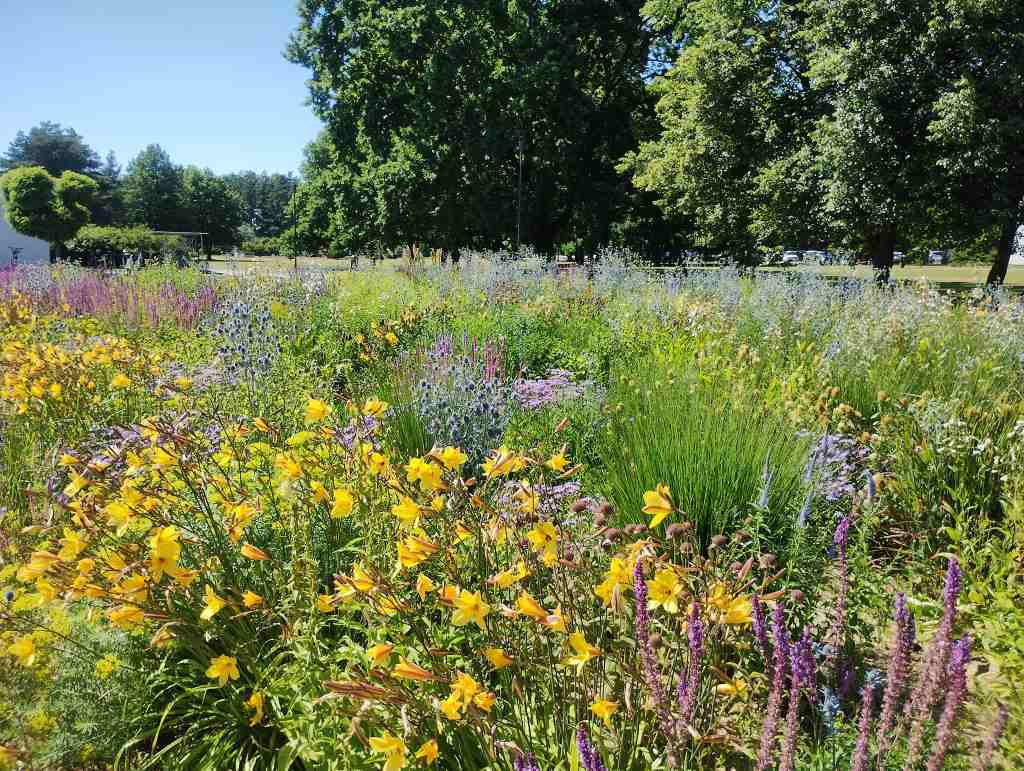
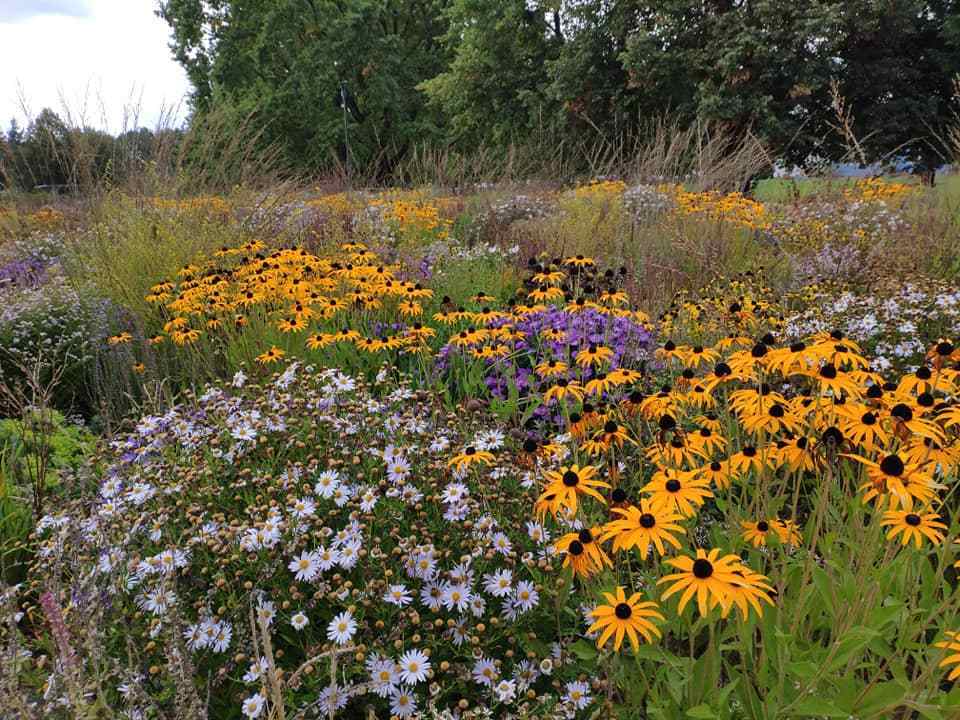
Fairly large sand bed, the public space in the spa area, Trebon, Czech Republic. The same bed at the end of June and in the fall. Planted by horticulturalist and nurseryman Jan Nussbauer, Herba Grata Nursery. Sand beds and gravel beds are lot more common in central Europe than in the USA. 1 - ©Jan Nussbauer, 2 -©Stromy Trebonska, Facebook
Southern Indiana sits in the “transitional” zone 6a/6b (was 5a to 6a). Unable to unlock the door to wider assortment of tender plants of magical zone 7. And also isn’t cool enough during the summer nights to achieve top performance of many perennials that do well in northern Indiana/Chicago area. Bloomington, Indiana lays on 39 degrees of latitude, which equals latitude of Athens in Greece. Average rainfall is 50” (127 cm).
NEW SAND BED (Bloomington, IN, zone 6)
My desire to create a unique garden environment was fueled by my frustrations, but also with my curiosity. How will Peter Korn’s plantings in oceanic climate translate to hot, humid continental climate? Can the sand widen our already narrower plant assortment in our region? Will the plants be more healthy?
From Peter Korn’s book, and from some text discussion with him, I knew that all of this should be theoretically possible: That the low nutrient sand creates slow environment – plants have to reach deeper for nutrients and water. That the newly planted ones will often decline before they bulk up some. That the slower growth will form more dense and more hardy tissue, less palatable for herbivores, shorter non-flopping stems and more natural appearance and increased longevity.
I’ve chosen west/north-west mildly sloping area, on the edge of mature black walnut grove, with nearly all day long sun. I followed most of Peter’s recommendations and rules, but I also made some mistakes.
CONSTRUCTION
During summer 2021 I marked the bed shape and stripped the sod with kick-sod cutter. Then broke the soil to pull roots of perennial weeds and some roots of the black walnuts. The soil revealed to be silty, with spots of more clayish soil and with several limestone outcrops just beneath the surface (limestone boulders and rock are all over the property).
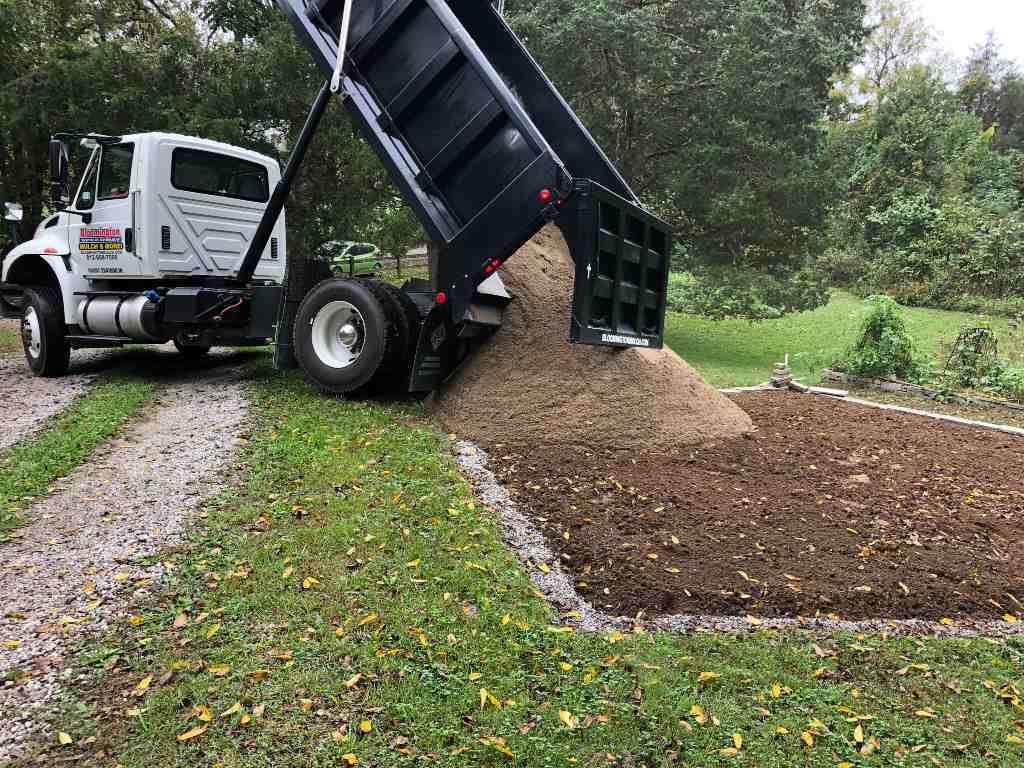
After the sand was brought in, I dry stacked “rip-rap” cut limestone rocks around the sand (these rocks sit on layer of gravel to avoid heaving in the winter). Bloomington is famous for it’s limestone quarries and cut limestone is easily available and affordable - 1 pound of rock per 1 penny.
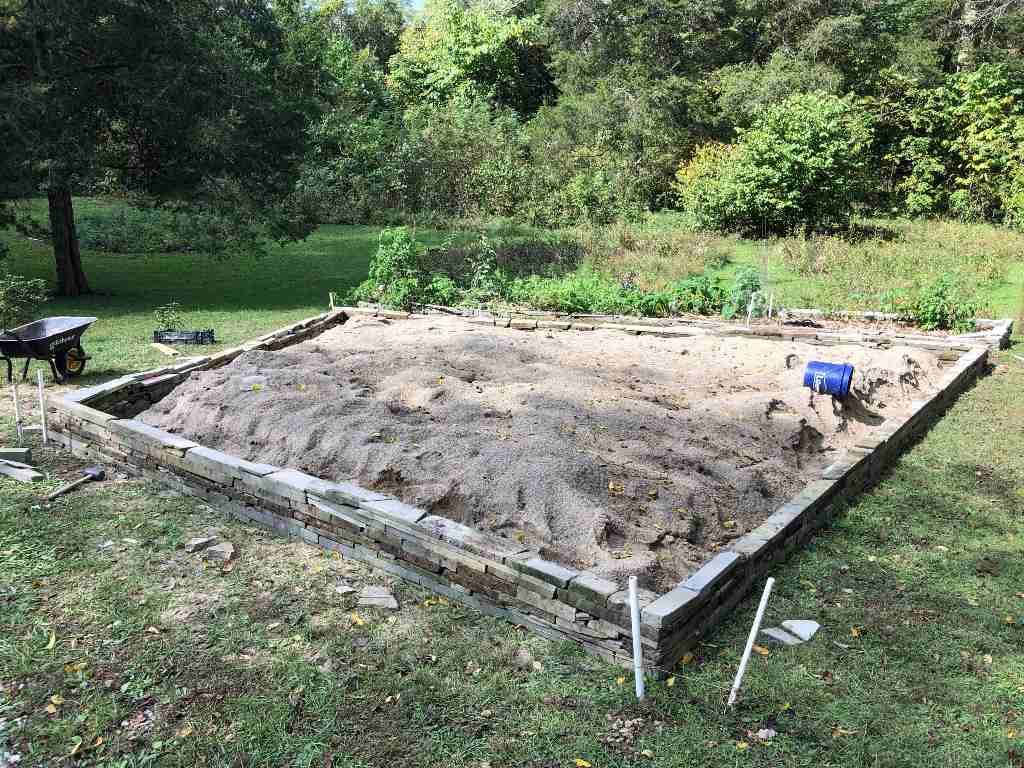
I used average, medium coarse sand in the thick enough layer. So about 13” (35 cm) in the center of the bed, slightly mounding and getting gradually thinner to 8” (about 20 cm) along the edges. Such layer is thick enough to hold the moisture during the drier periods and drains well enough after heavy rains. To prevent the sand escaping through gaps, I lined the retaining walls with thin weed barrier fabric.
The irregular rectangular-shaped bed of about 21’ x 33’ (7.5 m x 11 m) bed took 18 yards of sand. Except the soil work, the installation was fast.
PLANTING
I planted the bed in the first week of October 2021. Rather late, but this permitted planting bulbs at the same time. Fall is getting longer and fairly warm, so most of the plants managed to root some before the winter struck. Altogether I didn’t have many loses due to the winter(s), but more due to unsuitable plants for my conditions.
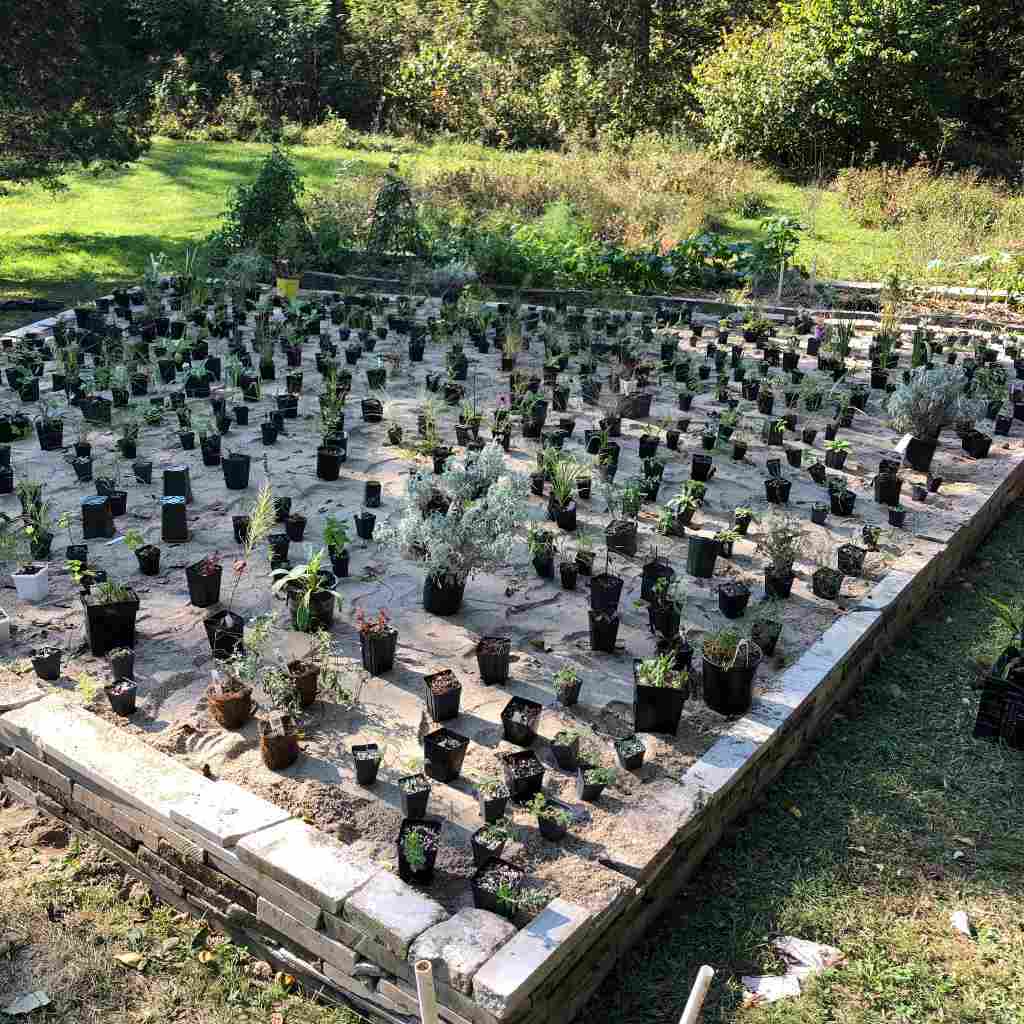
It took some time to assume what plants should thrive there. I gathered all the weird and possibly great plants grown from seeds from NARGS, Penstemon Society and Jelitto. I like taller plants more than the true rock garden plants, so Peter Korn’s steppe gardens were direct inspiration. I tried to select plants more or less drought tolerant, originating in dry/mesic environments from various continents. Majority of plants were in 3.5” (9 cm) pots, some older scraggly ones, and some bigger plugs. I placed them on the bed quite densely, about 8” (20 cm) apart, with the tall perennials towards the center and shorter along the edges.
Among the tallest were plants (60”/150 cm or more) were Leucanthemella serotina, Phlomis samia, Rudbeckia subtomentosa ‘Henry Eilers’, Silphium terebinthinaceum, Thermopsis caroliniana, Verbascum olympicum or tall grasses like Andropogon gerardii ‘Blackhawks’ or Muhlenbergia lindheimerii.
The rest of the plants were mix of shorter plants (around 2’ tall) up to small ones for the edges like Jasione leavis, Pulsatilla vulgaris or Phlox nivalis ‘Camla’.
I cleaned all the potting soil before planting. Planting in sand is very easy and fast, usually I used wooden dibber. Since I was planting quite late, I watered nearly every plant with diluted mycorrhizae fertilizer with small watering can (to support fast root development) and then watered the whole bed with a hose.
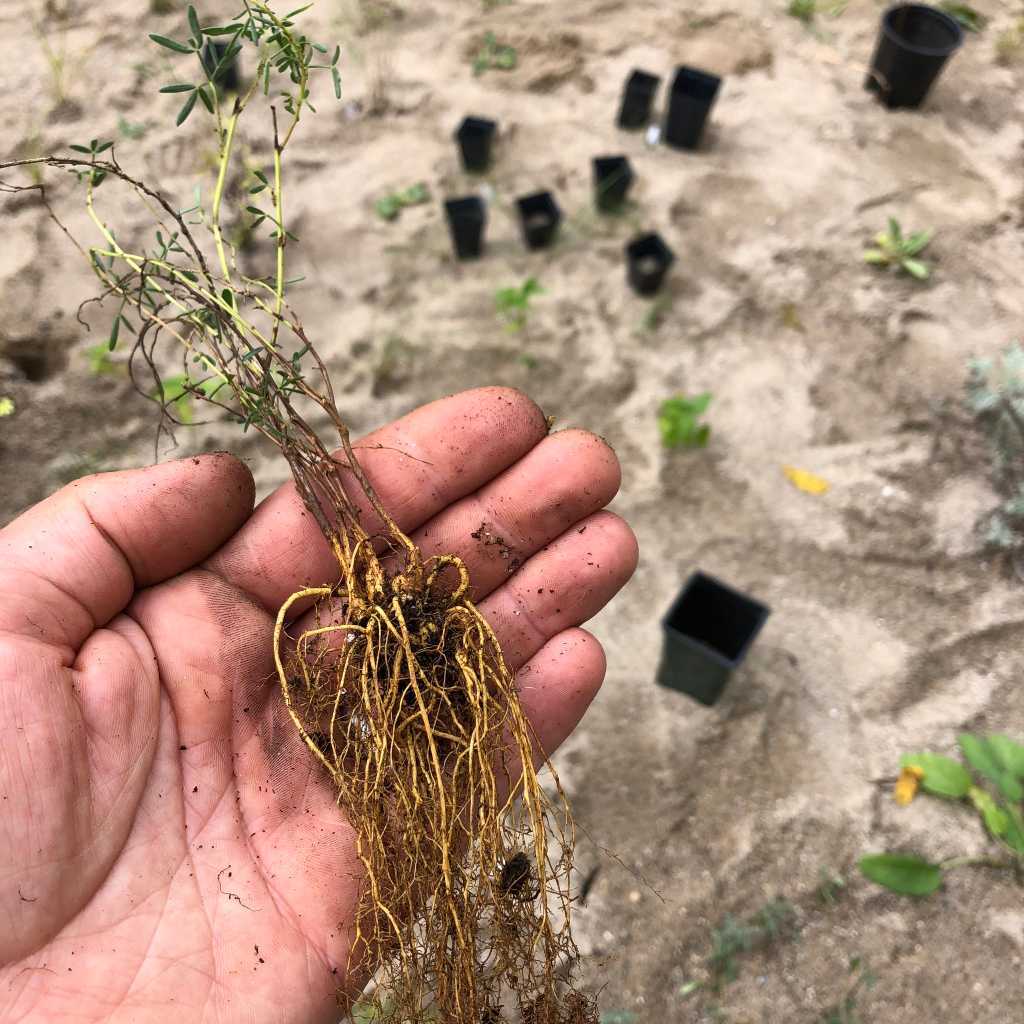
All plants were planted barerooted (potting soil was cleaned off). Late summer-early fall 2021.
Initially I planted about 715 plants and 835 bulbs, altogether in 141 species of plants. As you can tell, my goal was to create very bio-diverse and long flowering bed, with certain emphasis on north American native plants.
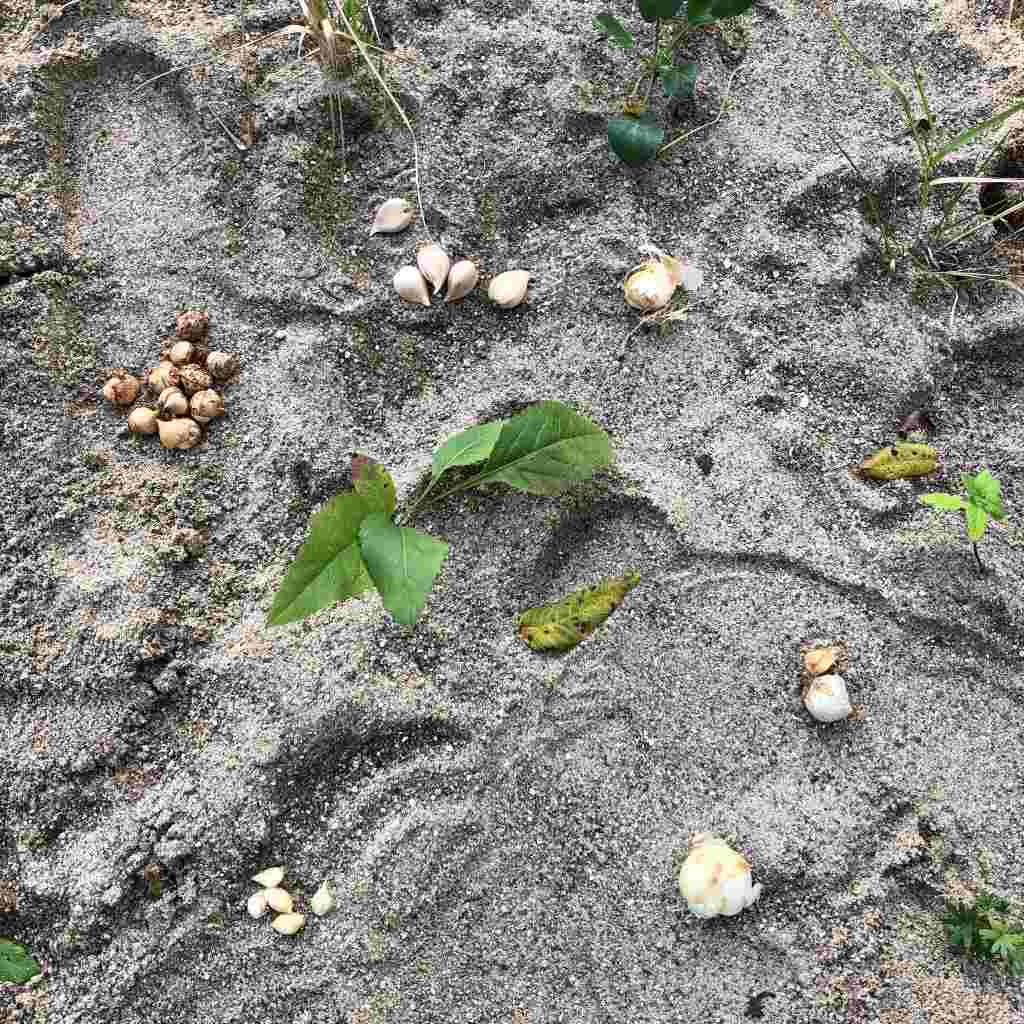
Adding bulbs in the fall. Now we know to plant them deeper than usually!
THE RESULTS
Sand bed has endured for 3 full seasons and I can pronounce some judgements. The outcomes are rather mixed and partially reflect my observations from other parts of the garden. There were some real successes, some failures, disappointments and surprises.
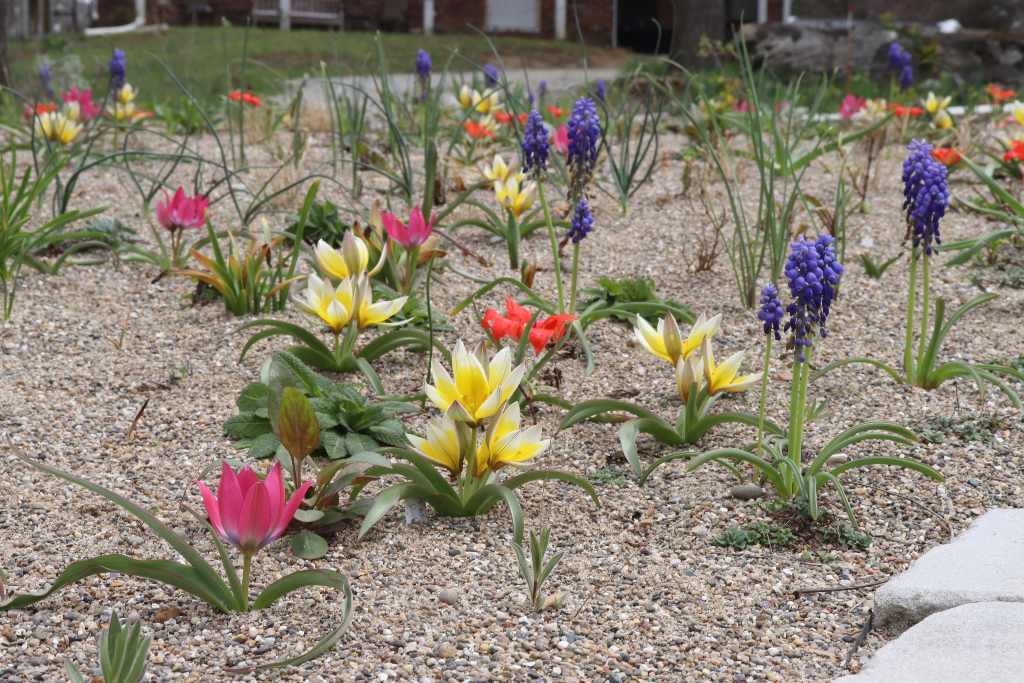
First spring 2022. Botanical tulips Tulipa 'Little Beauty' (purple), Tulipa dasystemon (yellow-white), Tulipa liniifolia (orange-red), Muscari armeniacum (blue, Grape Hyacinth).
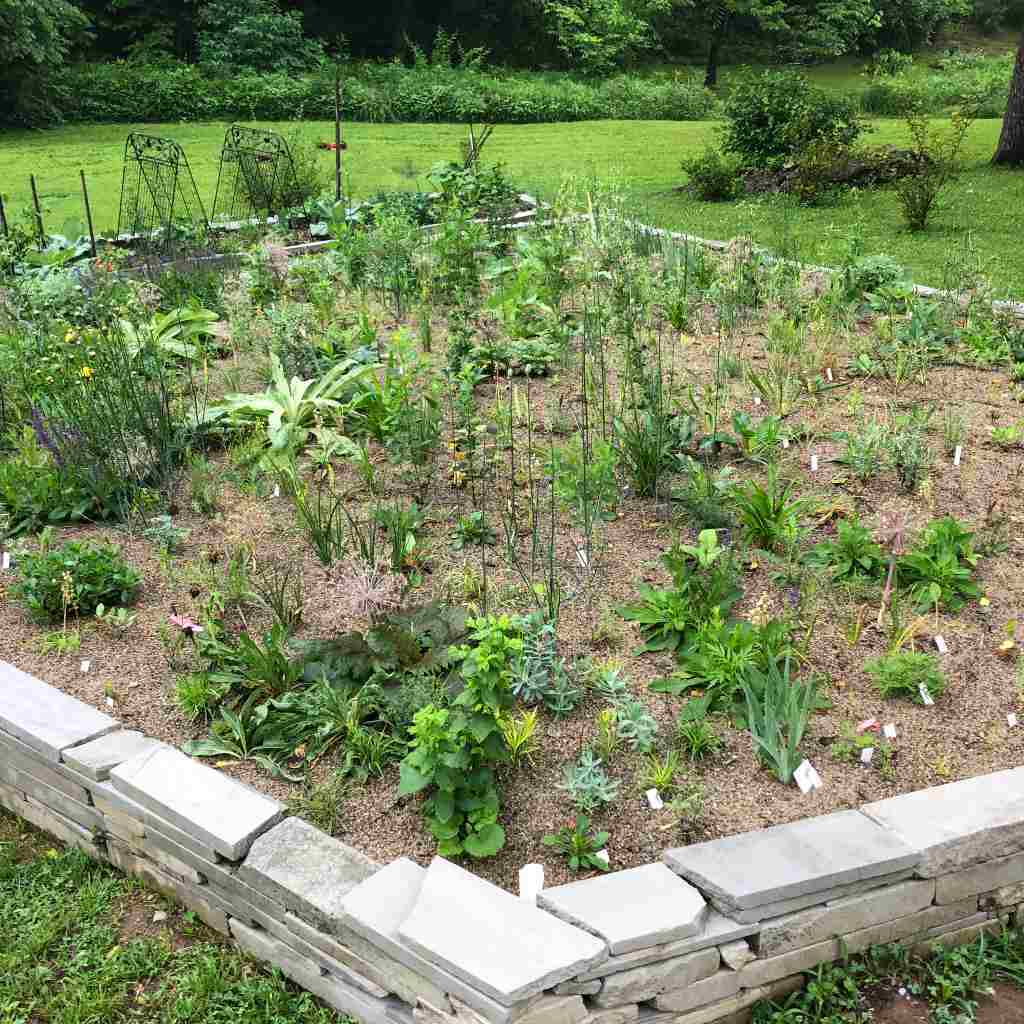
Mid June 2022, the bed is very slowly starting to fill up.
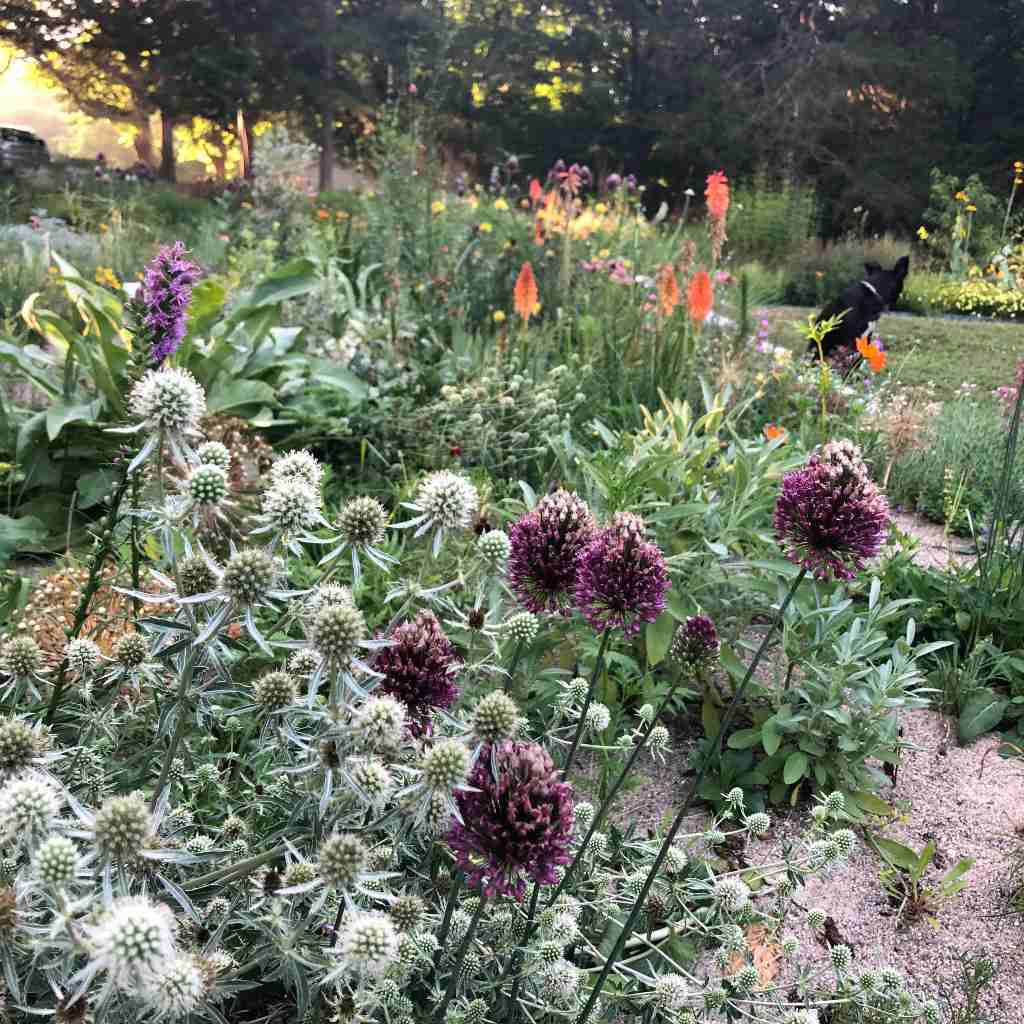
First year, June 2022. Eryngium planum (Sea Holly) was a mislabeled plant, I ripped it out at the end. But it did very well and there were tons of pollinators on them. Allium sphaerocephallon (Drumstick Allium) is a great one.
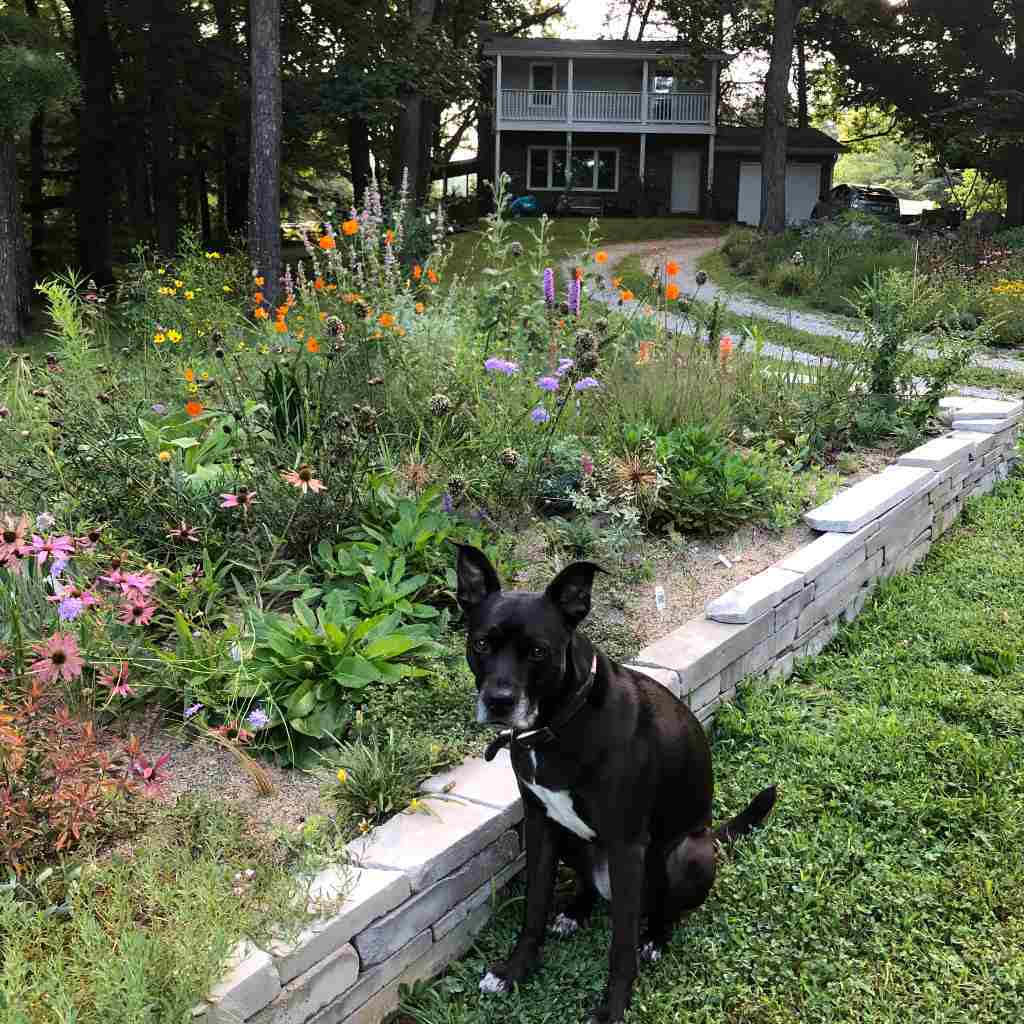
First year - end of July 2022. Many plants took off - Echinacea 'Public Domain', Scabiosa lachnophylla 'Blue Horizon' (pale blue), Salvia nemorosa 'Maynight Strain', Agastache foeniculum (tall blue in the background), oange annual Cosmos sulphureus, tall yellow Coreopsis 'Gilden Lace'. Next to Katie is Gazania linearis 'Colorado Gold' - with yellow buds (usually grown as annual, here it survived 3 winters).
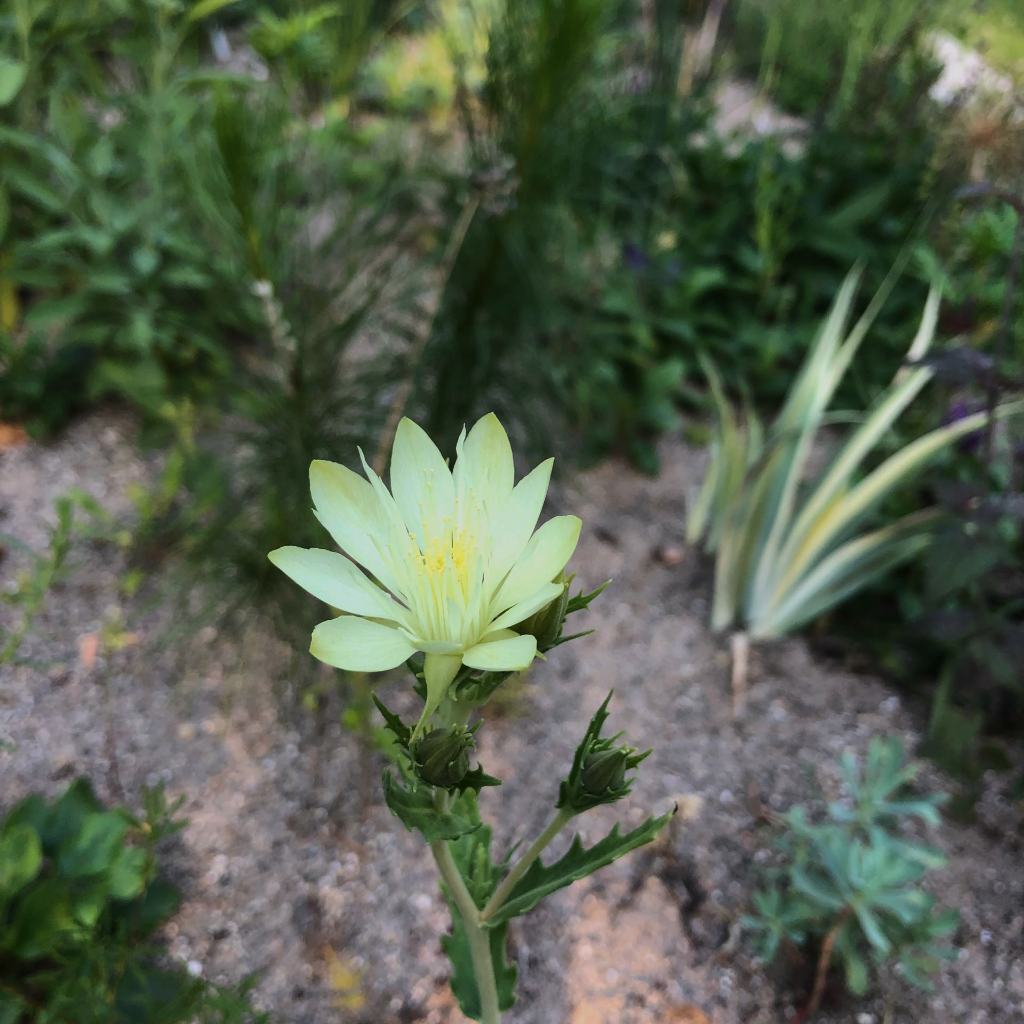
Mentzelia nuda (Sand Lily), native to southwestern and central USA. Unfortunatelly vanished the first year 2022).
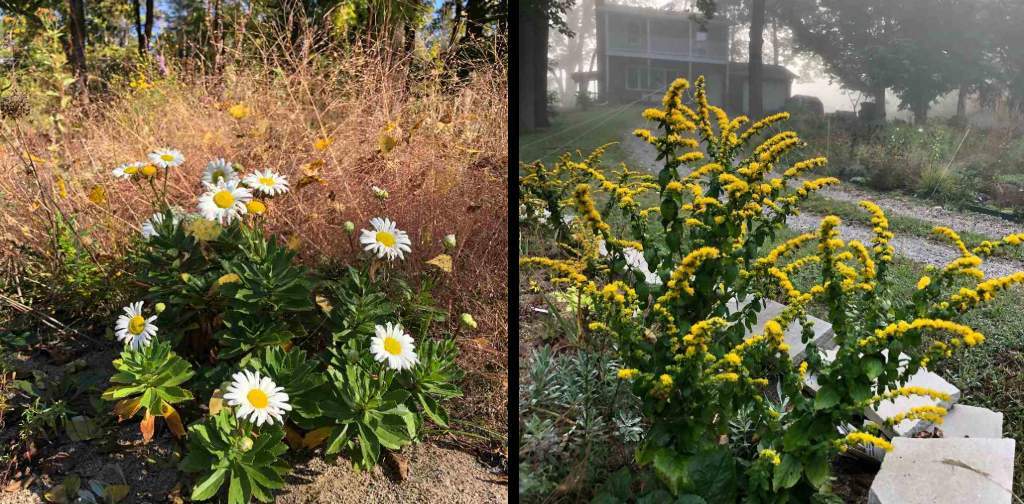
First year - early fall and fall 2022. Left - Nipponanthemum nipponicum (Nipon Daisy) with Eragrostis spectabilis (Purple Love Grass). Right - Solidago sphaecelata 'Golden Fleece' (Autumn Goldenrod 'Golden Flece). All of these plants do well in the sand (in a long term).
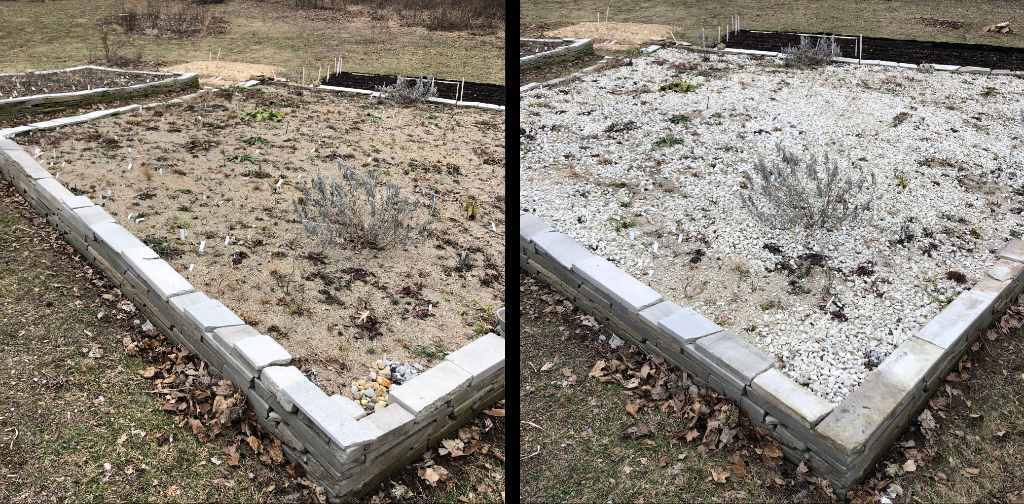
Second year, pre-spring 2023. Coarse top layer applied (2 fractions of local limstone gravel) - this protects the top layer from drying out too fast and the little gaps among the rocks allow plants to seed in more. Selfseeding is needed and welcomed. Combining 2 or 3 different sizes helps to create more natural look.
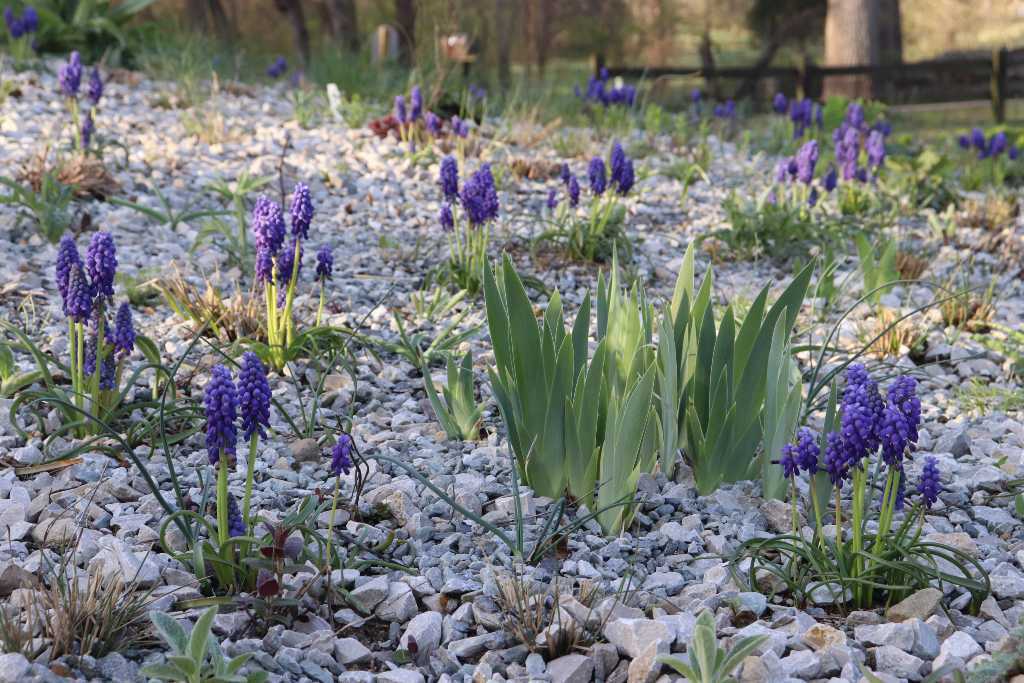
Second year 2023 - the Muscari armeniacum (Grape Hyacinth) is the most durable bulb. It seems that the deep frost can damage some bulbs in the sand (I found some rotten Crocuses and daffodils), planting the bulbs deeper is helpful or needed.
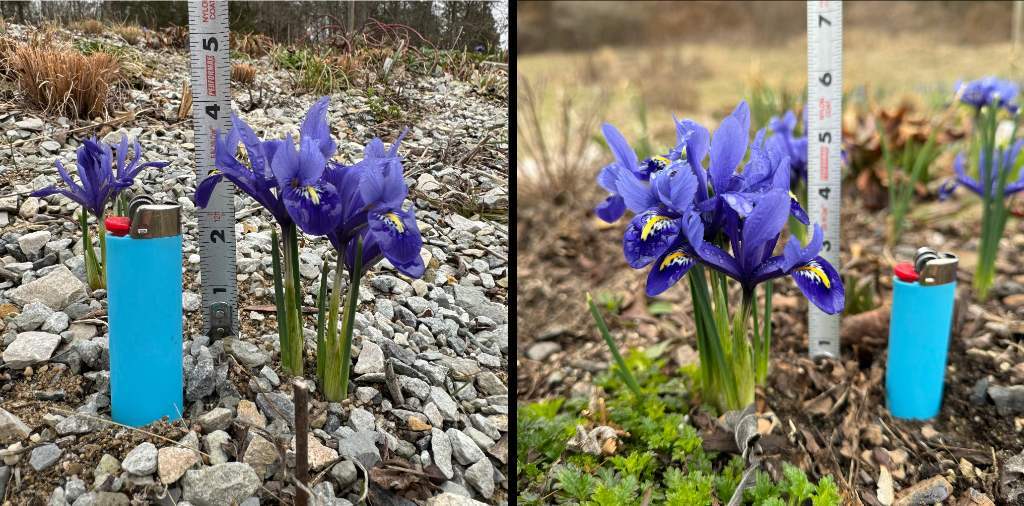
Iris reticulata 'Harmony' (Reticulated Iris) - size comparison : Left in the sand bed (plants are shorter, smaller, flowers are smaler and also bloom for shorter period). Right - the same Iris in rich and drained soil (the plants are more robust, flowers larger, and they last about 5 days longer).
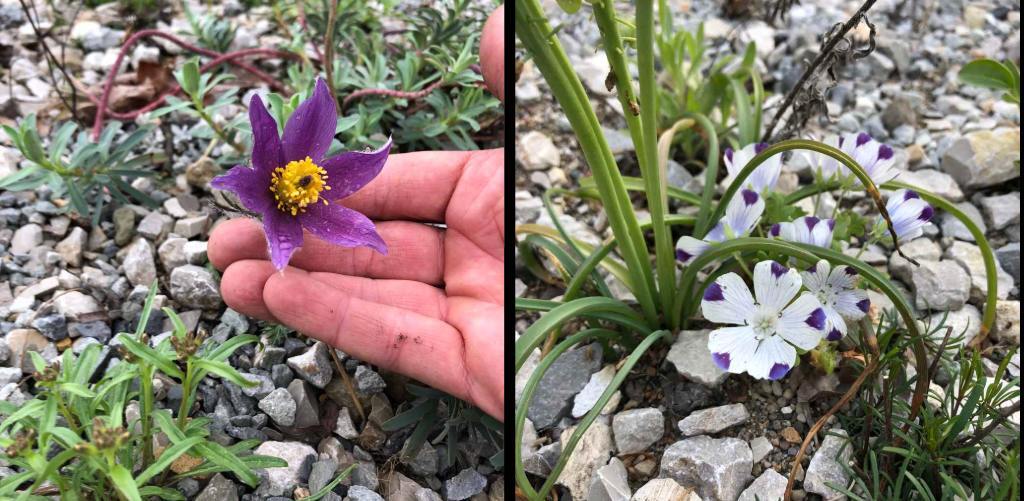
Early spring 2023. Left - Pulsatilla vulgaris (Pasqe Flower) - very easy to grow in Europe (and western USA), but hard for us. Yes, we have a native counterpart - Pulsatilla patens, which seems to be equally hard to cultivate here. Right - Nemophila maculata (Fivespot), annual endemic to California, secondary spread into other parts of USA with wildflower mixes.
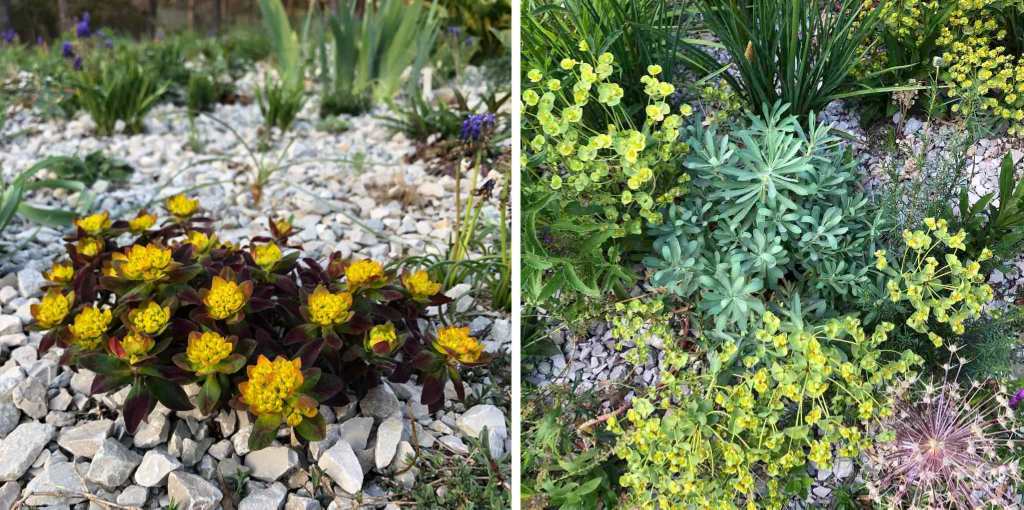
Euphorbias from dry/drained soil do well in the sand bed (they are harder to cultivate and keep alive in the nursery). Left - Euphorbia polychroma 'Bonfire' (Cushion Spurge 'Bonfire'), right : Euphorbia nicaeensis (Nice Spurge). Another one would be Euphorbia myrsinites.
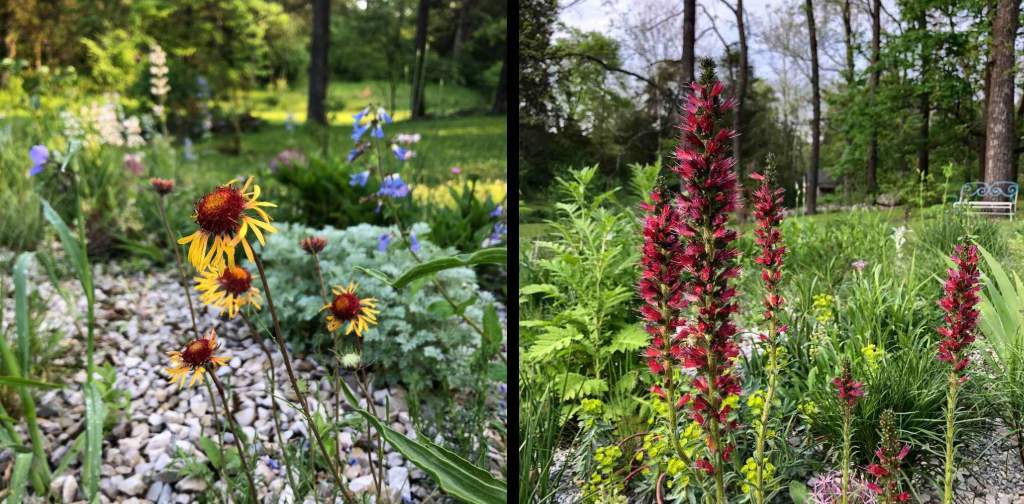
Second year, mid to late spring 2023 : Left - delicate Gaillardia pinnatifida (Red Dome Blanketflower) from Texas and SW USA. Right - Echium russicum (Red Viper's Bugloss) native to Ukraine and Russia. Both seems to do wel in sand, the question is the longer term performance. Other plants from Boraginaceae family (Borage Family) do well here too - Echium vulgare (Viper's Bugloss) and Cynoglossum officinale (Houndstongue).
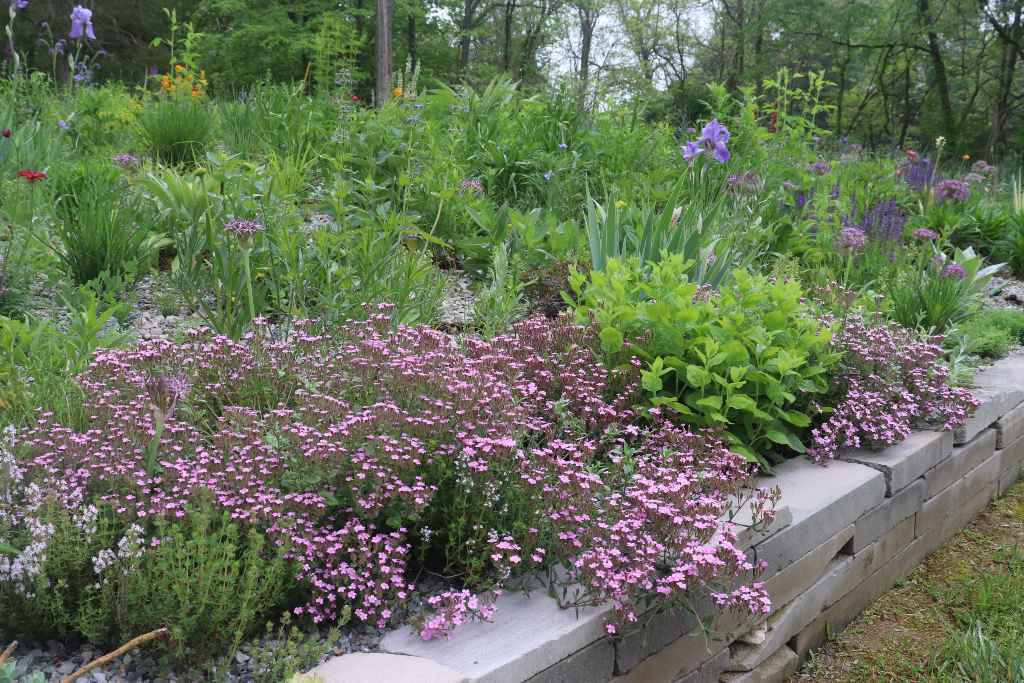
Second year, late spring 2023 - Saponaria cymoides (Rock Soapwort) seem to be happy and durable in the sand. Just like all the heirloom bearder Irises. Thymus vulgaris (Thyme) also does exceptionally well here.
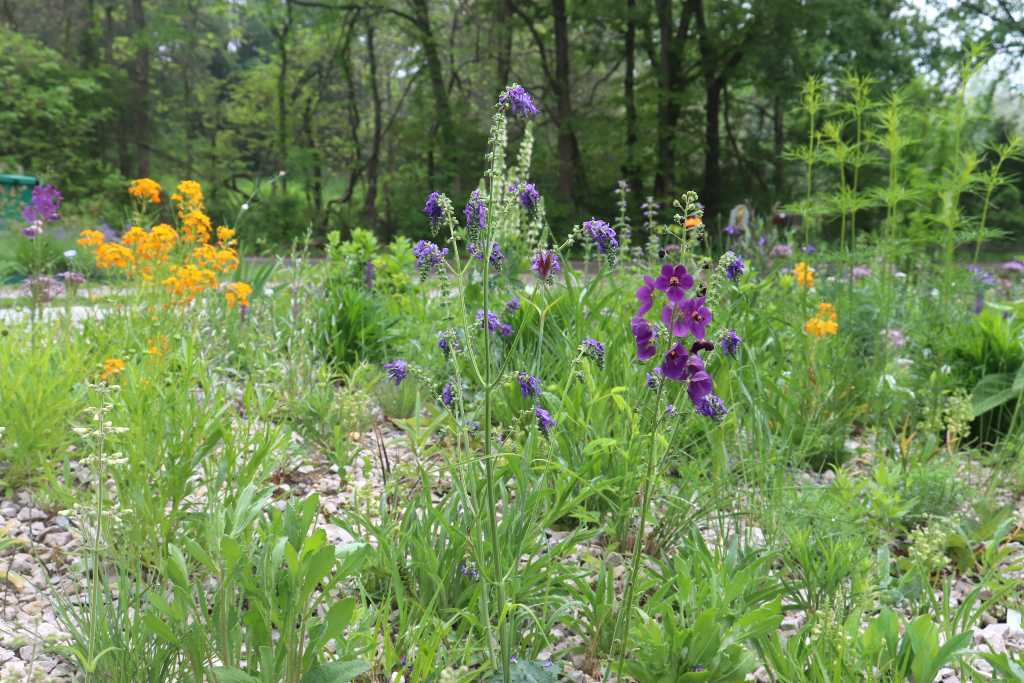
Second year - mid-late spring 2023 : blue tall Salvia nutans (Nodding Sage), purple Verbascum phoenicum 'Violetta' (Purple Mullein) and orange Erysimum allionii (Common Wallfower). It was impossible to get seed of the native Erysimum capitatum (Sand Dune Wallflower), sometimes you can get seeds of these plants in Europe, but not in USA. NARGS is one way of reaching to less common plants and natives!
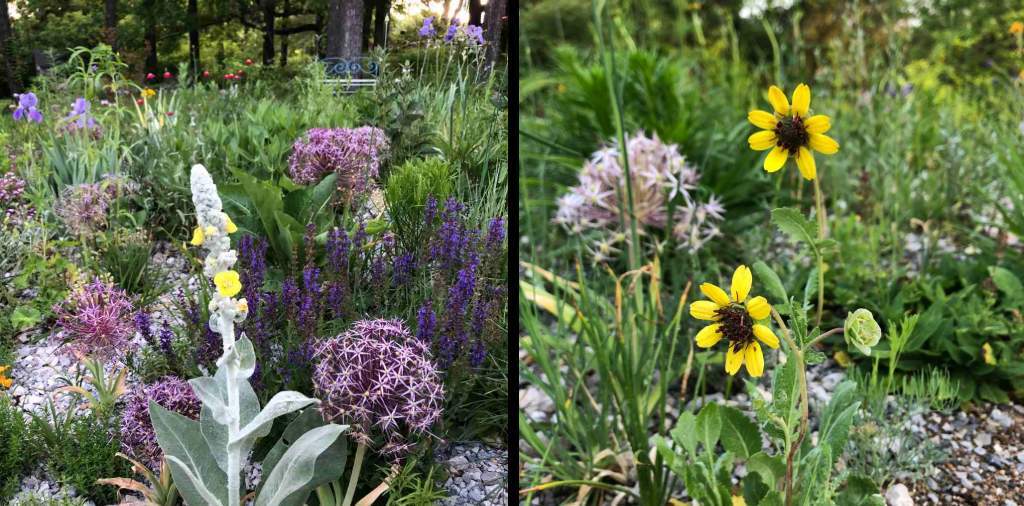
Second year, about late May 2023. Left - Verbascum bombyciferum (Giant Silver Mullein) does struggle in humidity. Here accompanied by Allium christophii (Star of Persia) and Salvia nemorosa 'Maynight Strain' (Meadow Sage). Right - SW USA native Berlandiera lyrata (Chocolate Flower) is ok in the sand.
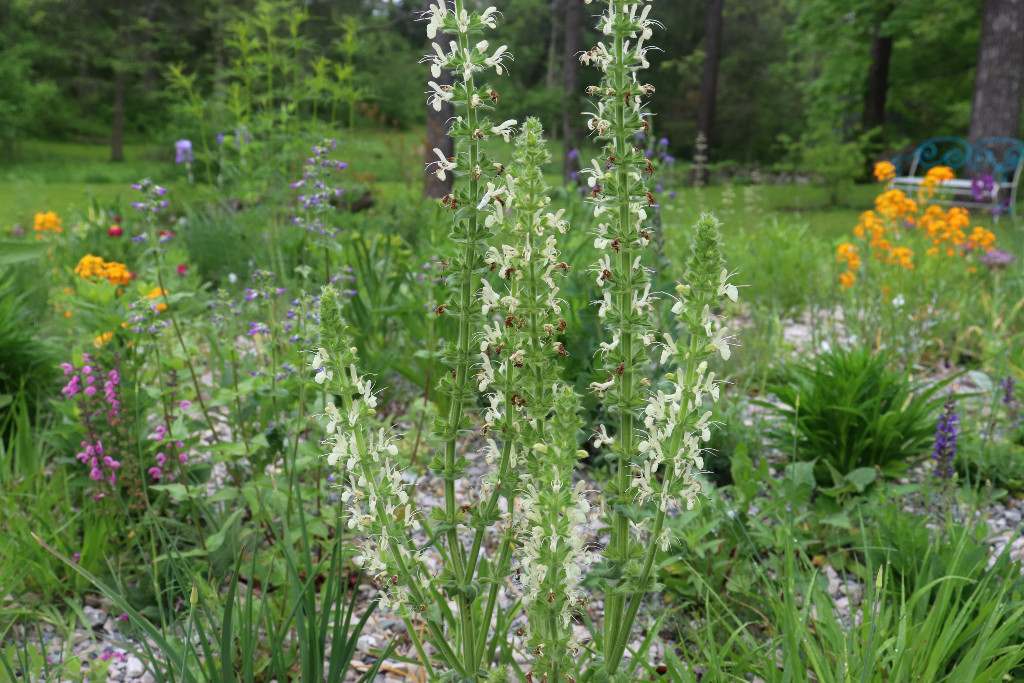
Salvia austriaca (Austrian Sage), beautiful, but it didn't self-seeded, as I hoped.
First off sand bed just confirmed that plants from western USA don’t make it here. It’s too hot and humid and plants quickly give up, no matter what soil you prepare for them. I lost all of the western Penstemons nearly immediately. Beardtongue’s nature is shorter-lived or pioneer species. I believe some could be more successful in a crevice garden with more neutral pH, and with selections from more suitable locations (another group of plants that fails here are plants from Caucasus, or any other cooler areas). Penstemon barbatus ‘Coccineus’ and Penstemon ovatus were the only more “exotic” beardtongue species that thrived, but still more biennials. On the other hand the eastern ones are happy in the sand (P. hirsutus, P. pallidus, P. x ‘Prairie Dusk’ and partially Penstemon grandiflorus with Penstemon gracilis). Penstemon x mexicalii hybrids persist, but doesn’t do much now. Now I am testing Penstemon smallii and Penstemon digitalis.
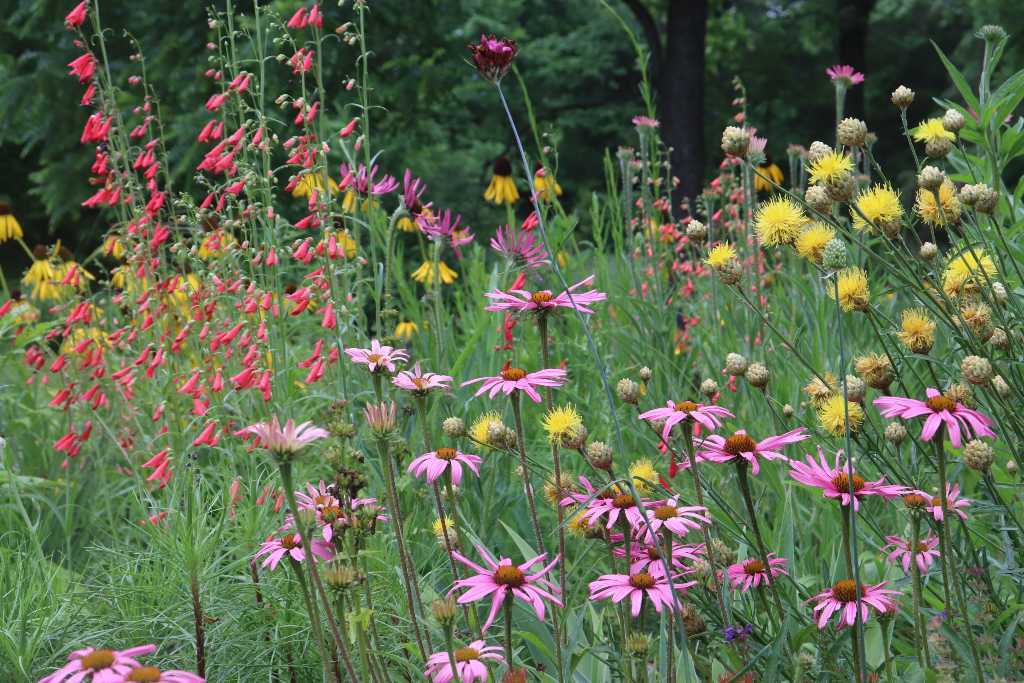
Second year, early summer 2023 - Penstemon barbatus 'Coccineus' (Beard-lip Beardtongue) did the best early on, it bloomed less and less in later years. Echinacea x 'Public Domain' is excelllent plant (front of the pic). Yellow Centaurea orientalis (Yellow Knapweed) does well and persists. In the background you can see purple Echinacea tenneseensis (TN Coneflower) and yellow Echinacea paradoxa (Yellow Coneflower) - both superior native plants, durable and long-lived work horses.
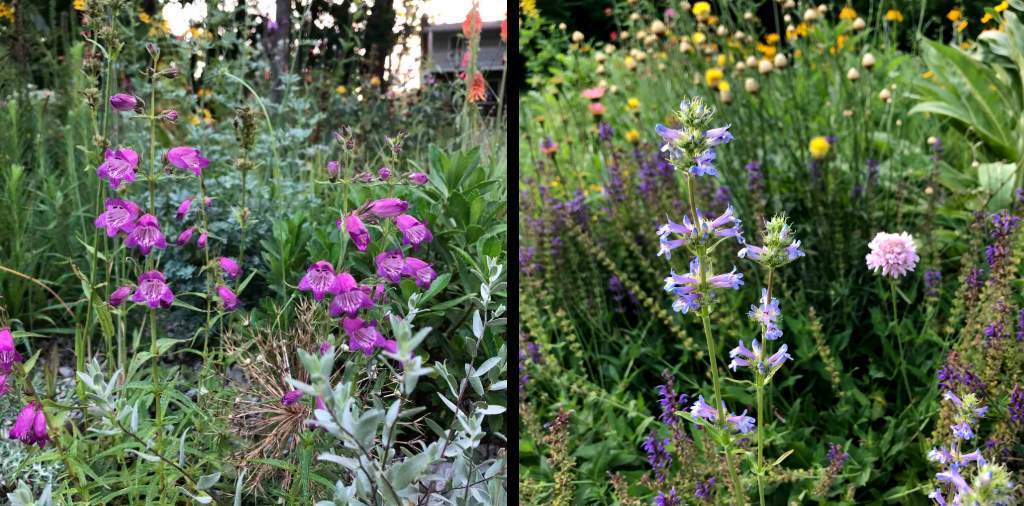
Second year, late spring/early summer 2023. Left - Penstemon x mexicali (Beardtongue hybrid of Californian and Mexican species) with silver-leaved Aster sericeus (Silky Aster). Right - Penstemon ovatus (Eggleaf Beardtongue) from Oregon and Washington. Many species of Penstemon (southwest, west of USA) were planted here and all of those vanished. Those two are exceptions, but still don't do as well as the southeastern natives like P. hirsutus. Abundance of rain in some periods of the year, tropical humidity, or deep frosts are the killers here.
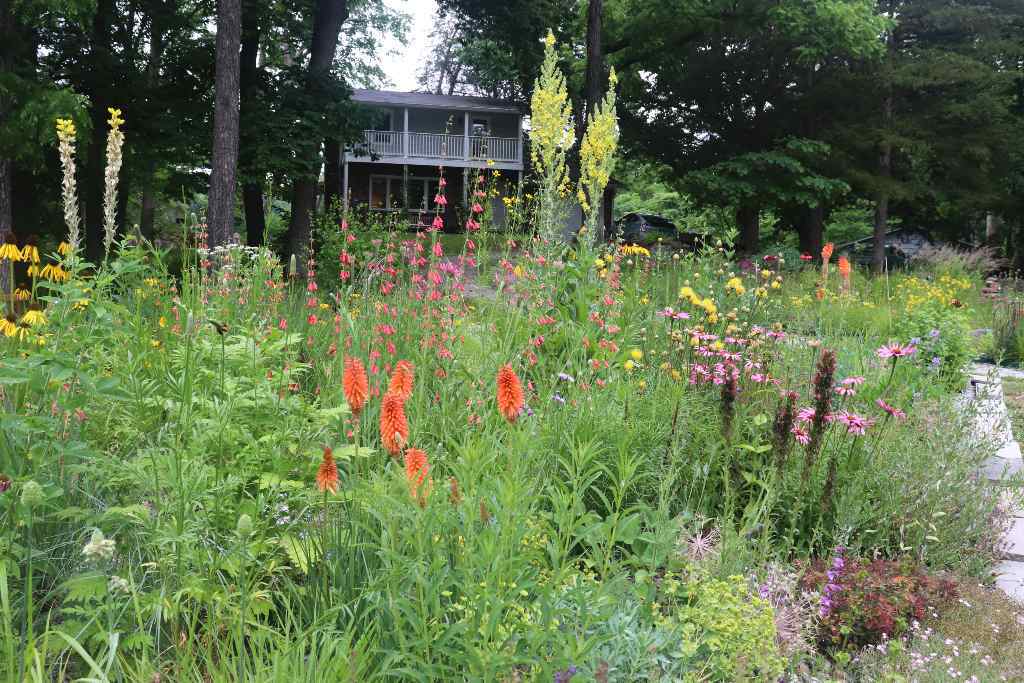
Second year, end of June 2023 - the bed more or less filled up. Kniphofia 'Poker Face' does well here, tall yellow Verbascum olympicum is short-lived and dissapered.
With some die offs, I kept planting different plants, filling gaps, loosing more plants and kept planting. Abruptly I reached a defeat point, I didn’t know what else would really grow there well and what wouldn’t. I was quite desperate, so I added even some weedy plants that would persist by self-seeding (Salvia lyrata ‘Purple Knockout’, Lychnis coronaria ‘Alba’, Stachys byzantina). But the sand hinders them, so I’m trialing Scabiosa ochroleuca ‘Moon Dance’ (Peter recommends to have some heavily seeding species).
I realized that I have to apply critical thinking, adjust the plant selections and interventions to the local climate (and maybe microclimate too, which seems to be more humid than more open spaces, since the property sits in a little valley surrounded by the woods).
The timing and size of the plants seemed to be the key too. Early spring and mid fall seems to be the best time because we have some regular rains. But from late spring on the temps quickly change and it stays hot and it makes it hard to water regularly. I lost smaller or weaker plants easier, especially off the ideal times.
But despite all of that, the bed looked decent the first year (so half a year after planting!). It filled up nicely and many plants flowered the first year.
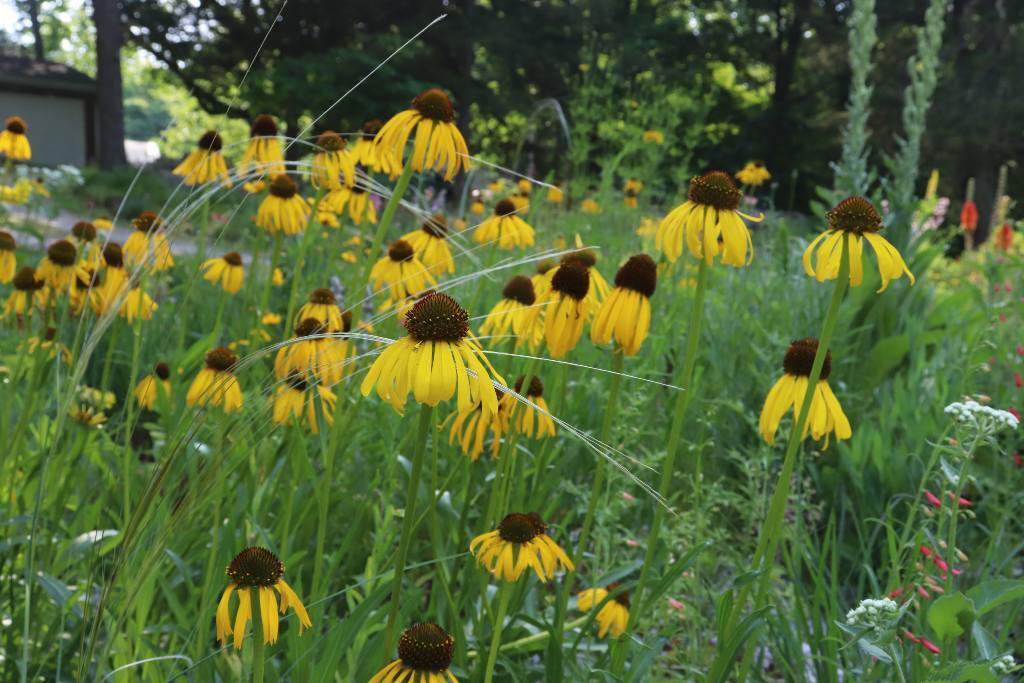
Second year, early summer 2023 - Echinacea paradoxa (Yellow Coneflower) with grass Stipa capillata (Slender Feather Grass). Yellow Coneflower, superb, tough, long-lived here, native primarily to glades and prairies in the Ozark regions of Missouri and Arkansas. It only needs sun and somewhat drained (or drained) soil.
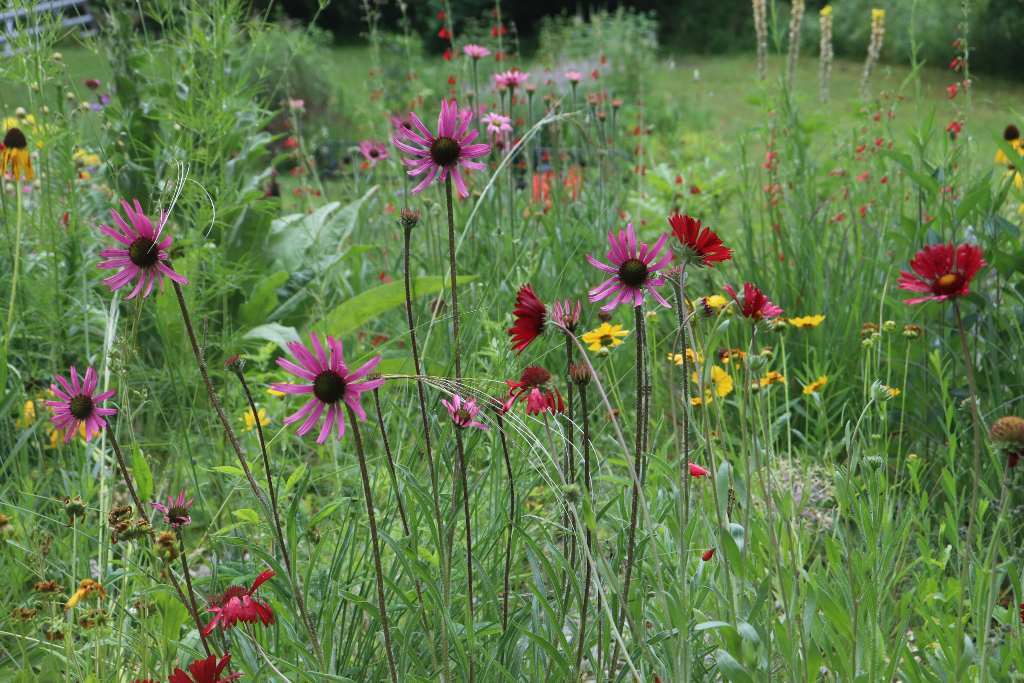
Second year, early summer 2023 - Echinacea tennesseensis (Tennessee Coneflower) with Gailardia aristata 'Red' (Blanket Flower). Coreopsis lanceolata (Lance-leaf Tickseed) in the backround. Another wonderful coneflower for drier/drained soils. Blanket Flower is durable in sand and seeds around. Tickseed needs more nutrients and vanished quickly and doesn't re-seed.
I did one basic mistake right at the beginning = not adding the coarse gravel / river rocks layer on the top straight away. I added crushed limestone gravel one year later (finer and more coarse fraction). This layer keeps the moisture in the sand, supports self-seeding and also stopped our cat from using this fancy litter box. Without the coarse layer, the surface dried out quite quickly. But a few plants seeded immediately and even without the gravel – Echinacea tennessieensis and Liatris lancifolia/Liatris mucronata.
After mulching with gravel, I started seeding surplus seeds I collected in the garden or in the sand bed itself. I mixed the seeds with some extra sand and was throwing little seed bombs into gaps. Intentionally I also ordered some seeds of annuals like Argemone mexicallii, Helenium amarum, Thelesperma filifolium, Nemophilla maculata, Potentilla paradoxa and many others. For the annuals the timing was crucial and one spring turned quickly dry, which lead to no or poor germination. But some annuals/biennials did well – Cosmos sulphureus wasn’t fussy at all, grew up to 2’ (66 cm) and flowered the whole season and self-seeded some too. Cheiranthus allionii was another successful one and looked stunning in combo with deep purple flowers of Verbascum phoeniceum ‘Violetta’. In 2024 little known Palafoxia callosa (from south central USA) did the show at the end of the season, when not much was in bloom. And lots of seedling of Ipomopsis rubra are waiting in the stage of fine-leaved rosettes to bloom in early summer 2025.
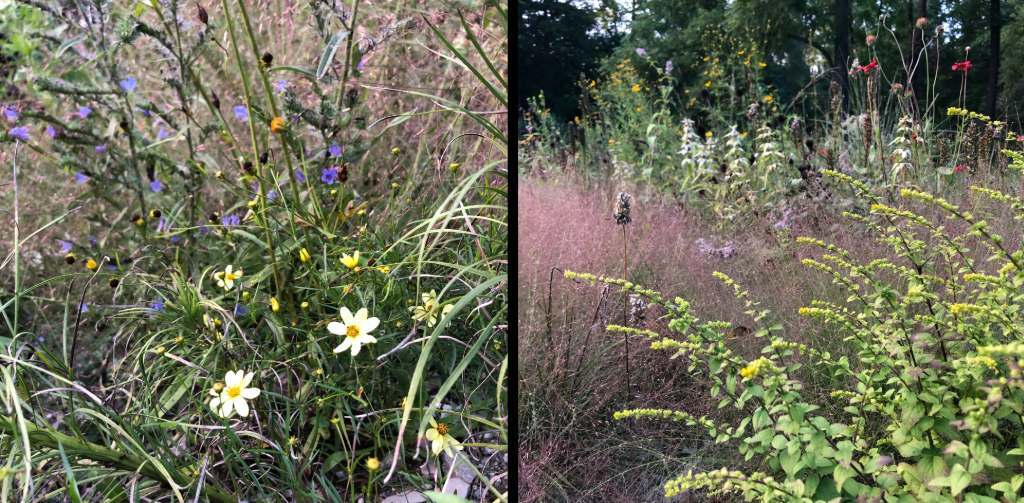
Mid summer 2023. Left Coreopsis verticillata 'Moonbeam' (Tickseed) with Echium vulgare (Viper's Bugloss). 'Moonbeam' does like sand and I expect other more colorful hybrids of Coreopsis that you tend to loose in the garden, simply need the sandy component. Right : Budding Solidago spheacelata 'Golden Fleece' (Autumn Goldenrod 'Golden Fleece'), with Eragrostis spectabilis (Purple Love Grass) and in the background Coreopsis verticillata x tripteris 'Gilded Lace' and Monarda punctata.
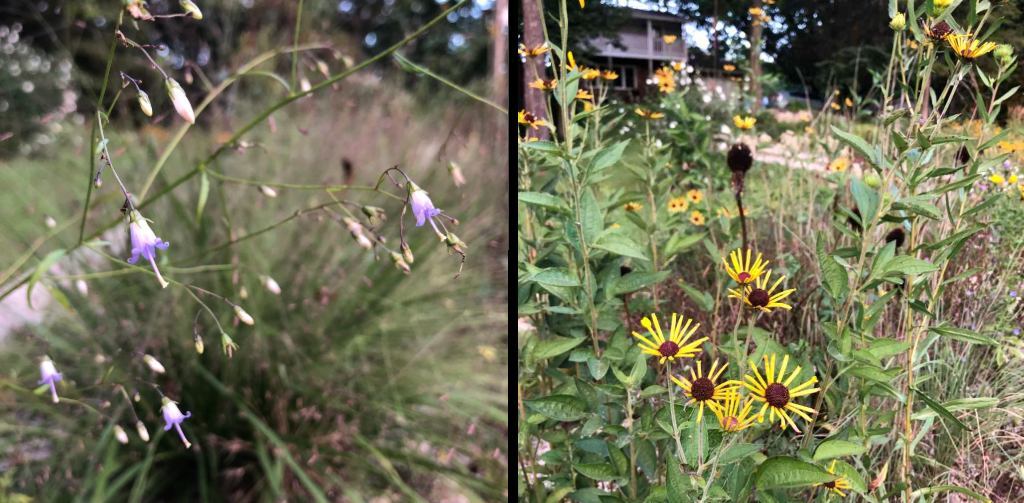
Second year, mid to late summer 2023. Notice the colorful shift in the pics. With the summer heat, humidity and often drougth, all the gardens here on the rocky hill get that yellow-brown. Simply all the spring lush green color is gone. Summer heat is the time when I slow down, or even stop gardening. I often don't want to take many pics either....Left - Campanula divaricata (Southern Harebell) delicate, but durable native for drained soils. Right - Rudbeckia subtomentosa 'Henry Eilers' (Sweet Coneflower 'Henry Eilers') - this one was tested for the theory of the non-flopping and shorter-statue. In average soil, it can get quite tall (5-6' tall) and can flop. Well, this theory is positively confirmed - plants do get shorter in sand, but this Rudbecia did lean some due to the shading of the walnut trees. Very durable and drought tolerant plant though.
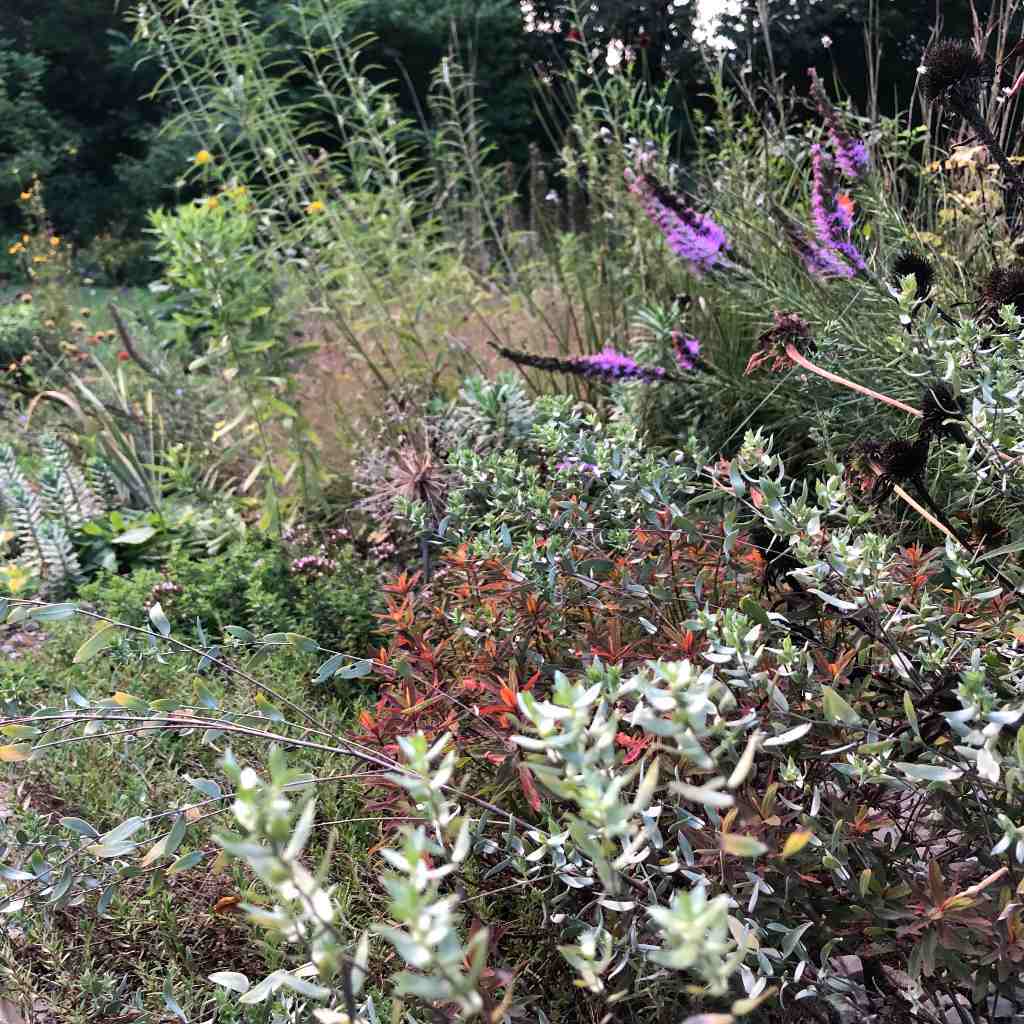
Late summer in the sand bed. Not the best picture, more like a painting representing the mood of aproaching fall. Silver leaves of Aster sericeus (Silky Aster), purple Euphorbia polychroma 'Bonfire' (Cushion Spurge), purple blooming Liatris lancifolia (Lanceleaf Blazingstar).
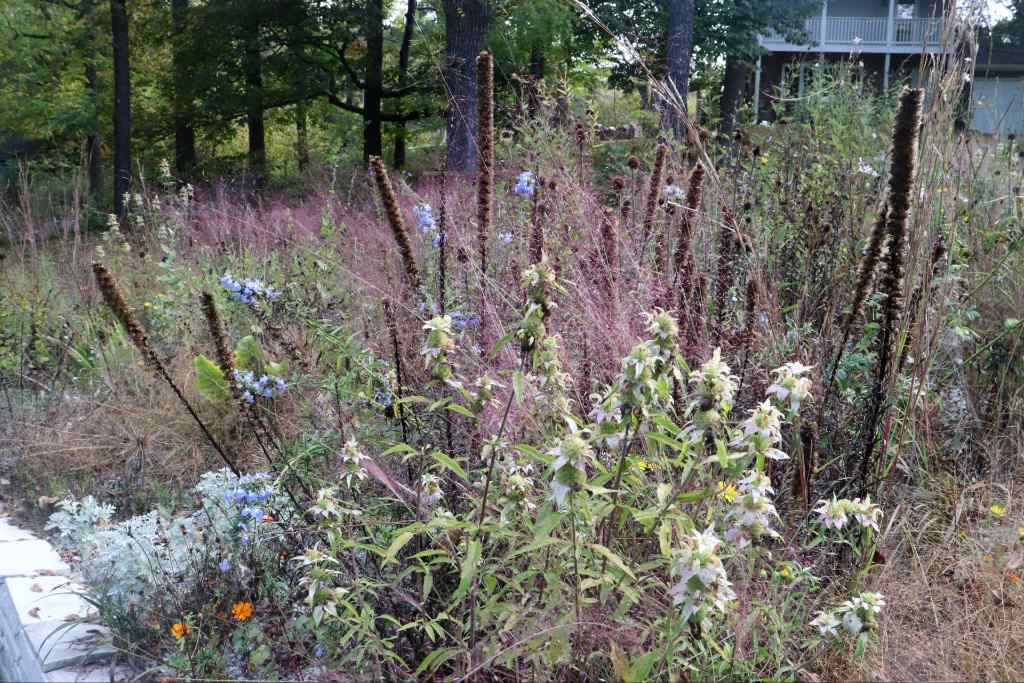
Second year, earlier fall look, 2023. Muted fall colors, dominant grasses - Eragrostis spectabilis (Purple Love Grass) and Muhlenbergia capillaris (Pink Muhly Grass), Monarda punctata (Spotted Beebalm), blue Salvia azurea (Blue Sage). Seedheads of Liatris lancifolia (Blazingstar). Gray foliage on the left - Artemisia 'Powis Castle' (Wormwood 'Powis Castle') - it did well, but the blackwalnuts roots deeper in the soil probably killed all of them.
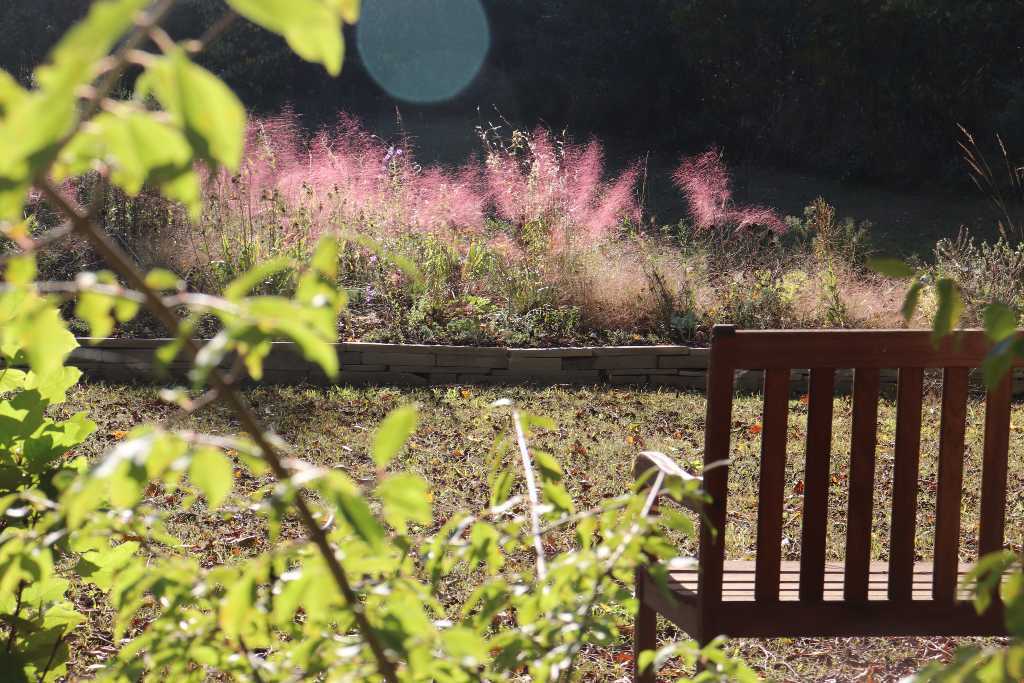
Second year 2023, mid to late fall - Muhlenbergia capillaris (Pink Muhly Grass) - stuning in the backlight. The purplish flowers often persists till December.
Some of the European perennials from dry/drained locations do quite well in the sand. But to keep them alive in pot culture is tough. I usually loose them before they could get big enough to be planted in the sand bed. They simply rot due to very humid air, and I can grow them only in the hoophouse, protected against too much rain (you still have to prepare special, sharply draining soil for them). I am speaking of plants like Euphorbia polychroma (or it’s red-leaved cultivar ‘Bonfire’), Echium russicum or Verbascum bombyciferum.
Peter Korn usually plants large quantities of bulbs. I was more shy with those and I was glad. The first summer after planting, the sand bed was taken by voles, who ate nearly all the botanical tulips (Tulipa ‘Little Beauty, Tulipa dasystemon and Tulipa linifolia), majority of the Crocus chrysanthus ‘Goldilocks’. The Muscari armeniacum, Allium sphaerocephalon survived the attack and do fairly well. I was shocked how easily and quickly the voles made their tunnels throughout the whole area.
I also lost quite some bulbs because I didn’t plant them deep enough and then I found rotting bulbs damaged by the deep frost (later I learned that Peter Korn plants them a bit deeper). That was the case of Narcissus ‘Tete-a-Tete’, Sternbergia lutea and a few other bulbs. On the other hand, delicate miniature Narcissus Jonquilla ‘Baby Moon’ seems to be quite durable and persisting, just like Iris reticulata. I add some more bulbs every fall, primarily those that do well, but also trial a few new ones.
It's not recommended to grow nutrient demanding plants (with larger flowers and leaves). I still tried Peaonia (P. lactiflora, P. tenuifolia hybrid ‘Early Scout’), native Silphium terebinthinaceum (desired mainly for the structural leaves), Echinops ritro. These don’t get any bigger, don’t bloom and can turn dormant by early summer. Papaver orientale gave up completely (I can’t grow it anywhere in the garden).
Genus that nearly completely failed was Agastache – all the exotic orange, purple flowering ones from southwestern USA vanished the first year, and the only surviving is our native Agastache foeniculum.
So far the second year was the best performing year, majority of plants flowered and heavily. But a few plants started to show signs of nutrient deficiency, and didn’t bloom in the third year. So I plan on adding some slow releasing mineral fertilizer in 2025.
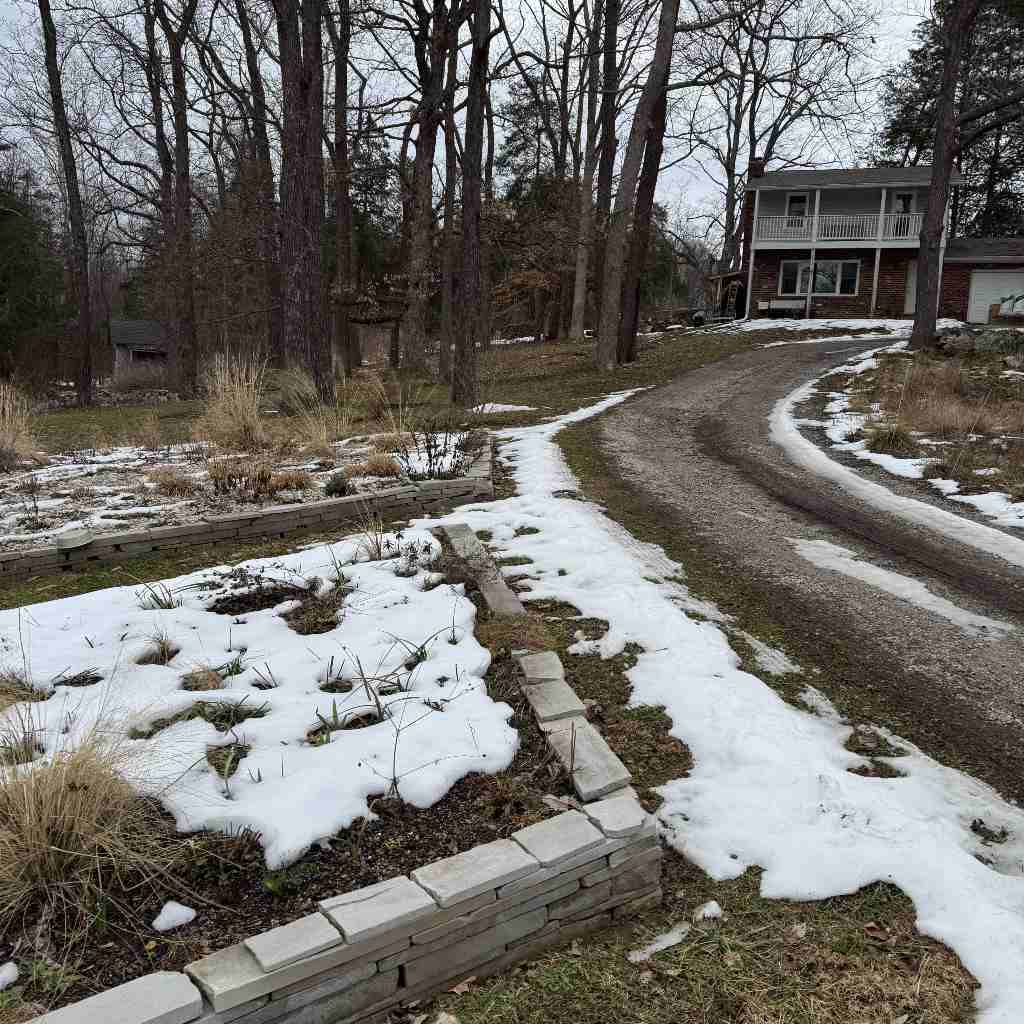
Third year, end of the winter 2024. Snow melts faster on the sand than on traditional organic mulch. The sand does warm up faster, but can also freeze deeper than the common soil.
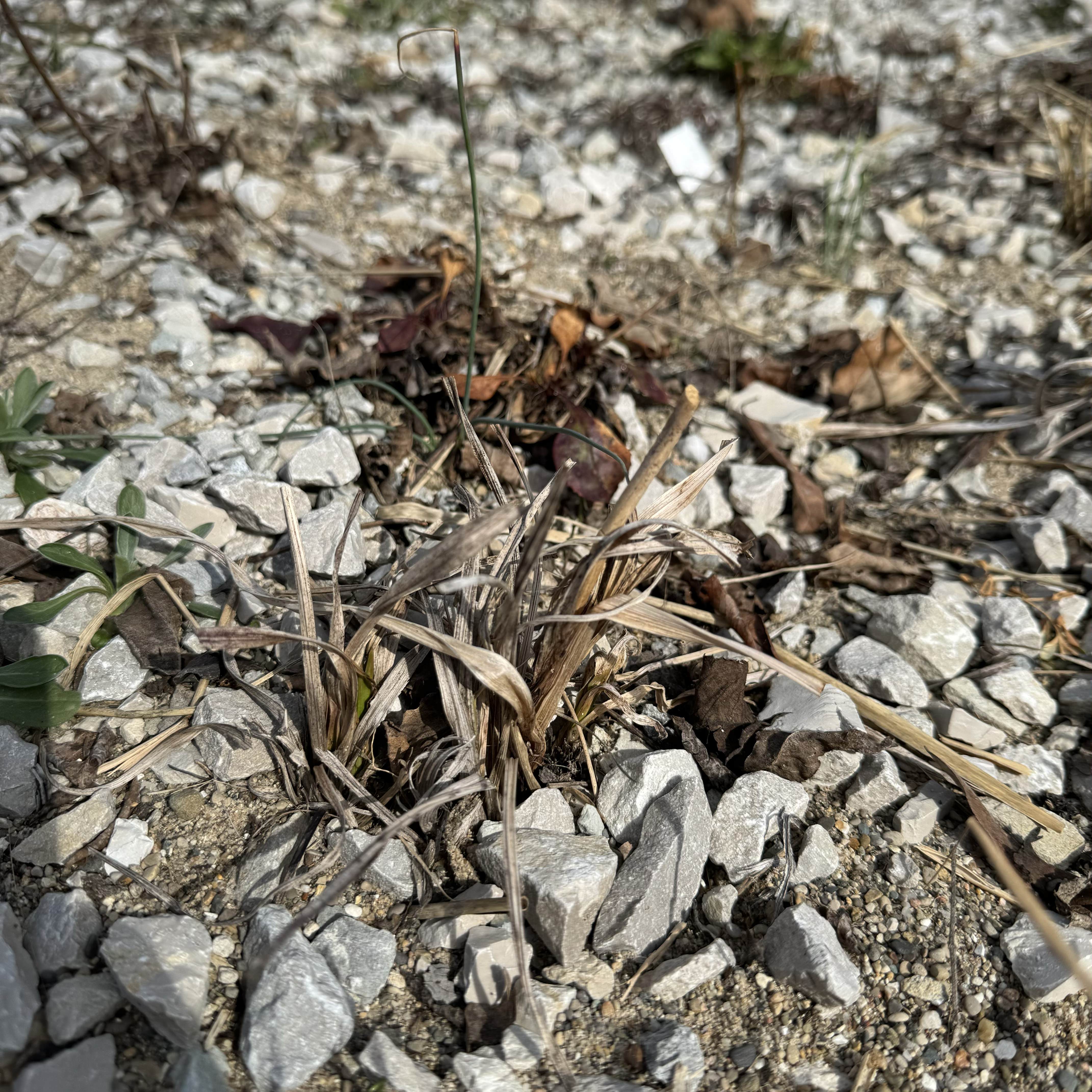 Third year, spring 2024. Beaten up Kniphofia (Red Hot Poker), after the cold winter - it's hard to believe that it will green up, fully recover and even bloom.
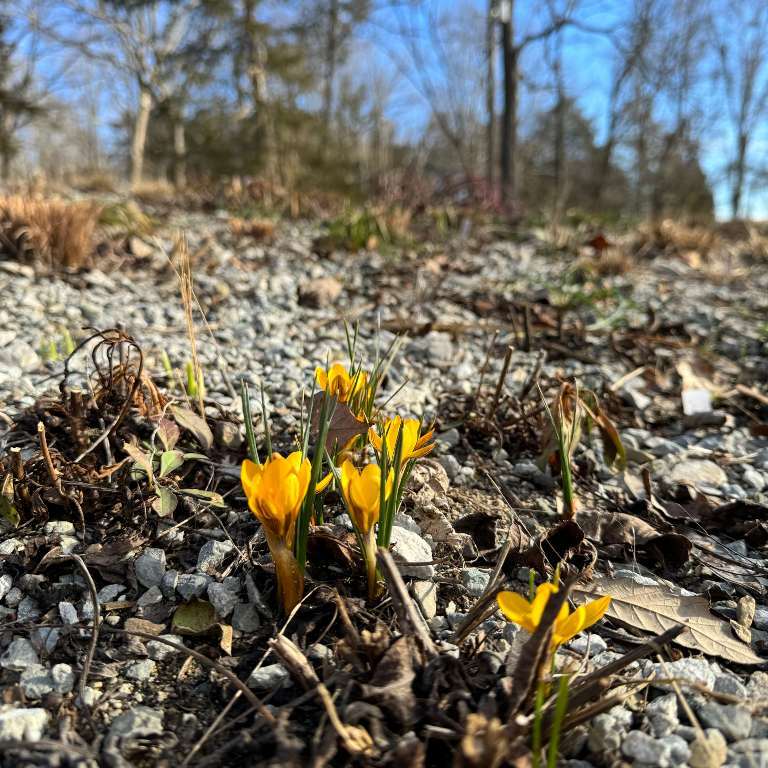
Third year, pre-spring 2024. Crocus chrysanthus 'Yellow Goldilocks' (Snow Crocus) is the earliest to bloom. Iris reticulata (Reticulated Iris) is greening up in the background.
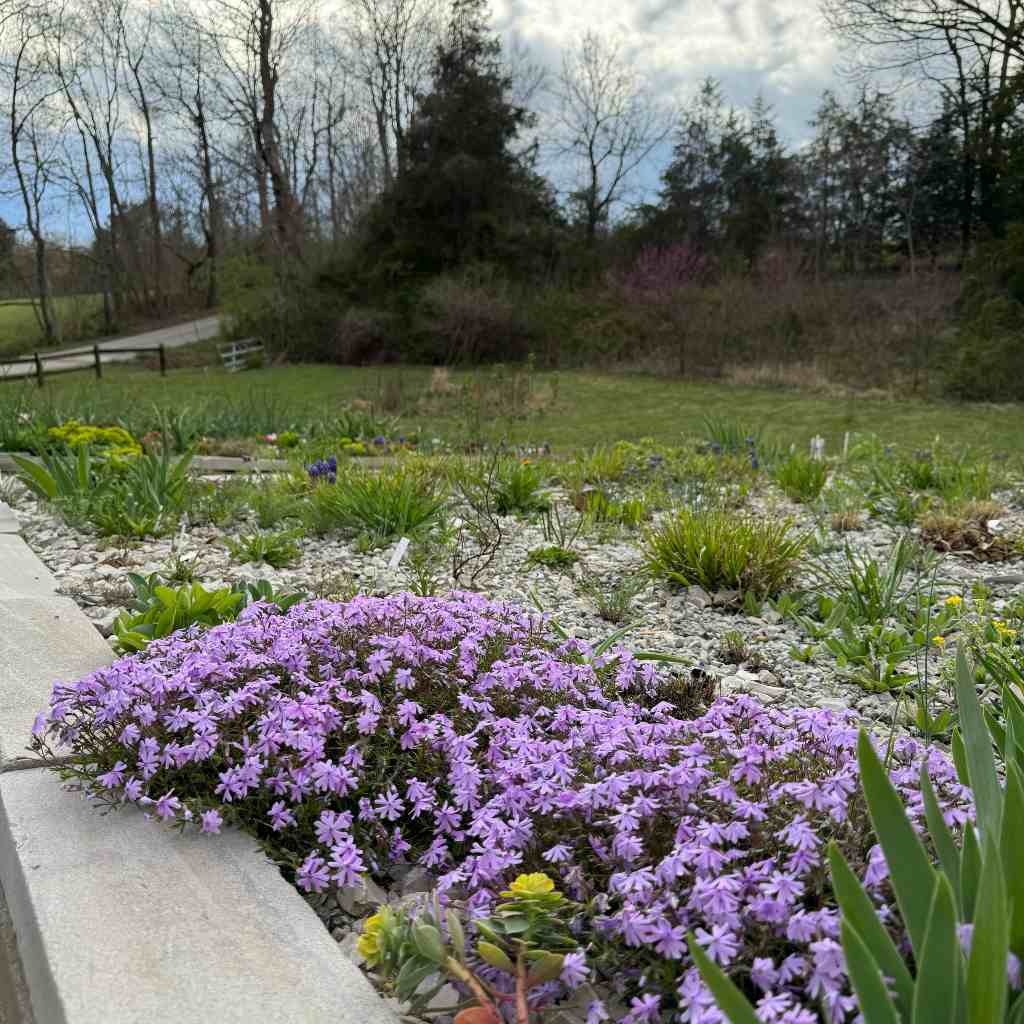
Third year, spring 2024. Phlox nivalis 'Camla' - strong, vigorous and happy. Other Creeping Phloxes (Phlox subulata) also grow very well in sand.
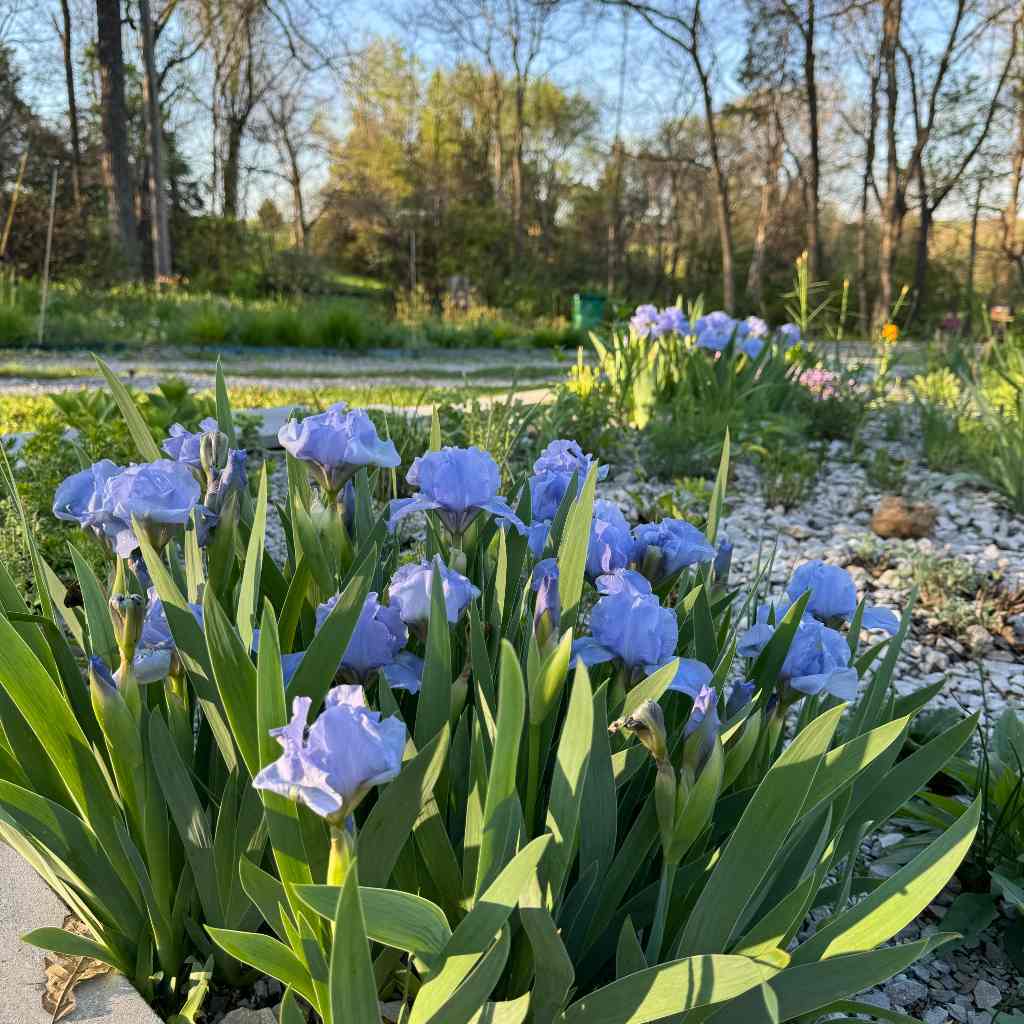
Third year 2024. Iris x barbata nana 'Forever Blue' (Dwarf Bearded Iris). After all the observations it seems that all the less hybridized bearded Irises (older cultivars, heirloom) do great in the sand. The newer cultivars with larger flowers and brighter colors may need more nutrients.
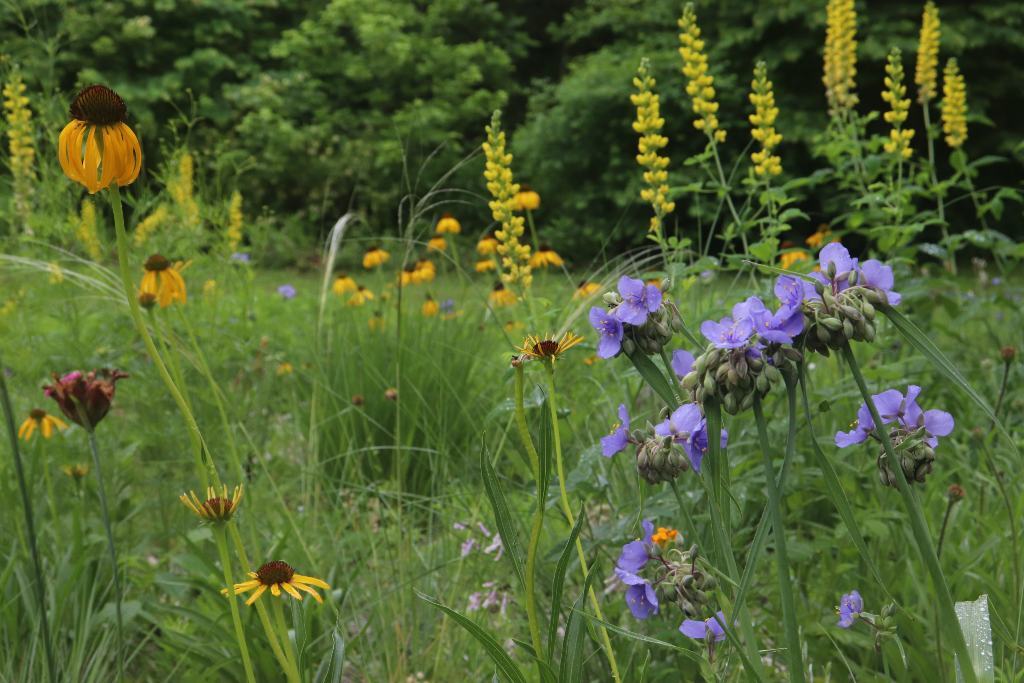
Third year - late spring/early summer 2024 - from the left Echinacea paradoxa (Yellow Coneflower), Stipa capillata (Slender Feather Grass), tall yellow Thermopsis caroliniana (Carolina Lupine) and blue Tradescantia ohiensis (Ohio Spiderwort). All of these thrive.
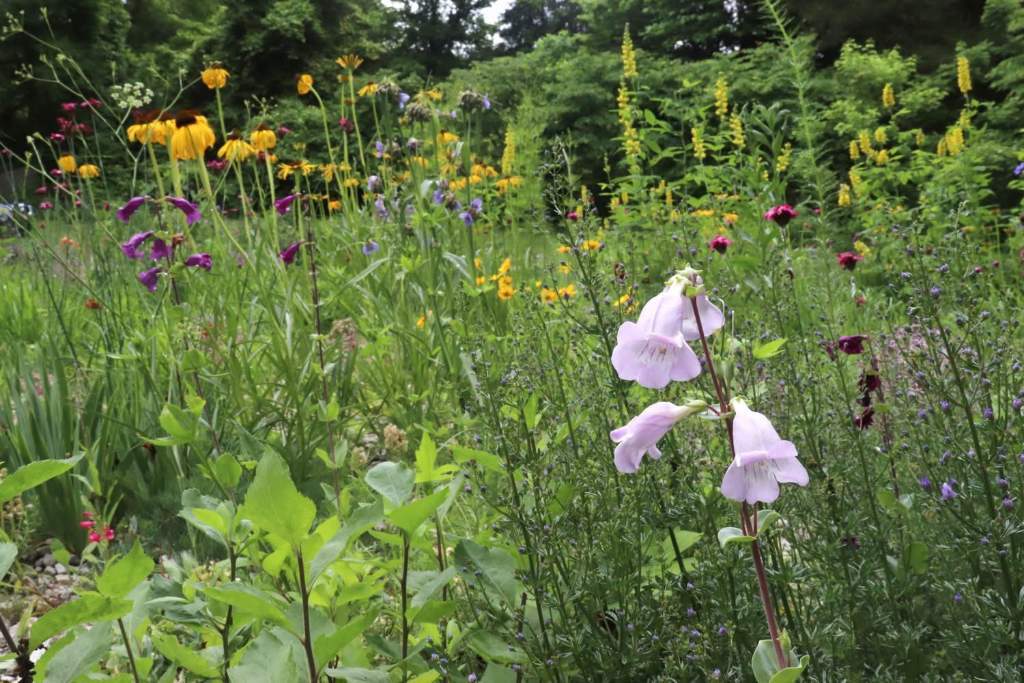
Pale pink Penstemon grandiflorus (arge-Flowered beardtongue), in the background selectuon of the same plant with more vivid colors ('Prairie Jewel'). Other flowering plants - Echinacea paradoxa, Tradescantia ohiensis, Thermopsis caroliniana.
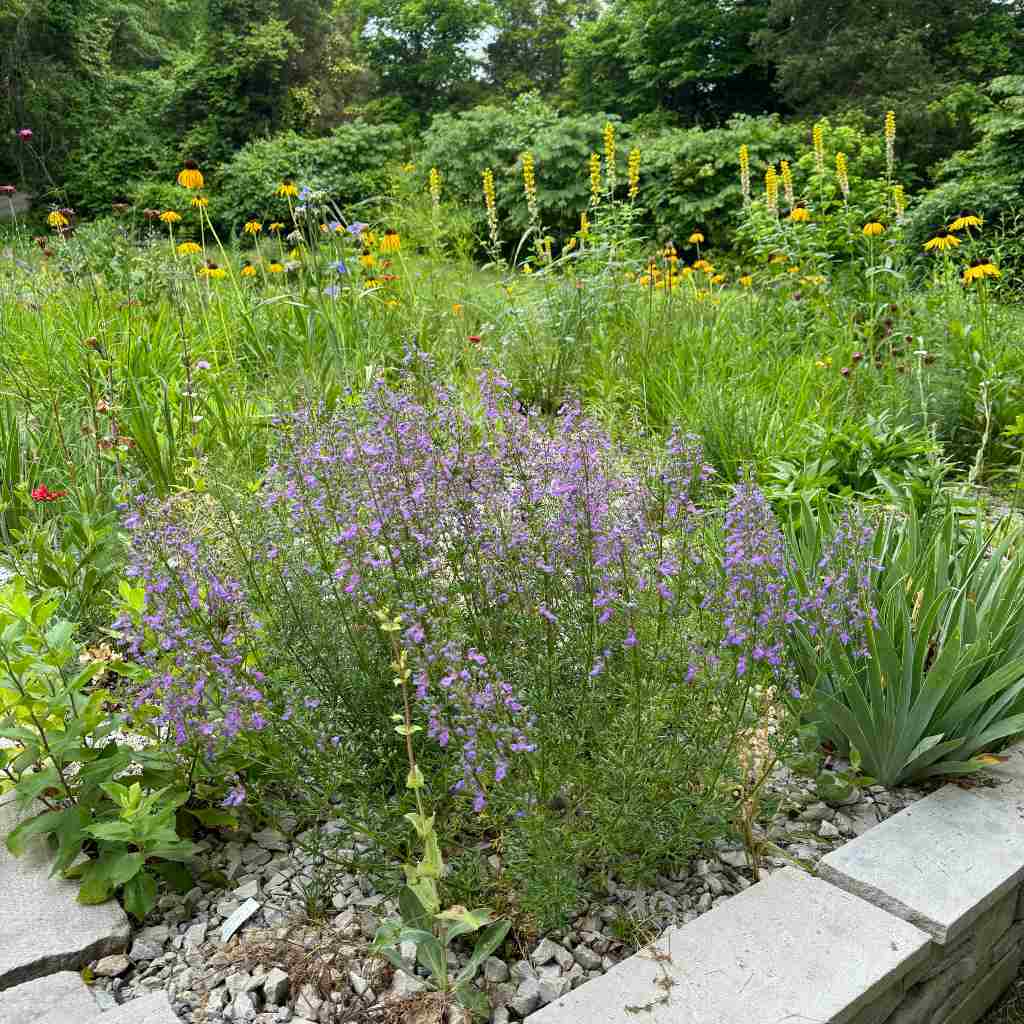
Third year, late spring/early summer 2024 - Teucrium orientale (Oriental Germander) also thrives in a longer term.
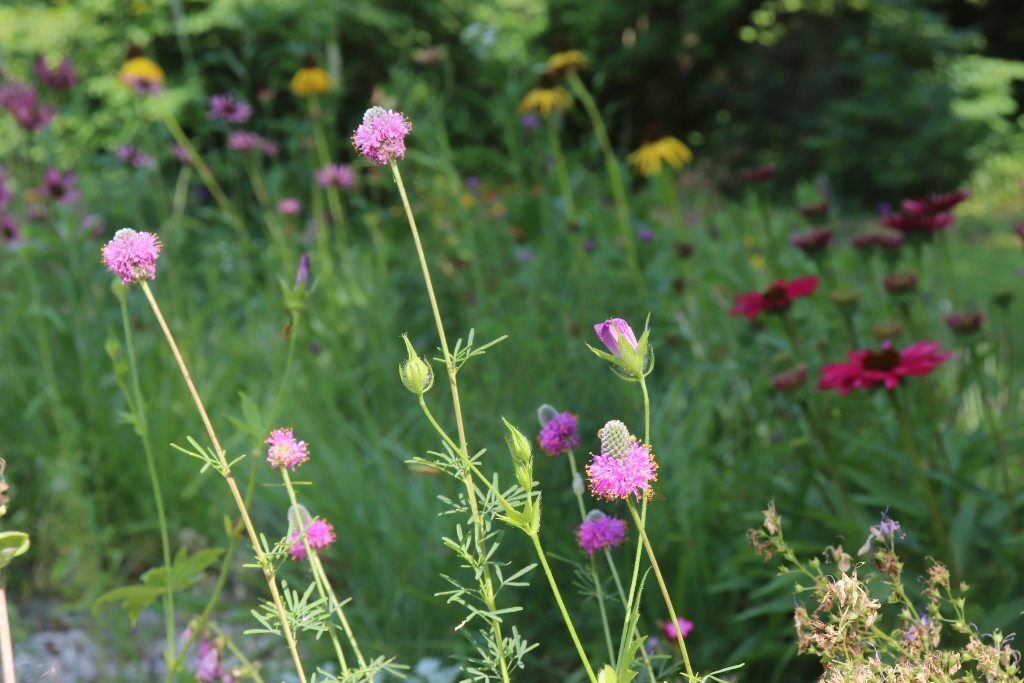
Third year, late spring/early summer 2024 - Dalea purpurea (Purple Prairie Clover) with Echinacea 'Kismet Raspberry' (on the right). Both do very well. Dalea has a bit shorter flowers, but it could also be the genotype.
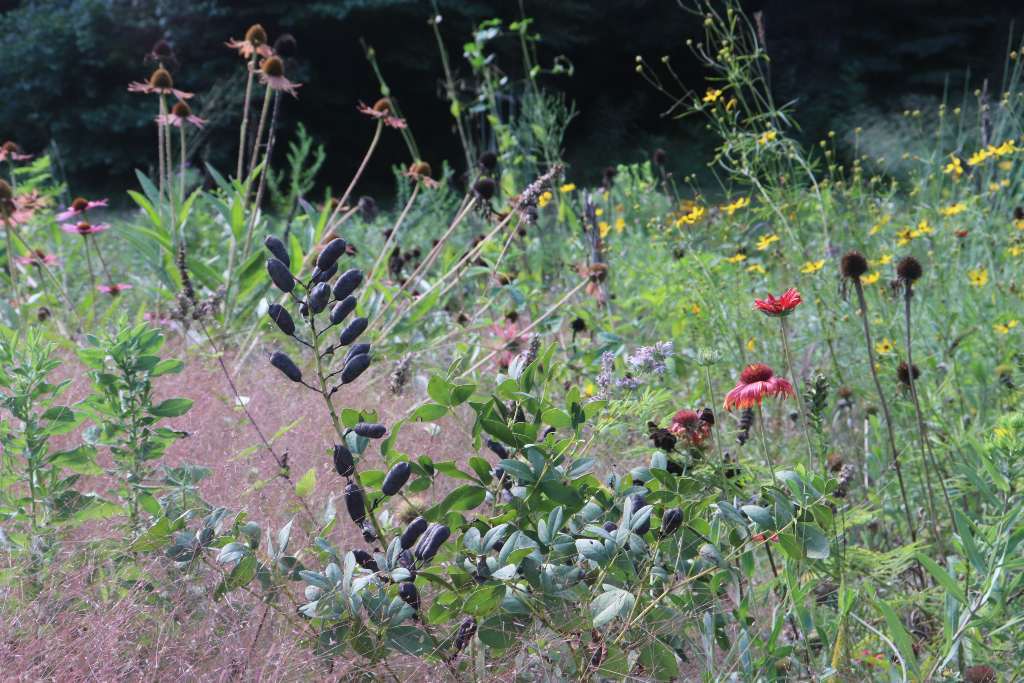
Third year, mid summer 2024. Seedheads of Baptisia 'Pink Trouffles' in the front, surrounded by the Eragrostis spectabilis (Purple Love Grass). Baptisia minor was also planted here. They all seem to be rather slow growing and spindly looking.
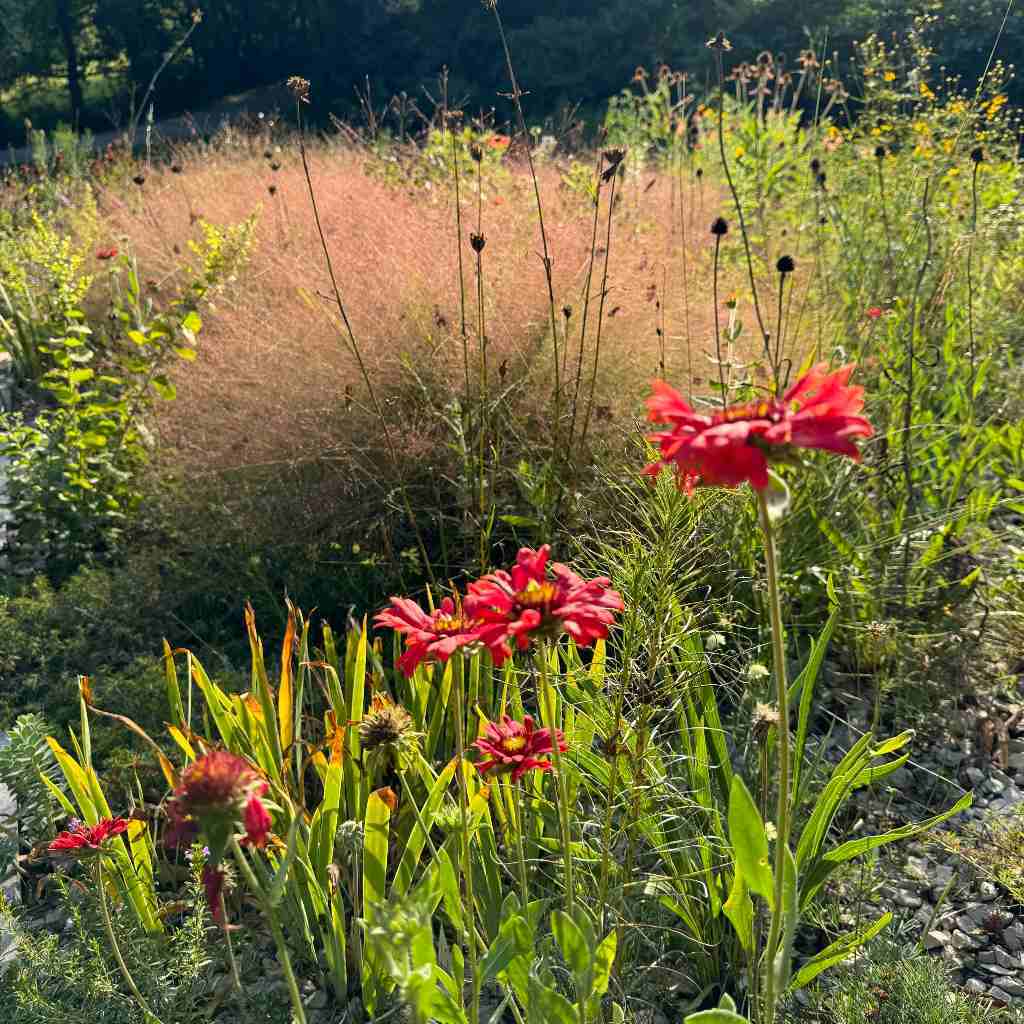
Third year, end of summer 2024 - Gaillardia aristata 'Red Shades' (Blanket Flower) blooms from end of May till end of the season. Satureja montana ssp. illyrica (Winter Savory) in the left corne of the picture.
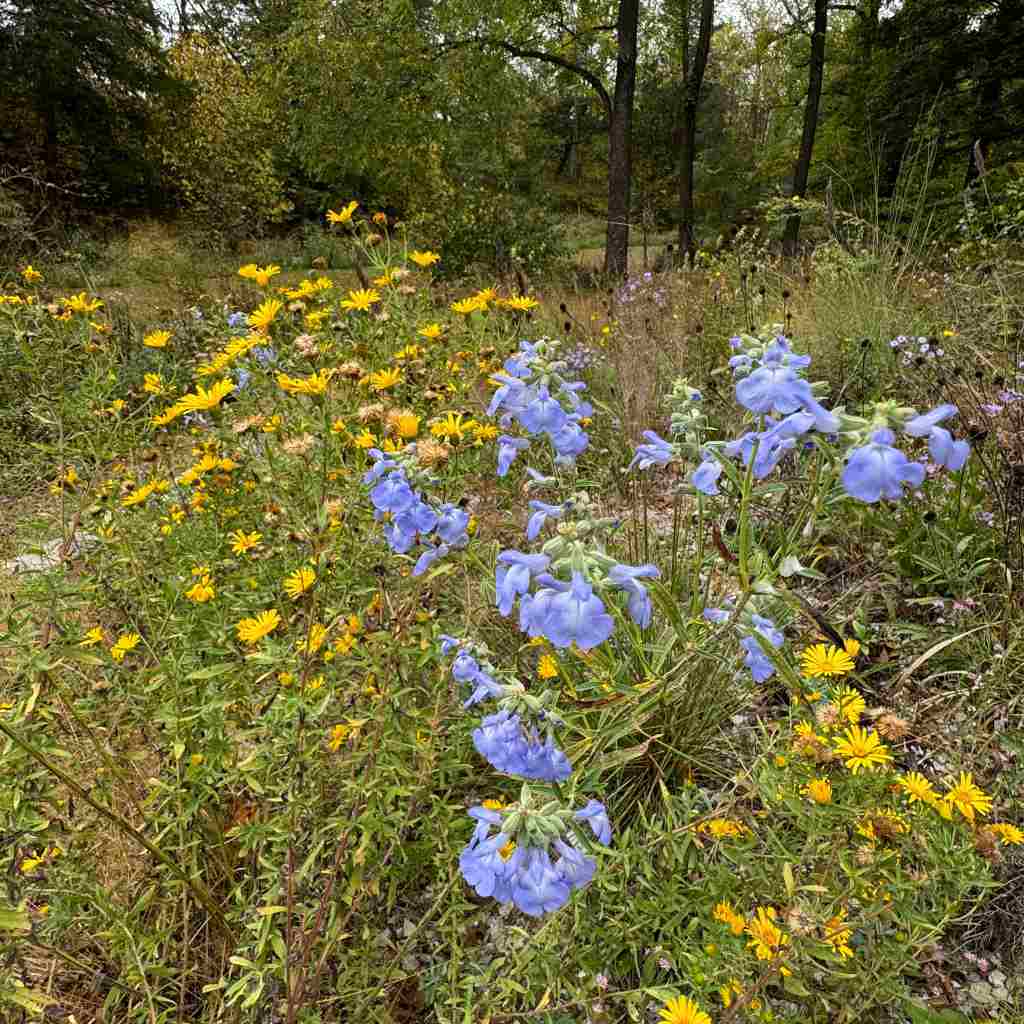
Third year, early to mid fall 2024 - Salvia azurea (Blue Sage) and yellow Heterothecca villosa (Hairy Goldenaster). This Goldenaster is one of the most vigorous plants in the sand - it bulks up incredibly fast, blooms realiably, maybe even gets too big. Both species still get very tall in the sand (4'+) and lean to the side (walnut shade maybe?).
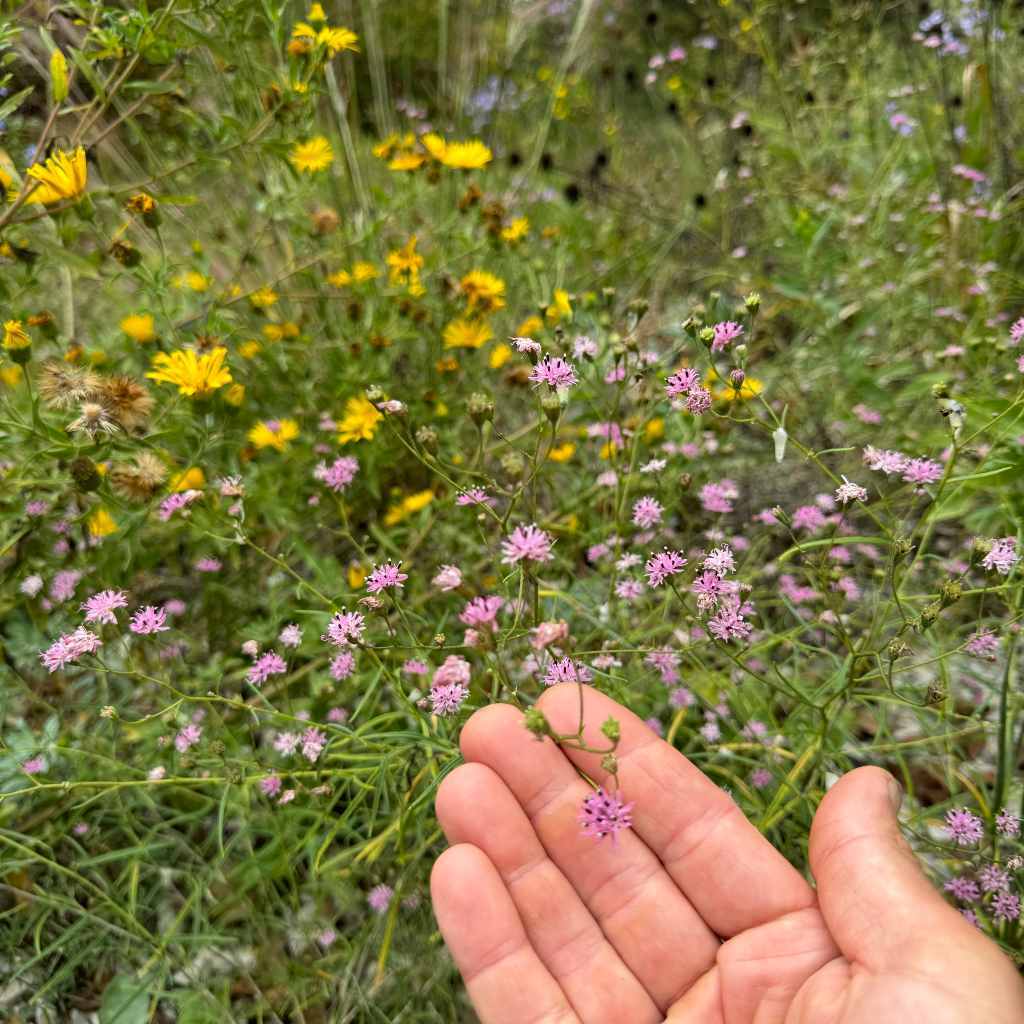
Third year, early to mid fall 2024 - Palafoxia callosa (Small Palafox) - very late blooming and stunning annual native to Texas, Oklahoma, Arkansas, and Missouri. Sadly, nearly unknown in horticulture. Thank you "superplantdork" for sharing the seeds!
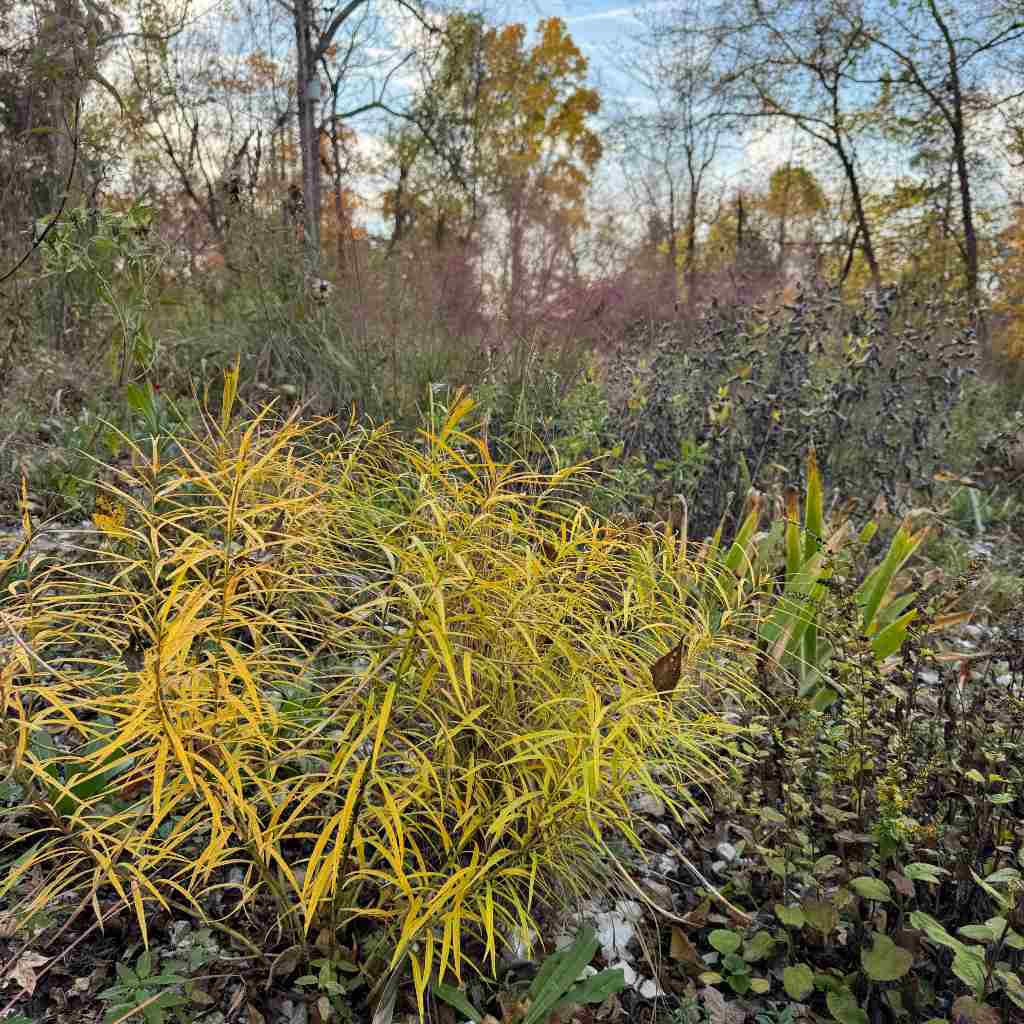
Third year, late fall 2024?end of the season - fall color of Amsonia 'Midway to Montana' (Bluestar hybrid), with Muhlenbergia capillaris (Pink Muhly Grass) in the background. Amsonia is slow and smaller in the sand. Peter Korn doesn't recommend those wide-clumping perennials, mostly because he wants to squeeze in many other more narrow plants. But I find it very refreshing to have some fall color in the sand bed.
But out of many failures, there are plants that really thrive in the sand. Yucca glauca usually rots in pots, but here gets bigger every year (other Yuccas should do well too). Echinacea tennesseenis and Echinacea paradoxa originate in the limestone glades, so sand environment perfectly fits their needs and they seed around quite prolifically. That’s why narrow-leaved Echinacea hybrids do just as well (E. x ‘Kismet Raspberry’, E. x ‘Public Domain’).
I should point out other exceptionally well performing plants: North American Asters from drier locations (A. turbinellus, A. leavis, A., less so A. sericeus) , some Boraginacea family members ( Cynoglossum officinale, Echium vulgare, more or less Echium russicum and Onosma sp.), Coreopis verticillata x tripteris ‘Gilded Lace’ (‘Moonbeam’ also does quite well), Dianthus carthusianorum, Euphorbia (E. myrsinites, E. nicaeensis, and US native E. corollata), Eryngium planum, Gaillardia aristata, Iberis sempervirens, Bearded Irises group (I. x barbata ‘Elatior’, ‘Nana’, I. pallida), Kniphofia ‘Poker Face’(most likely other hybrids too), some Liatris, Parthenium integrifolium, Saponaria ocymoides, Scabiosa lachnophylla ‘Blue Horizon’, some Salvia (Salvia austriaca, S. azurea, more are being trialed), Solidago (S. sphaecelata ‘Golden Fleece’, S. drummondii), Teucrium orientale and grasses like Eragrostis spectabilis, Muhlenbergia capillaris or Muhlebergia lindheimerii.
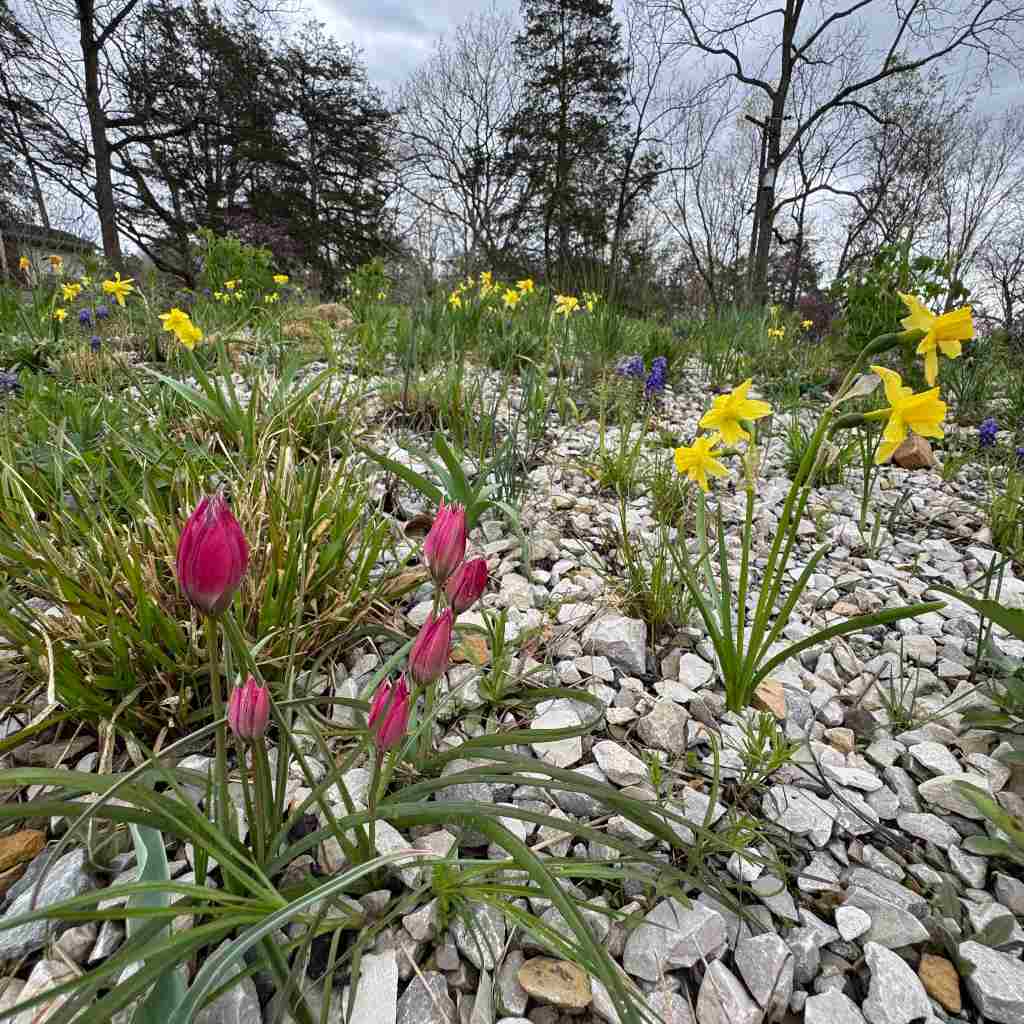
Spring 2025, the fourth season - Tulipa 'Little Beauty' (Botanical Tulip) with Narcissus 'Baby Moon' (Dwarf Jonquil Daffodil 'Baby Moon') and Muscari armeniacum (Grape Hyacinth)
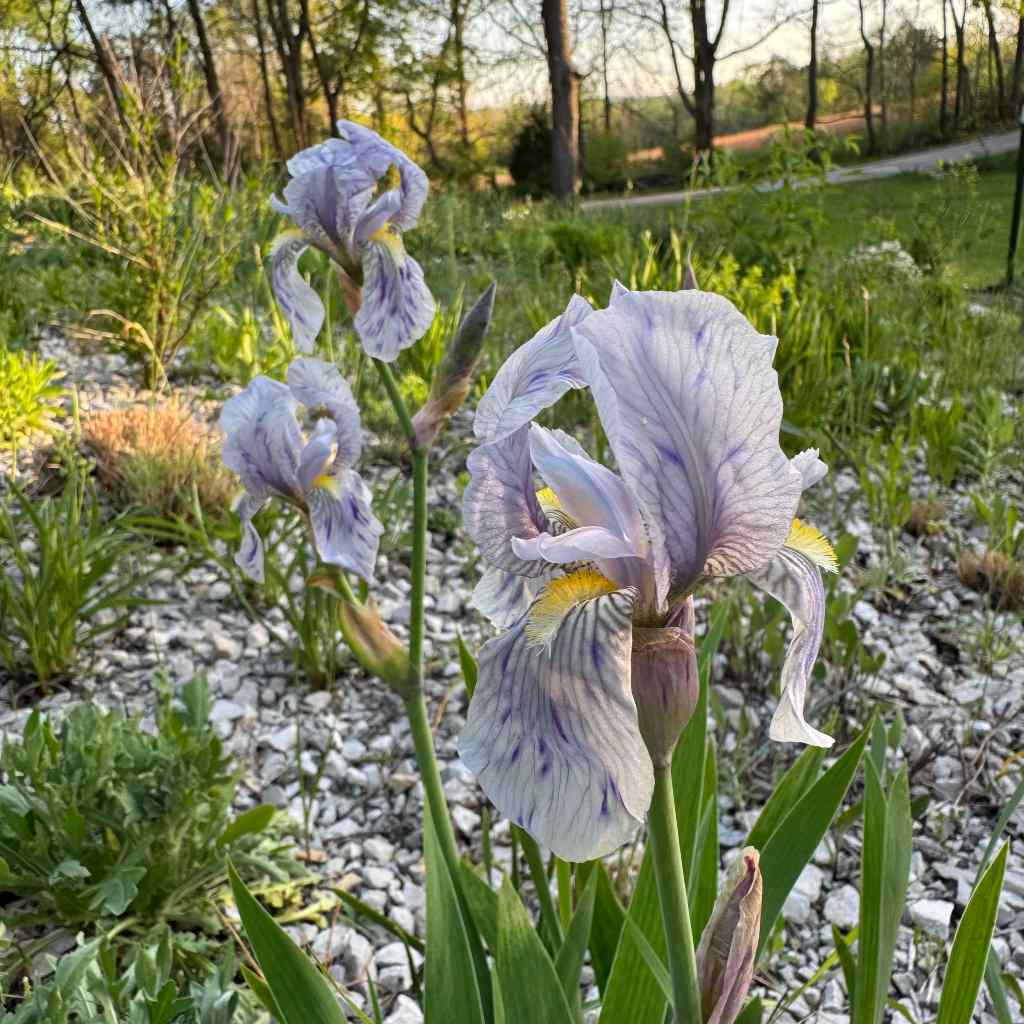
Spring 2025, the fourth season - Unkown older cultivar of Bearded Iris (?)
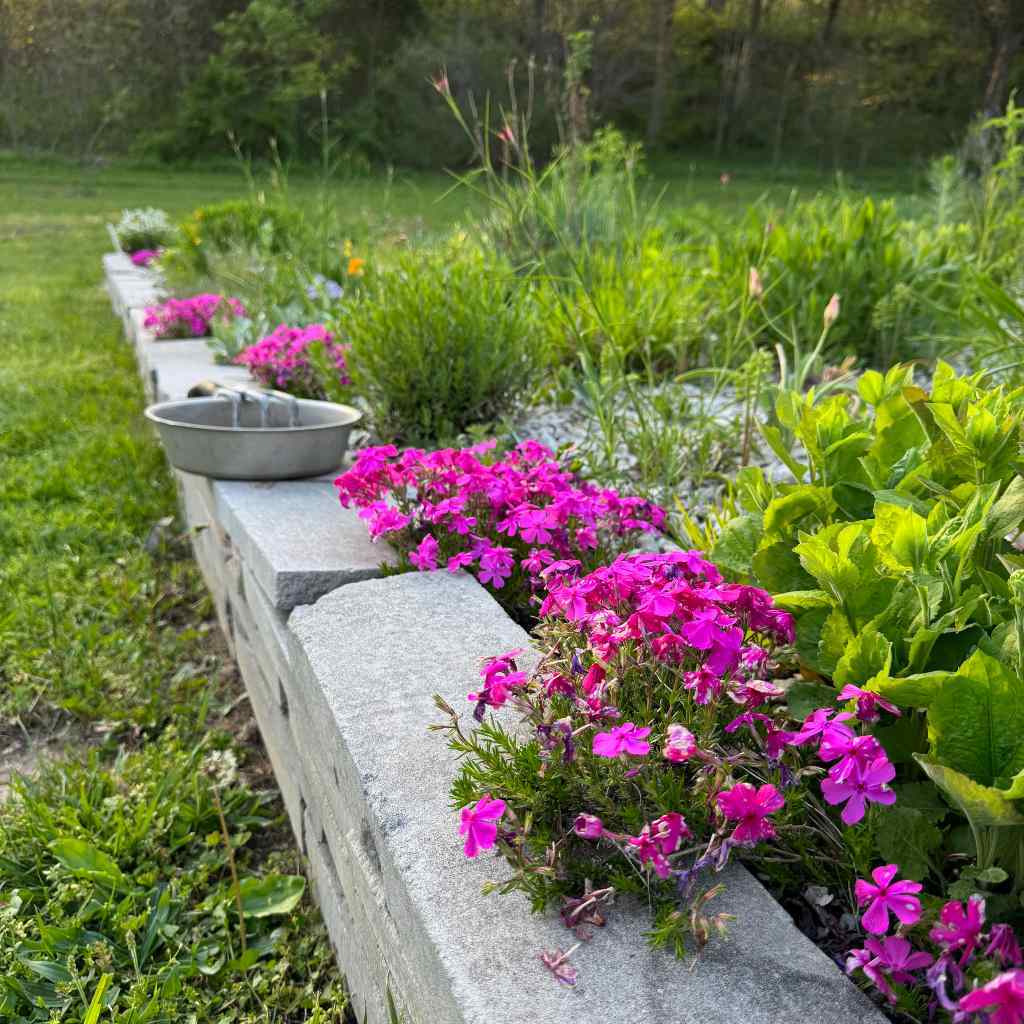
Mid spring 2025, the fourth season - Phlox subulata 'McDaniels Cushion' (Creeping Phlox McDaniels Cushion)
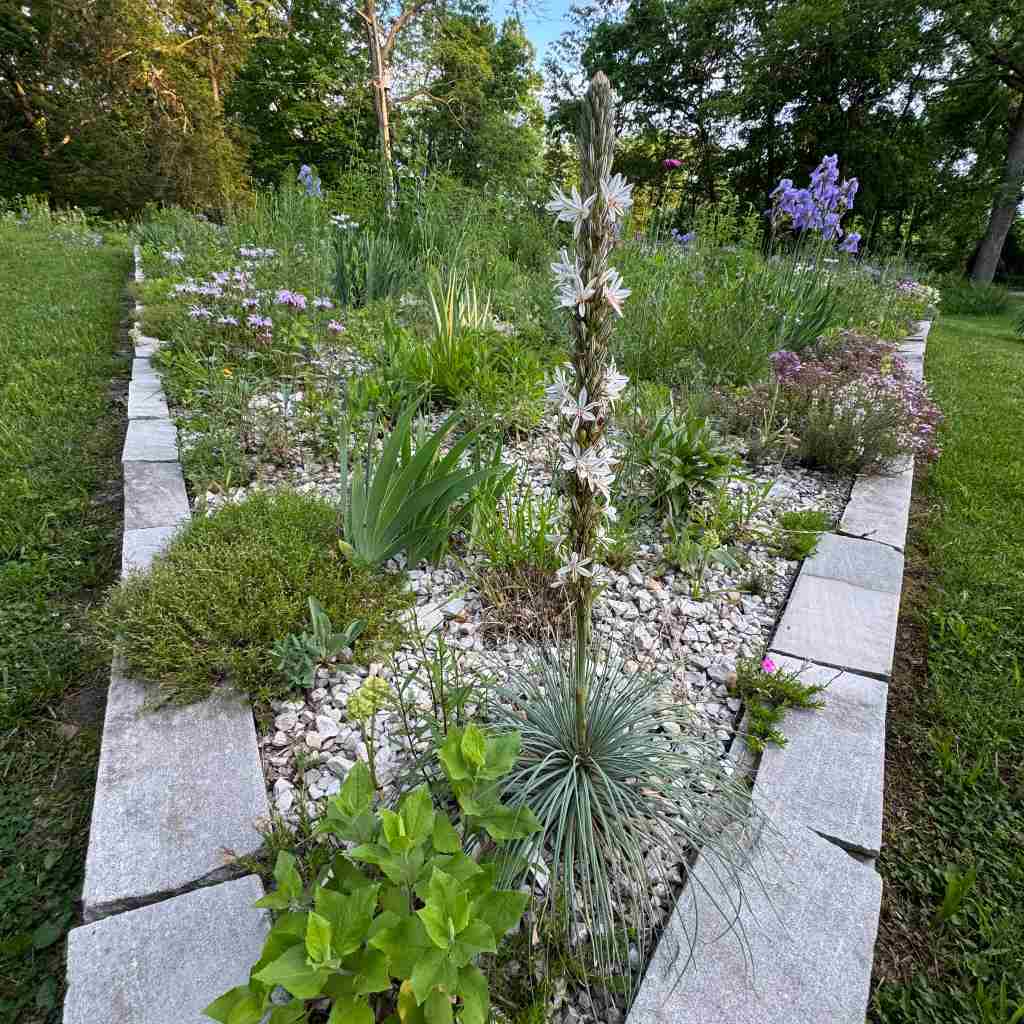
Mid spring 2025, the fourth season - Asphodeline taurica (Asphodel), native to Eastern Meditteranean. Other species of Asphodeline seem to do quite well in the sand, but here they don't live too long. Large green leaves next to the Asphodeline is Solidago drummondii (Cliff Goldenrod).
SUMMARY
Sand gardening works, and will permit you to grow some more rare or more tender species. But this will be heavily influenced by your macro climate and you may have to trial many plants, before you find the right ones. Peter Korn seemed to found the sweet spot of somewhat cooler and moister oceanic climate, allowing him cultivation wide variety of plants from different parts of the world. In my case, the suitable assortment seems to be a lot more narrow. But there have to be a bunch of plants from south eastern/southern USA, parts of Texas or humid areas in China, that will do well in the sand beds. But these are not commonly available not even as seeds and may require botanizing and seed collecting in the wild. Planting and transplanting in sand is easy and fun, the weed pressure is nearly zero. Tall plants are more sturdy and don’t flop.
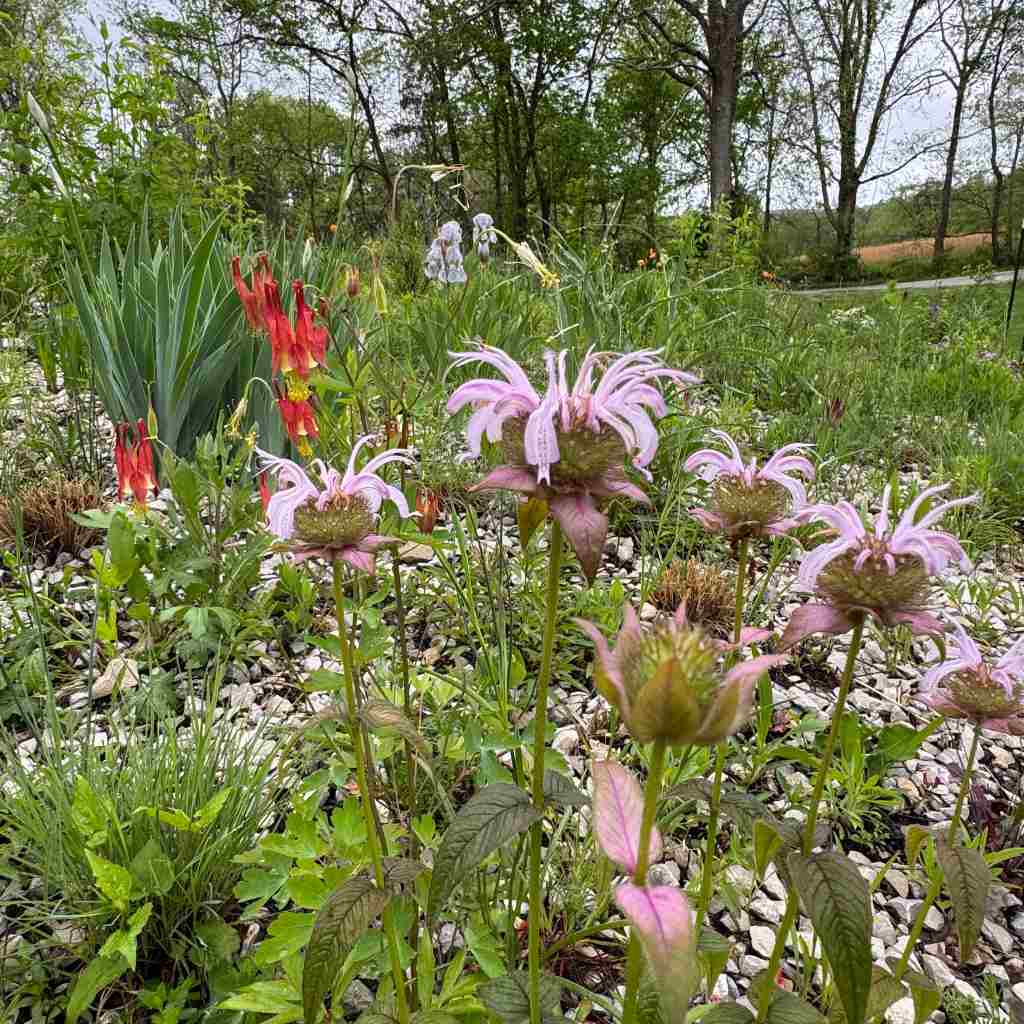
Mid spring 2025 - Monarda bradburiana (Eastern Beebalm) with Aquilegia canadensis (Wild Columbine)
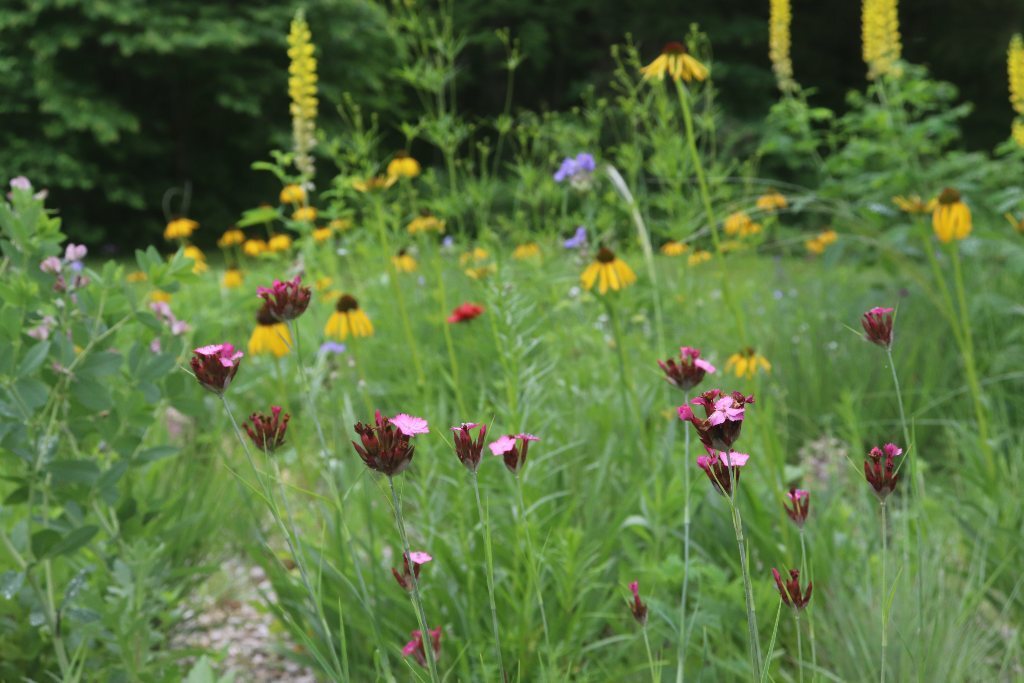
Mid spring 2025 - Dianthus carthusianorum (Carthusian Pink) is well adapted to drained soils. In the background Echinacea paradoxa (Yellow Coneflower) and Tradescantia ohiensis (Ohio Spiderwort).
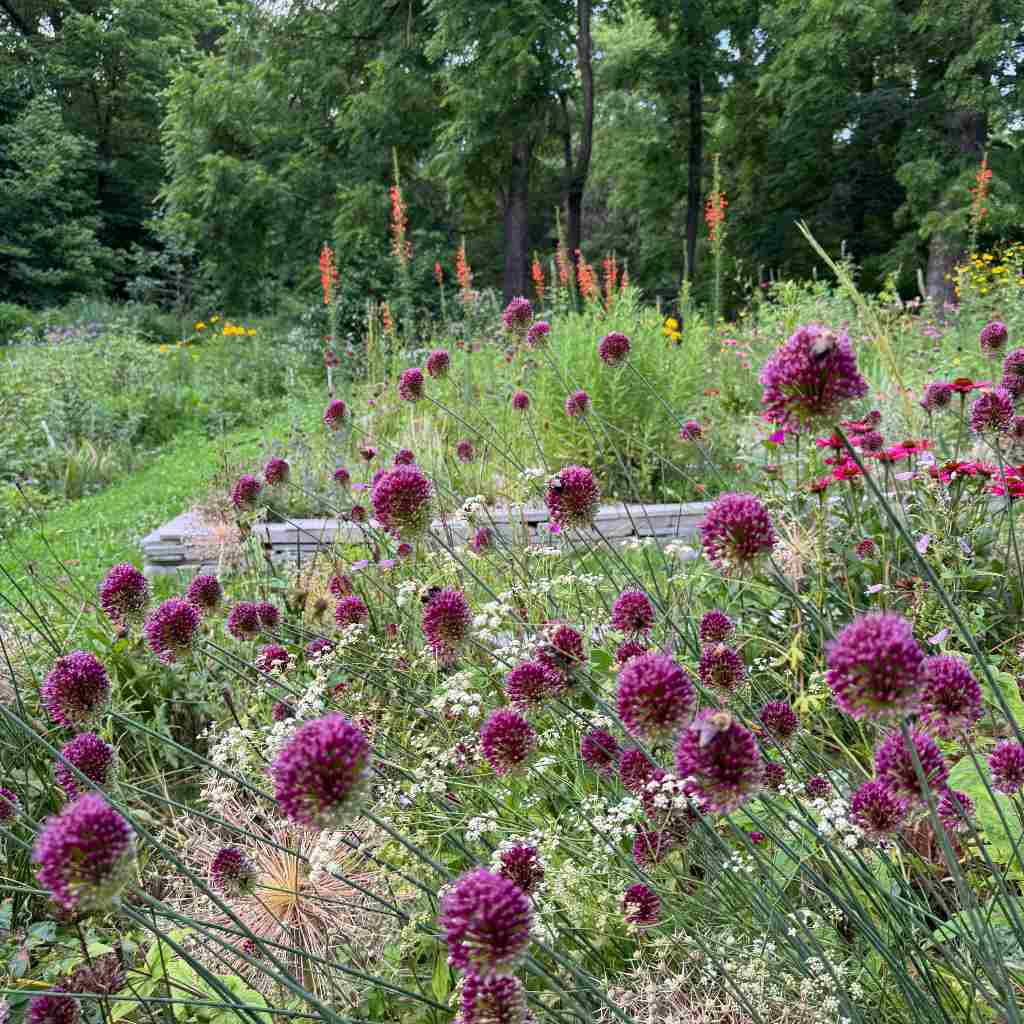
Mid to late June 2025, view across the raised bed (with rich soil) towards the sand bed (with lean sand). Tall orange native biennial Ipomopsis rubra (Standing Cypress) is in it's bloom peak.
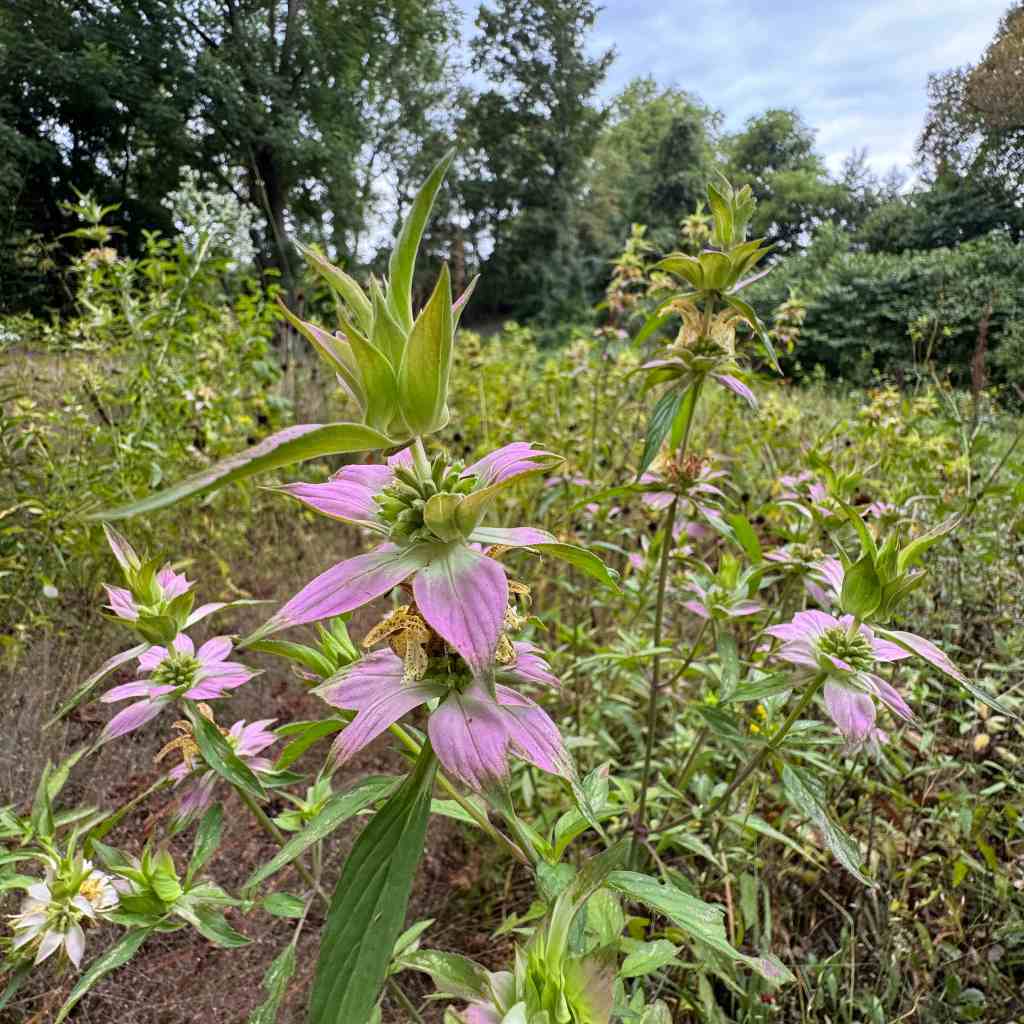
Late summer to early fall 2025 - I kept sprinkling seeds of Monarda punctata (Spotted Beebalm) and it did too well. There might be too many of them now!
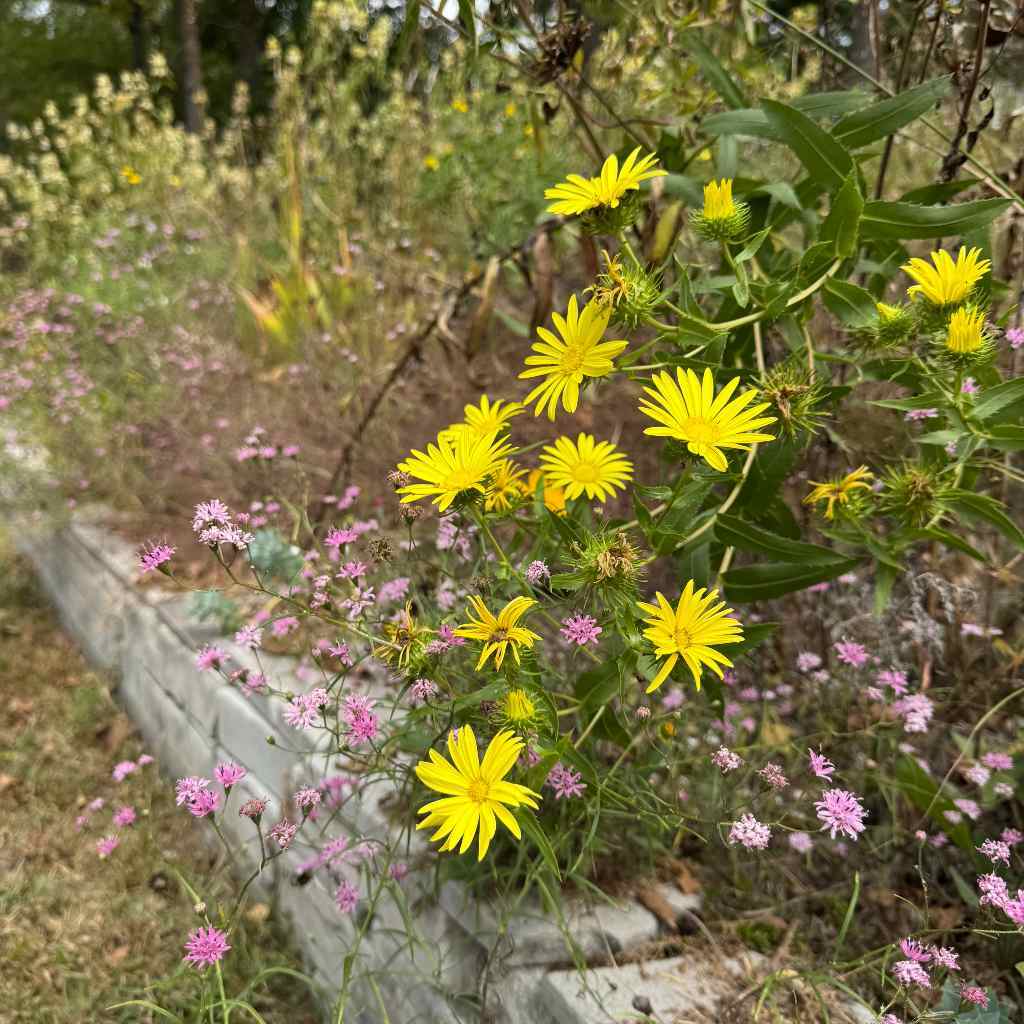
Early fall 2025 - both native yellow Grindellia lanceolata (Narrowleaf Gumweed) with pink-purple annual Palafoxia callosa (Small Palafox).
A few more things I would recommend: Be ready to experiment and change things. Choose a spot away from big mature trees (shading and root competition is limiting). Consider some soil amendment before you put the sand down (depends on what you want to grow). Depending on your climate – be prepared to water during longer period of droughts. Prefer deeper rooting plants and be ready to fertilize some plants. Accept a bit more sparse look and simply, keep planting away.
Last two pictures are from the natural areas from Northern Indiana :
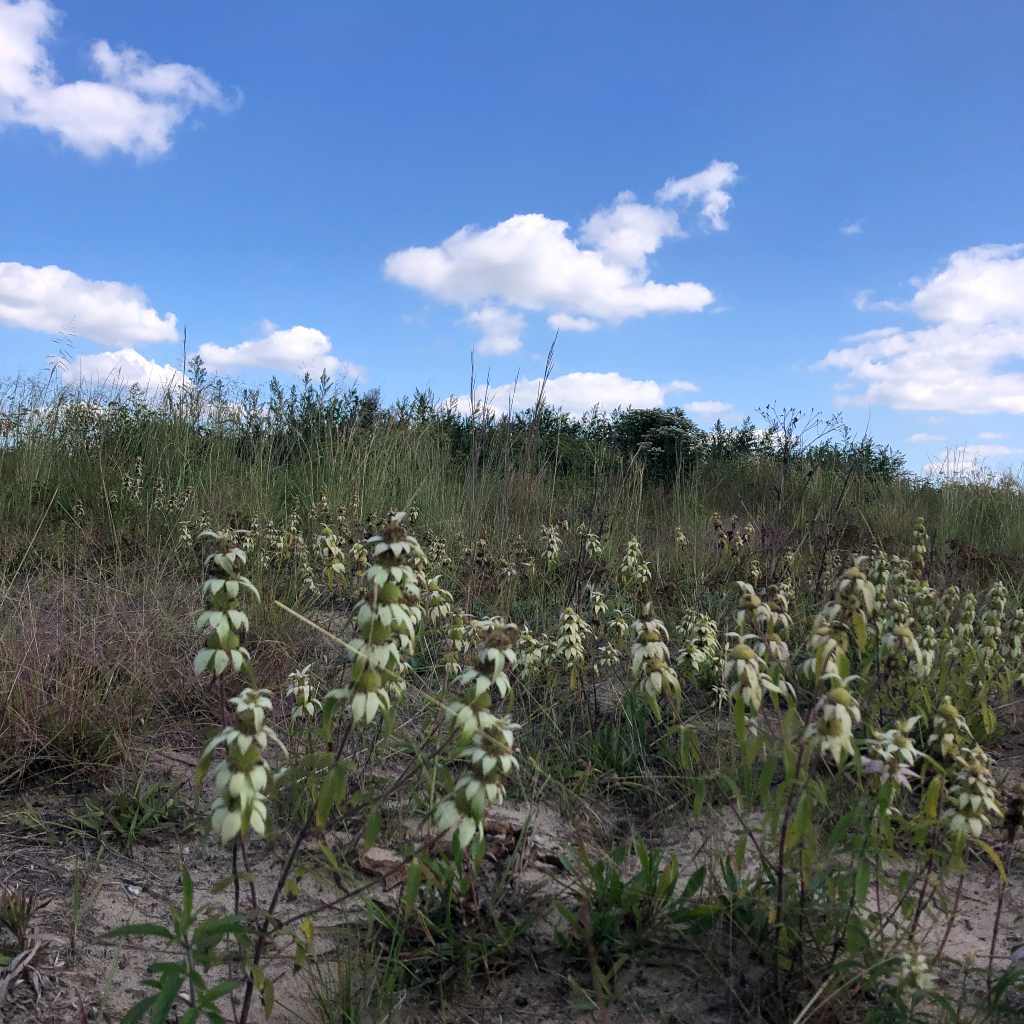
Kankakee Sands (Indiana/Illinois) in early fall - small hill of pure sand with Monarda punctata (Spotted Beebalm). Notice the very sparse vegetation and the bare areas.
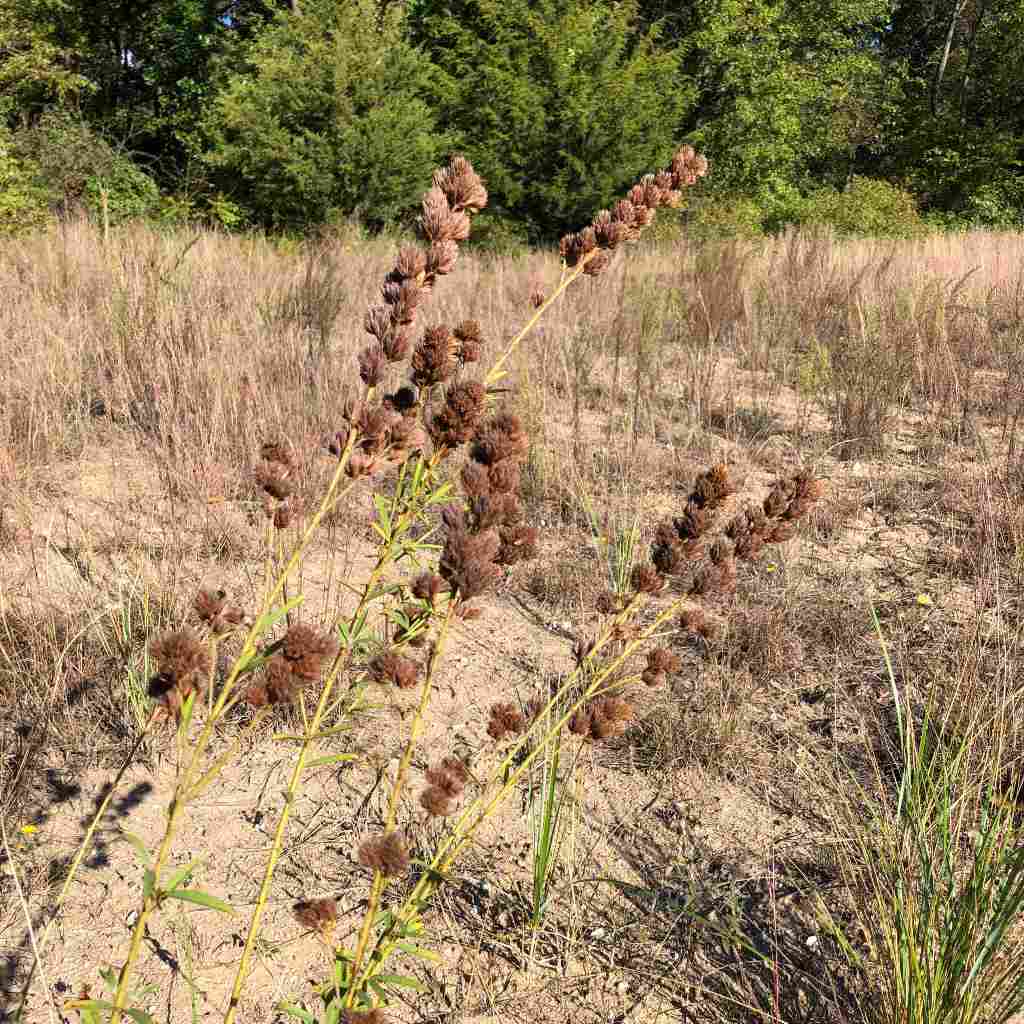
Indiana Dunes State Park in early fall - Lespedeza capitata (Round-headed Bush Clover) with grass Schizachyrium scoparium (Little Bluestem) in the background. Very sandy soil.
All pictures that are not identified with the copyright are the sole property of US Perennials, LLC.