


New

Zoom the image with the mouse
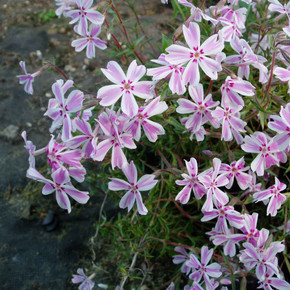
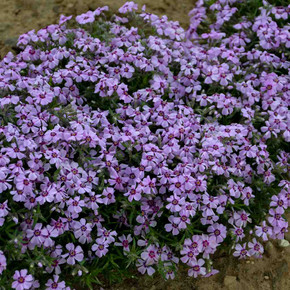
Phlox nivalis 'Eco Flirty Eyes' - TRAILING PHLOX - MOSS PHLOX 'ECO FLIRTY EYES' (moderate spreading)
Product Code:
PHL-ECO-FLI-EY
Shipping:
Calculated at Checkout
$8.99
Vigorous, semi-evergreen needle-like leaves and lavender-pinkish, medium-sized flowers.
Very drought and heat tolerant, needs average to well drained or sandy soils.
Tough plant with similar needs like creeping phlox. In early spring, the flowers completely cover the whole plants.
Easy to grow perennial, the only need is some sunlight and drainage.
Even this plant is considered "ground covering" plant, it's not highly competitive for true groundcover - it can compete only on sunny and dry spots (other plants can quite easily self-seed, intermingle or even overpower it).
Blooming time: end of March to April/May (about mid spring)Size: 3-4” tall x 24" wide, but in time even wider (but can be easily restrained)
USDA zones: 4a to 9
Culture: full sun, half shade, dappled sun, gravelly, rocky, sandy soils, poor and shallow soils, xeriscape. Drainage is essential!
Moisture Needs: dry, medium-dry, soil has to be drained. In nature refers more acidic soils than Phlox subulata, but we successfully grow in in alkaline soils.
Origin: Selected by Dr. Don Jacobs, who rescued cuttings from a plant in Rockdale County, Georgia (many of Dr. Don Jacob's plants bear name "Eco..."). Wild form of Phlox nivalis is native wildflower to eastern USA, Wisconsin, Michigan, Utah and Texas. See the USDA distribution map.
Deer/rabbit resistant: yes / yes
Attracts Butterflies or Pollinators butterflies
Attracts Hummingbirds: yes
Pot Size: 3.5" perennial pot (1.22 pt/580 ml)
Picture copyright: US Perennials nursery
Plant combinations: For the edges, along patios and paths, rock gardens, trough gardens, crevice gardens, slopes. Best combined with smaller to medium sized perennial – from native choose shorter Agastache, Anemone patens, Antennaria, Asclepias tuberosa, dwarf Baptisia, Campanula rotundifolia, Coreopsis, Cunila origanoides, Dalea, shorter Echinacea, Gaillardia, Gaura (shorter cultivars), smaller cultivars of Heuchera (in cooler regions), Penstemons, Ruellia humilis, shorter cultivars of Stokesia, Verbena canadensis, native grasses like Boutelloa gracilis, Koeleria cristata, Sporobolus heterolepis 'Tara' (or non-native Sesleria).
And non-native perennials like Achillea, summer blooming Allium, shorter Aquilegia, Armeria, Calamintha, Campanula, Cerastium, Delosperma, Dianthus, Geranium (G. sanquineum, G. dalmaticum and x cantabrigiense, G. cinereum, G. endresii, G. renardii), Gypsohila, Iris (dwarf and miniature bearded Iris), shorter Lavandula, shorter Nepeta, Origanum, shorter Platycodon, Satureja, Salvia, Sedum, Sempervivum, low Stachys,Scabiosa columbaria, Thymus, lower Veronica and many spring bulbs.

Phlox nivalis 'Eco Flirty Eyes' - TRAILING PHLOX - MOSS PHLOX 'ECO FLIRTY EYES' (moderate spreading)
$8.99
Details
Vigorous, semi-evergreen needle-like leaves and lavender-pinkish, medium-sized flowers.
Very drought and heat tolerant, needs average to well drained or sandy soils.
Tough plant with similar needs like creeping phlox. In early spring, the flowers completely cover the whole plants.
Easy to grow perennial, the only need is some sunlight and drainage.
Even this plant is considered "ground covering" plant, it's not highly competitive for true groundcover - it can compete only on sunny and dry spots (other plants can quite easily self-seed, intermingle or even overpower it).
Blooming time: end of March to April/May (about mid spring)Size: 3-4” tall x 24" wide, but in time even wider (but can be easily restrained)
USDA zones: 4a to 9
Culture: full sun, half shade, dappled sun, gravelly, rocky, sandy soils, poor and shallow soils, xeriscape. Drainage is essential!
Moisture Needs: dry, medium-dry, soil has to be drained. In nature refers more acidic soils than Phlox subulata, but we successfully grow in in alkaline soils.
Origin: Selected by Dr. Don Jacobs, who rescued cuttings from a plant in Rockdale County, Georgia (many of Dr. Don Jacob's plants bear name "Eco..."). Wild form of Phlox nivalis is native wildflower to eastern USA, Wisconsin, Michigan, Utah and Texas. See the USDA distribution map.
Deer/rabbit resistant: yes / yes
Attracts Butterflies or Pollinators butterflies
Attracts Hummingbirds: yes
Pot Size: 3.5" perennial pot (1.22 pt/580 ml)
Picture copyright: US Perennials nursery
Plant combinations: For the edges, along patios and paths, rock gardens, trough gardens, crevice gardens, slopes. Best combined with smaller to medium sized perennial – from native choose shorter Agastache, Anemone patens, Antennaria, Asclepias tuberosa, dwarf Baptisia, Campanula rotundifolia, Coreopsis, Cunila origanoides, Dalea, shorter Echinacea, Gaillardia, Gaura (shorter cultivars), smaller cultivars of Heuchera (in cooler regions), Penstemons, Ruellia humilis, shorter cultivars of Stokesia, Verbena canadensis, native grasses like Boutelloa gracilis, Koeleria cristata, Sporobolus heterolepis 'Tara' (or non-native Sesleria).
And non-native perennials like Achillea, summer blooming Allium, shorter Aquilegia, Armeria, Calamintha, Campanula, Cerastium, Delosperma, Dianthus, Geranium (G. sanquineum, G. dalmaticum and x cantabrigiense, G. cinereum, G. endresii, G. renardii), Gypsohila, Iris (dwarf and miniature bearded Iris), shorter Lavandula, shorter Nepeta, Origanum, shorter Platycodon, Satureja, Salvia, Sedum, Sempervivum, low Stachys,Scabiosa columbaria, Thymus, lower Veronica and many spring bulbs.


Customer Reviews

Shipped With Care
Secure packaging for safe delivery
Nursery Grown Plants
Healthy, well-rooted perennials
Curated Plant Selection
Reliable performers for real gardens